The Allahabad High Court has set aside a Rs. 6.91 lakh entertainment tax demand against Agra Club Ltd., holding that Housey/Tambola played exclusively by members in a private club does not constitute 'entertainment' under the U.P. Entertainment & Betting Tax Act, 1979. The Court emphasized that the activity lacked public character and commercial motive, which are essential for taxability under the Act.
Background & Facts
The Genesis
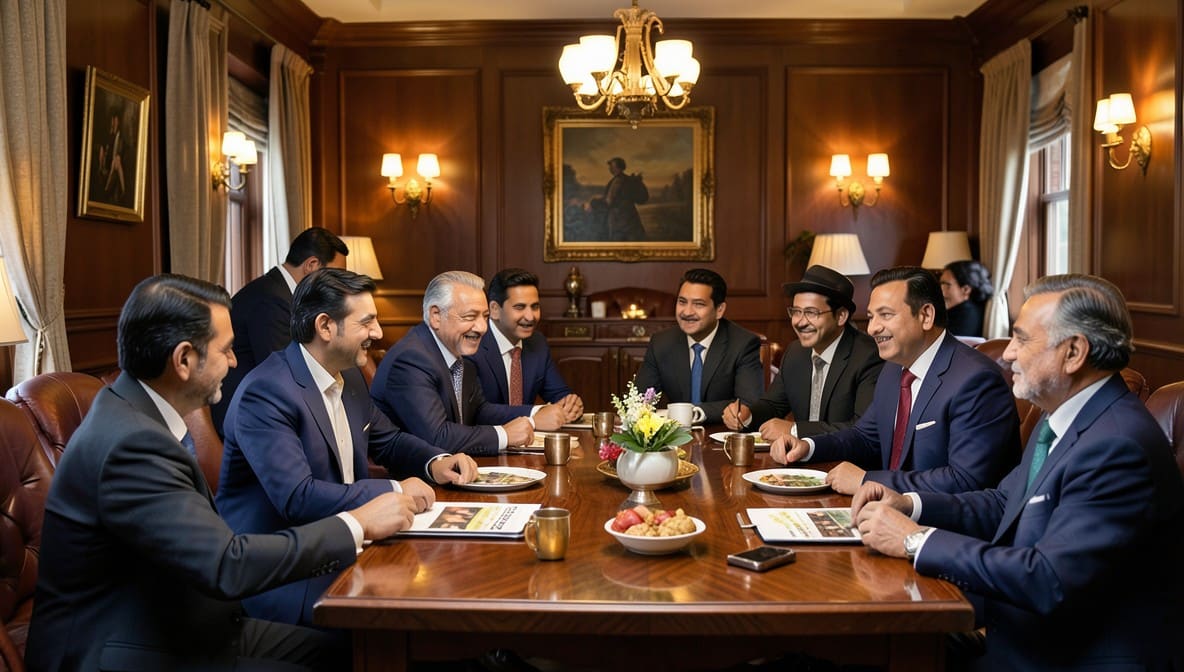
The petitioner, Agra Club Ltd., is a non-profit private members' club comprising armed forces and civil administration officials. The club hosts Housey/Tambola games exclusively for its members on functional days, typically Saturdays. The club operates on a no-profit, no-loss basis, and participation is restricted to members only.
Key Facts
- On 30.03.1998, the Entertainment Tax Department issued a show cause notice to the petitioner alleging that Housey was being played twice weekly, which was taxable under Section 3(1) of the U.P. Entertainment & Betting Tax Act, 1979.
- The petitioner responded that Housey was played only by members on function days and that the club operated on a no-profit basis.
- The District Magistrate, Agra, vide order dated 05/06.11.2007, imposed an entertainment tax of Rs. 6,71,002 along with a penalty of Rs. 20,000 (total Rs. 6,91,002) for the period January 1998 to September 2007.
- The petitioner appealed the order before the Commissioner, Agra Division, who dismissed the appeal vide order dated 06.03.2025.
Procedural History
- 30.03.1998: Show cause notice issued by Entertainment Tax Department.
- 05/06.11.2007: District Magistrate, Agra imposed entertainment tax of Rs. 6,71,002 and penalty of Rs. 20,000.
- 2007-2025: Petitioner filed statutory appeal, which was dismissed on 06.03.2025.
- 23.07.2026: Present writ petition filed before the Allahabad High Court.
The Parties' Positions
The petitioner contended that Housey was restricted to members and lacked public character, and that the club operated on a no-profit basis. It relied on Vivek M. Hinduja & Others v. M. Ashwatha & Others (2020) and Nekkanti Rama Lakshmi v. State of Karnataka (2020) to argue that the activity did not constitute 'entertainment' under the Act.
The respondents argued that a fee was charged from participants, making the activity taxable under the Act. They relied on Sales Tax Officer v. Sudarsanam Iyengar & Sons (1970) to support their contention.
The Legal Issue
The central question was whether Housey/Tambola played exclusively by members in a private club constitutes 'entertainment' within the meaning of Section 2(g) of the U.P. Entertainment & Betting Tax Act, 1979, thereby attracting tax liability under Section 3(1).
Arguments Presented
For the Petitioner
The petitioner argued that:
- Housey was played exclusively by members in a private club, with no public access.
- The club operated on a no-profit, no-loss basis, and the activity was purely recreational.
- The respondents failed to demonstrate any commercial gain or profit derived from the activity.
- The activity lacked the essential element of public participation, which is a foundational requirement for taxability under the Act.
The petitioner relied on Vivek M. Hinduja & Others v. M. Ashwatha & Others and Nekkanti Rama Lakshmi v. State of Karnataka to support its contention.
For the Respondent
The respondents contended that:
- A fee was charged from participants for entry/coupon prices, which constituted a monetary benefit.
- The activity was taxable under the Act, as it provided amusement to participants.
- The petitioner failed to substantiate its no-profit claim with sufficient evidence.
The respondents relied on Sales Tax Officer v. Sudarsanam Iyengar & Sons to argue that the activity fell within the ambit of 'entertainment'.
The Court's Analysis
The Court examined the definition of 'entertainment' under Section 2(g) of the U.P. Entertainment & Betting Tax Act, 1979, which is inclusive and expansive. It noted that the term 'entertainment' includes any exhibition, performance, amusement, game, or sport offered for payment, regardless of whether it carries educational value or requires skill.
The Court relied on the Supreme Court's decision in Geeta Enterprises v. State of U.P. (1983), which held that the term 'entertainment' must be interpreted broadly to include any activity that provides amusement or diversion to the public or a section thereof, and yields a monetary benefit to the organizer. The Court summarized the tests for 'entertainment' as follows:
- The activity must have a public character, being open to the public in a hall, theatre, or any other place where members of the public are invited or attend.
- The activity may provide any kind of amusement, whether sport, game, or performance requiring skill.
- Even if admission is free, if the exhibitor derives a monetary benefit, it constitutes entertainment.
- The duration of the show or the identity of the person operating the machine is irrelevant.
The Court observed that in the present case, the activity of Housey was conducted exclusively within the precincts of a private members' club, with entry restricted to members only. Participation was limited to a closed and identifiable class, and the activity lacked public character. The Court held that the element of public participation, which is essential for attracting the definition of 'entertainment', was conspicuously absent.
The Court also noted that the petitioner operated on a no-profit, no-loss basis, and that the respondents failed to bring on record any material demonstrating that the petitioner derived any commercial gain, profit, or revenue from the conduct of Housey. The Court held that mere collection of coupon charges or contribution amounts from participants for conducting the game or distributing prizes could not ipso facto be treated as a commercial benefit accruing to the organizer.
"The record shows that the petitioner, a non-profit private members' club (including armed forces and civil administration officials), hosts Housey/Tambola for members on functional days (usually Saturdays). Relying on 1989 notification under Section 3(1) of the U.P. Amusement and Entertainment Act, 1979, the authorities treated this as taxable entertainment and, after notices spanning 1998-2007, assessed entertainment tax of Rs.6,71,002/- plus a Rs.20,000/- penalty (total Rs.6,91,002/-) for January 1998-September 2007."
The Verdict
The petition succeeded. The Court set aside the impugned orders dated 06.03.2025 and 05/06.11.2007, holding that Housey/Tambola played exclusively by members in a private club does not constitute 'entertainment' under the U.P. Entertainment & Betting Tax Act, 1979. The Court allowed the writ petition and directed the respondents to refund any amount recovered under the impugned orders, if any.
What This Means For Similar Cases
Public Character Is Essential for Taxability
- Activities conducted exclusively for members of a private club, with no public access, do not constitute 'entertainment' under the Act.
- The element of public participation is a foundational requirement for taxability under the Act.
Commercial Motive Must Be Proven
- The mere collection of coupon charges or contribution amounts from participants does not ipso facto constitute a commercial benefit.
- The respondents must demonstrate that the organizer derived a commercial gain or profit from the activity to attract tax liability.
Burden of Proof Lies on Revenue Authorities
- Revenue authorities must bring on record concrete evidence to substantiate claims of commercial gain or profit.
- Failure to do so will result in the activity being held non-taxable.
Precedents Clarify the Scope of 'Entertainment'
- The Supreme Court's decision in Geeta Enterprises v. State of U.P. (1983) provides a clear framework for interpreting the term 'entertainment' under taxing statutes.
- Courts must apply the tests laid down in the decision to determine whether an activity constitutes 'entertainment' for tax purposes.