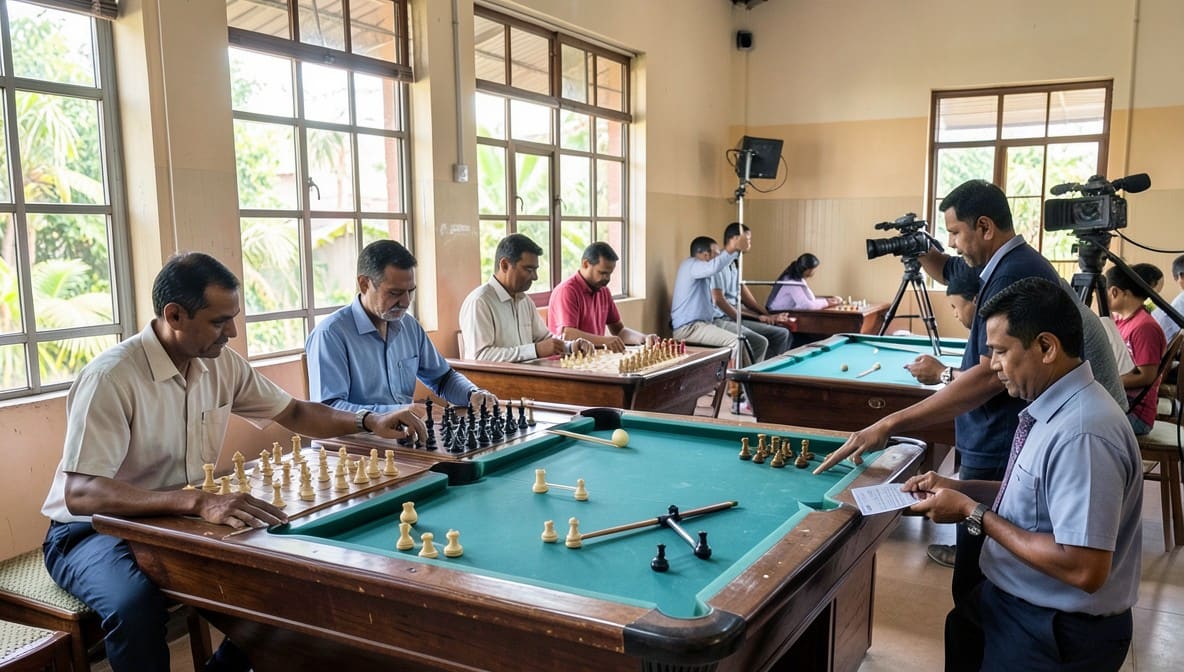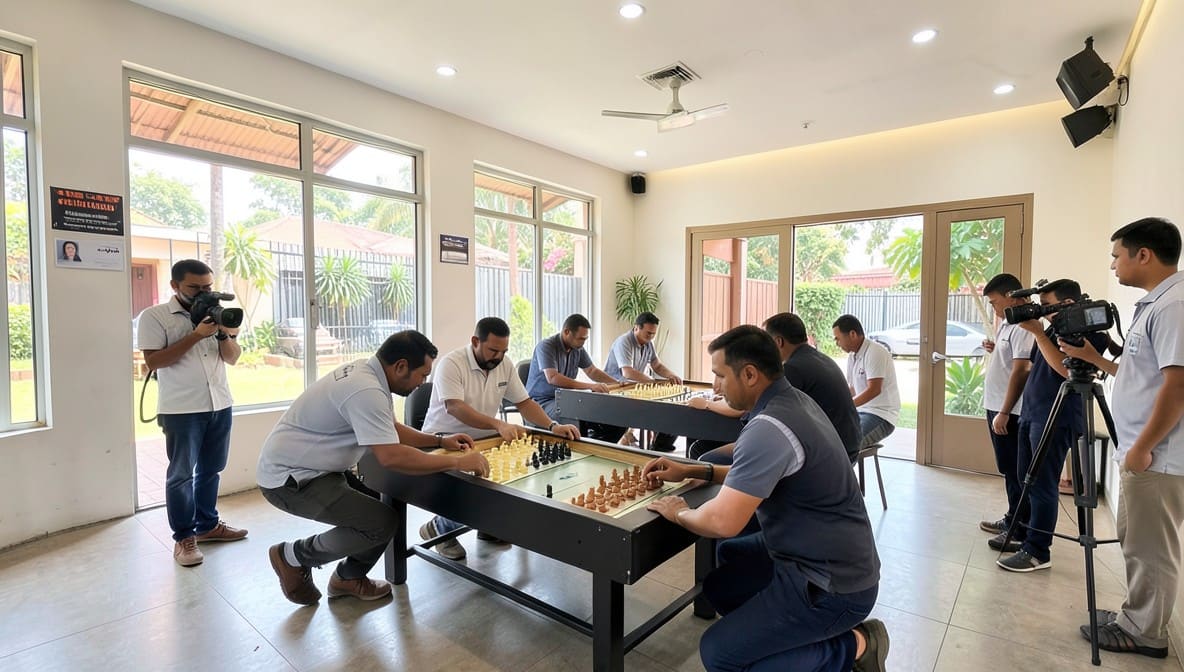
The Madras High Court has clarified that police cannot interfere with lawful recreational activities in registered clubs merely on suspicion, affirming that games like Rummy and Carom Board, when played without stakes, are protected under fundamental rights. This judgment reinforces the boundary between lawful recreation and unlawful gambling under the Tamil Nadu Gaming Act, 1930.
Background & Facts
The Dispute
The petitioner, Happy People Recreation Club, registered under the Tamil Nadu Societies Registration Act on 11.09.2024, operates at Door No. 251/A7, 251/A7/1, Sadhik Nagar, Udumalaipettai Taluk, Tiruppur District - 642 126. The club conducts indoor recreational activities including Rummy and Carom Board, explicitly prohibiting any form of gambling or wagering. The respondents, comprising the Superintendent of Police, Deputy Superintendent of Police, and Inspector of Police, allegedly interfered with the club’s daily operations, creating an atmosphere of intimidation and disrupting its administration.
Key Facts
- The club was formally registered on 11.09.2024 with bye-laws prohibiting gambling.
- The petitioner’s President, A. Ravindranath Tagore, is the sole representative of the club.
- The club’s activities are confined to non-monetary, skill-based indoor games.
- The respondents did not produce any specific complaint, FIR, or evidence of gambling occurring on the premises.
- The petitioner was previously convicted in Crime No. 198 of 2015 under Sections 51(a)(i) and 65 of the Copyright Act, but this conviction is unrelated to gaming or gambling.
- No prior notice, inspection report, or warning was issued by police before alleged interference.
Procedural History
- 11.09.2024: Happy People Recreation Club registered under Tamil Nadu Societies Registration Act.
- Early 2025: Alleged police visits and threats to shut down club activities began.
- 01.02.2026: Formal complaint submitted to police authorities seeking cessation of interference; no response received.
- 15.03.2026: Petitioner filed this Writ Petition (Criminal) under Article 227 of the Constitution.
- 07.04.2026: Judgment delivered by the Madras High Court.
The Parties' Positions
For the Petitioner: The club’s activities are purely recreational and lawful. The police have no legal basis to interfere without credible evidence of gambling. The interference violates Articles 14 (equality) and 19(1)(c) (right to form associations) of the Constitution. The prior conviction under the Copyright Act is irrelevant and improperly invoked to justify harassment.
For the Respondents: The police are empowered under the Tamil Nadu Gaming Act, 1930, to inspect premises upon reasonable suspicion. The petitioner’s past conviction indicates a pattern of unlawful conduct. The writ seeks a blanket injunction without specific instances of interference, making it unsustainable.
Relief Sought
The petitioner sought a writ of mandamus restraining the respondents and their subordinates from interfering with the lawful activities of the club, including playing Rummy and Carom Board without any element of gambling.
The Legal Issue
The central question was whether police can interfere with the lawful recreational activities of a registered club based solely on general suspicion or past unrelated convictions, without concrete evidence of gambling under the Tamil Nadu Gaming Act, 1930.
Arguments Presented
For the Petitioner
The petitioner relied on the principle that games of skill, such as Rummy and Carom Board, are not gambling when played without stakes. Citing Dr. K.R. Subramanian v. State of Tamil Nadu and State of Andhra Pradesh v. G. Srinivasa Rao, it was argued that the Constitution protects the right to form associations and engage in lawful recreation. The absence of any FIR, complaint, or inspection report negated the claim of reasonable suspicion. The prior copyright conviction was irrelevant and prejudicial.
For the Respondent
The Additional Public Prosecutor contended that the police have statutory powers under Section 10 of the Tamil Nadu Gaming Act, 1930, to enter and inspect premises where gambling is suspected. Reliance was placed on Director General of Police v. Mahalakshmi Cultural Associate and M.M. Nagar Sports and Recreation Centre v. Superintendent of Police, which permit police oversight. The petitioner’s past conviction, though unrelated, raised concerns about credibility and potential misuse of the club for illegal purposes.
The Court's Analysis
The Court examined the distinction between games of skill and games of chance under Indian jurisprudence. It noted that Rummy has been consistently held by the Supreme Court in State of Andhra Pradesh v. K. Satyanarayana and Dr. K.R. Subramanian to be a game of skill, not gambling, when played without monetary stakes.
"The mere presence of a game like Rummy does not attract the provisions of the Tamil Nadu Gaming Act unless there is evidence of wagering or betting. The police cannot act on hunches or past unrelated conduct."
The Court rejected the respondent’s reliance on the petitioner’s 2015 copyright conviction, holding that it had no bearing on the current matter and could not justify preemptive interference. The Court emphasized that Article 19(1)(c) protects the right to form associations for lawful purposes, and Article 14 prohibits arbitrary state action.
The Court also clarified that while police retain the power to act upon credible information, such power cannot be exercised without reasonable grounds. Blanket restrictions or unverified suspicions do not meet the threshold of legality.
The Verdict
The writ petition was allowed. The Court directed that the respondents and their subordinates shall not interfere with the lawful day-to-day functioning of the petitioner’s club. The petitioner shall ensure no gambling or wagering occurs on the premises. The police are permitted to enter and inspect the premises only upon reasonable suspicion supported by credible information, and in accordance with law. No costs were awarded.
What This Means For Similar Cases
Police Action Requires Concrete Suspicion
- Practitioners must now insist on documented grounds before any police inspection of recreational clubs.
- General allegations or past unrelated convictions cannot justify interference under the Tamil Nadu Gaming Act.
- Clubs should maintain records of non-gambling activities and bye-laws to rebut unfounded claims.
Registered Clubs Are Protected Under Article 19(1)(c)
- Registration under the Societies Registration Act strengthens the claim to lawful association.
- Courts will protect recreational activities involving skill-based games like Rummy, Carom, Chess, or Bridge if no stakes are involved.
- Any police action must be proportionate and evidence-based, not speculative.
Burden of Proof Lies with the State
- The state bears the burden of proving reasonable suspicion of gambling.
- Absence of FIR, complaint, or inspection report renders police action unlawful.
- Courts will not permit harassment under the guise of law enforcement.