The Uttarakhand High Court has reaffirmed that prolonged pre-trial custody without concrete evidence of direct involvement in serious offences, including those under UAPA, cannot justify continued denial of bail. The judgment underscores the necessity of specific, credible links between the accused and the alleged criminal act, rejecting speculative or circumstantial inferences.
Background & Facts
The Dispute
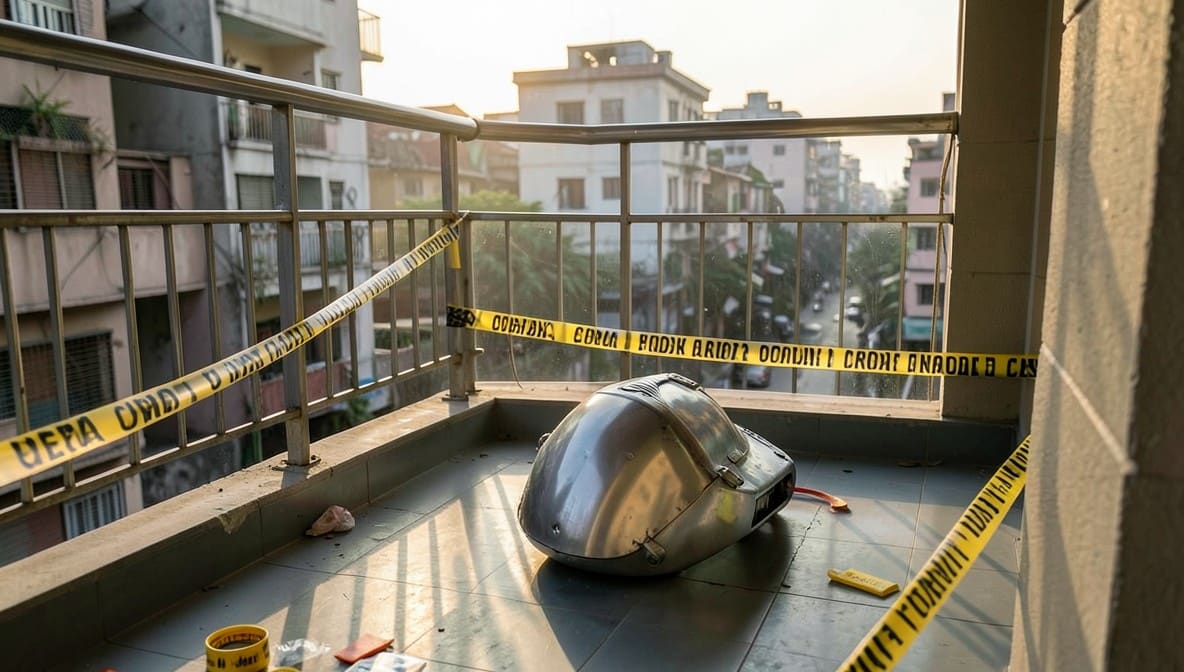
FIR No. 23 of 2024 was registered at Police Station Banbhoolpura, District Nainital, against unknown persons for offences under Sections 147, 148, 149, 307, 332, 353, 412, 427, 436, and 120B of the Indian Penal Code, along with Sections 3 and 4 of the Prevention of Damage to Public Property Act, 1984, and Sections 15 and 16 of the Unlawful Activities (Prevention) Act, 1967. The incident occurred on 08.02.2024 at Malik-ka-Bagicha, Haldwani, during a government demolition drive. The prosecution alleged that a mob assembled, attacked police and administrative personnel with petrol bombs, fired illegal weapons, and snatched police arms.
Key Facts
- The appellant, Abdul Rehman, was arrested on 20.02.2024.
- He was not named in the original FIR, which named only "unknown persons."
- His name emerged during the course of investigation.
- The prosecution’s case against him rests solely on CCTV footage.
- No witness statement under Section 161 Cr.P.C. explicitly identifies him as committing any act of violence.
- He has no prior criminal record.
- As of the date of judgment, he had been in custody for over two years.
Procedural History
- 08.02.2024: Alleged incident at Malik-ka-Bagicha, Haldwani.
- 20.02.2024: Arrest of Abdul Rehman.
- 08.07.2024: First bail application rejected by 1st Additional Sessions Judge, Haldwani.
- 09.09.2024: Second bail application rejected by the same court.
- 12.12.2025: Supreme Court, in SLP(Crl.) Nos. 18725/2025 and 18860/2025, directed the Uttarakhand High Court to decide the appeal on merits, despite delay.
- 18.03.2026: Judgment reserved.
- 20.03.2026: Judgment delivered.
The Parties' Positions
For the Appellant
- Argued that he was falsely implicated.
- Contended that no specific role was assigned to him in the FIR or in any witness statement.
- Emphasized that the prosecution failed to establish direct or circumstantial evidence linking him to the violence.
- Highlighted his prolonged custody exceeding two years without trial.
For the Respondent
- Asserted that his involvement was established through CCTV footage and statements under Section 161 Cr.P.C.
- Claimed the offences fell within the ambit of "terroristic attack" under UAPA.
- Argued that the nature of the offences - rioting, arson, and attack on public servants - justified denial of bail.
- Stated that the charge sheet had been filed, indicating sufficient material for trial.
Relief Sought
The appellant sought bail, challenging the rejection of his two bail applications and requesting immediate release on personal bond with sureties.
The Legal Issue
Can an accused be denied bail under UAPA and IPC provisions when there is no direct evidence of specific involvement, no prior criminal history, and the prosecution relies solely on CCTV footage and general association with a mob, especially after more than two years in custody?
Arguments Presented
For the Appellant
The appellant’s counsel argued that mere presence at the scene, without any act of violence or specific role attributed, cannot sustain denial of bail. He relied on the principle that bail is the rule and jail is the exception, particularly where the prosecution fails to establish a prima facie case. He cited State of Rajasthan v. Balchand and Sanjay Chandra v. CBI to emphasize that prolonged custody without trial weighs heavily in favour of release. He further contended that invoking UAPA requires clear evidence of terrorist intent or association with a proscribed group, neither of which was established against him.
For the Respondent
The State contended that the offences under Sections 15 and 16 of UAPA, read with Sections 307 and 120B IPC, are non-bailable and grave. It argued that the CCTV footage, combined with witness statements, established the appellant’s participation in a violent conspiracy. It relied on Union of India v. K.A. Najeeb to assert that courts must exercise caution in granting bail in cases involving threats to public order and national security. The State maintained that the filing of the charge sheet indicated sufficient evidence to proceed to trial.
The Court's Analysis
The Court conducted a meticulous review of the record, including the FIR, charge sheet, and statements recorded under Section 161 Cr.P.C. It noted that while the prosecution claimed CCTV footage implicated the appellant, it could not identify who had identified him from the footage or how his presence was linked to any specific act of violence.
"The prosecution could not tell us as to who has named or identified the appellant/applicant."
The Court observed that the absence of any specific allegation against the appellant in the FIR, coupled with the lack of direct testimony placing him at the scene committing an act of violence, rendered the case against him speculative. The Court rejected the State’s reliance on general association with a mob, holding that mere presence at a riotous gathering, without proof of active participation or intent, does not constitute a punishable offence under Section 149 IPC or UAPA.
The Court further emphasized that the appellant had been in custody for over two years without trial, a factor that, under K.A. Najeeb, must be weighed in favour of bail where the prosecution has not demonstrated exceptional circumstances justifying continued detention. The Court also noted the absence of any prior criminal antecedents.
The invocation of UAPA was not dismissed outright, but the Court held that the threshold for invoking UAPA is not met by vague allegations or association alone. Without evidence of terrorist intent, membership in a proscribed organization, or specific acts of terror, the provisions cannot be used to indefinitely deny bail.
The Verdict
The appeal is allowed. The orders dated 08.07.2024 and 09.09.2024 rejecting bail are set aside. The appellant, Abdul Rehman, is directed to be released immediately on bail, provided he is not wanted in any other criminal case. He shall execute a personal bond of Rs. 50,000 and furnish two reliable sureties, each in the like amount, to the satisfaction of the trial court. Pending applications are disposed of.
What This Means For Similar Cases
Presence Alone Is Not Enough for UAPA or Conspiracy Charges
- Practitioners must challenge bail denials where the prosecution relies on CCTV footage or general association without specific acts attributed to the accused.
- Courts must distinguish between participation in a mob and active commission of violence under Section 149 IPC.
- UAPA cannot be invoked merely because a protest turned violent; there must be evidence of terrorist intent or organizational link.
Prolonged Custody Without Trial Favors Bail
- Accused persons detained for over two years in cases without strong prima facie evidence are entitled to bail under the principle of speedy trial.
- Courts must record reasons for continued detention beyond 18 - 24 months, especially in non-bailable offences.
- Delay in trial, even if not attributable to the accused, weighs heavily in bail applications.
Burden of Specificity in Prosecution Evidence
- Prosecution must identify how the accused was linked to the crime - by name, voice, clothing, or action - in witness statements or forensic evidence.
- Vague references to "involvement" or "presence" are insufficient to rebut the presumption of innocence.
- Courts should not defer to the charge sheet as conclusive proof of guilt for bail purposes.