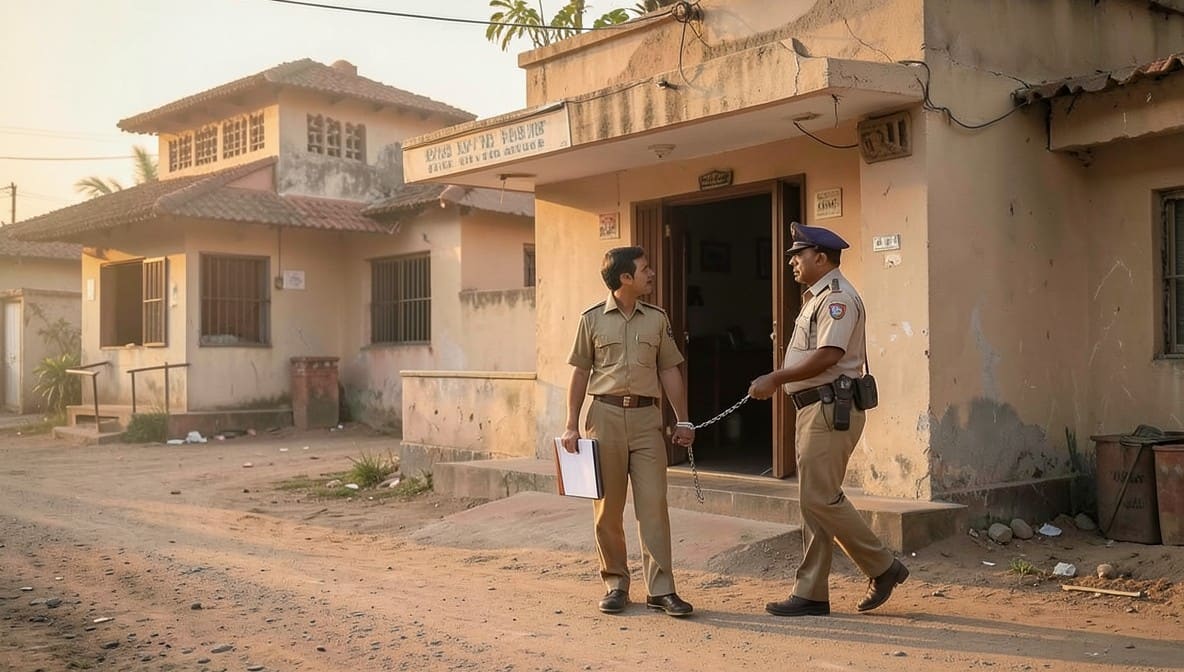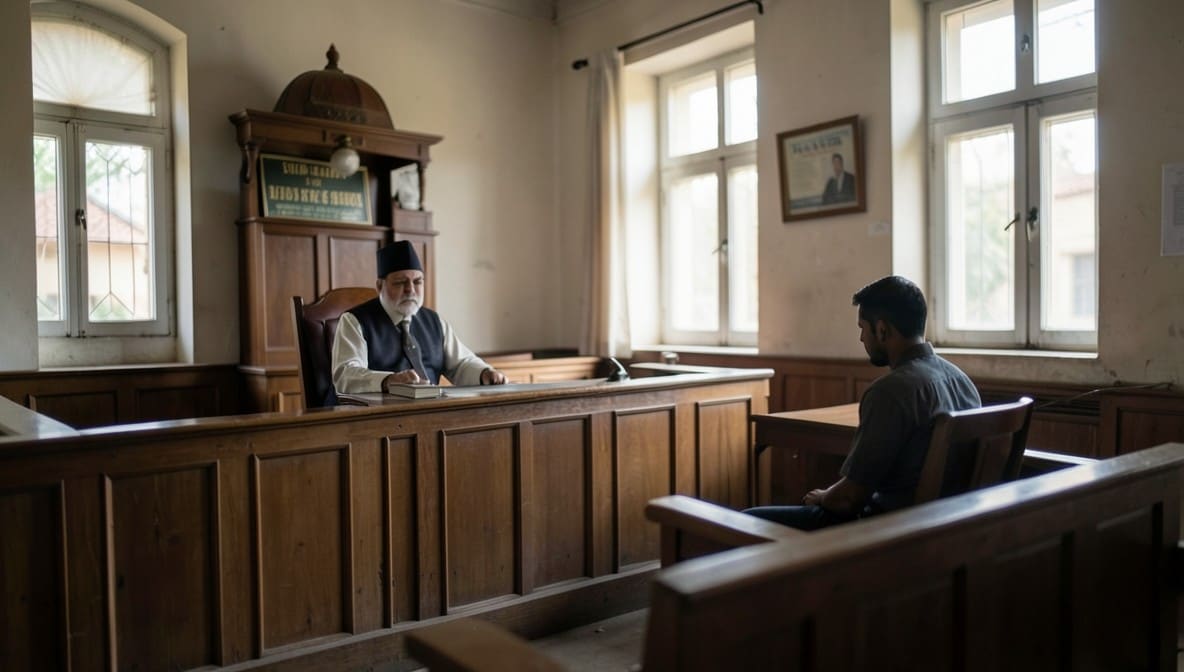
The Uttarakhand High Court has reaffirmed that bail cannot be denied solely on the basis of general, omnibus allegations in an F.I.R. where no specific role or overt act is attributed to the accused. This ruling reinforces the principle that at the bail stage, courts must avoid pre-judging guilt and must assess whether the accused poses a flight risk or threat to evidence, not whether they will ultimately be convicted.
Background & Facts
The Dispute
The applicant, Faijan, is in judicial custody in connection with F.I.R. No. 216 of 2025, registered at Police Station Ramnagar, District Nainital, under Sections 190, 191(2), 191(3), 103(1), and 238 of the B.N.S. The case arises from the alleged murder of a 23-year-old male on 13.06.2025. The prosecution alleges that the deceased was taken away by acquaintances and later murdered by a group of individuals, including the applicant and one Sikandar, acting in furtherance of common intention.
Key Facts
- The F.I.R. names five accused persons, including the applicant, and 10 - 12 unknown persons.
- No specific overt act, weapon used, or conduct directly attributable to the applicant is described in the F.I.R.
- The prosecution claims the applicant is visible in C.C.T.V. footage near the place of occurrence.
- The applicant has no prior criminal record.
- The applicant has been in judicial custody since 16.06.2025.
- The applicant is a permanent resident of District Nainital.
- The trial is expected to take considerable time to conclude.
Procedural History
- 13.06.2025: Alleged murder occurred.
- 16.06.2025: Applicant taken into judicial custody.
- 19.08.2025: Bail application rejected by the trial court.
- 16.04.2026: Bail application filed before the Uttarakhand High Court.
The Parties' Positions
For the Applicant
- The F.I.R. contains vague, omnibus allegations without assigning any specific role to the applicant.
- No motive has been attributed to him.
- His presence in C.C.T.V. footage, even if accepted, does not prove participation in the crime - it is a matter for trial.
- He is a permanent resident with no history of absconding.
- Denial of bail at this stage amounts to presumption of guilt.
For the Respondent/State and Complainant
- The applicant is visible in C.C.T.V. footage near the scene of crime, indicating active involvement.
- The offence is serious and involves murder.
- Granting bail would undermine the investigation and risk tampering with evidence.
Relief Sought
The applicant seeks release on bail, arguing that the conditions for denial under Section 439 CrPC are not met, and that his continued custody is unjustified at the pre-trial stage.
The Legal Issue
Can bail be denied to an accused solely on the basis of general allegations in an F.I.R. and presence in C.C.T.V. footage, without any specific attribution of an overt act or motive?
Arguments Presented
For the Appellant/Petitioner
The applicant’s counsel relied on the settled principle that at the bail stage, the court does not determine guilt or innocence but assesses whether the accused is likely to flee, tamper with evidence, or repeat the offence. Citing State of Rajasthan v. Balchand, the counsel argued that mere suspicion or presence near the scene is insufficient to deny bail. The absence of any specific role assigned to the applicant in the F.I.R. renders the allegations too vague to justify continued custody. The C.C.T.V. footage, even if authentic, requires contextual interpretation and cannot be the sole basis for denying liberty.
For the Respondent/State
The State and complainant’s counsel contended that the applicant’s presence in the C.C.T.V. footage at the place of occurrence constitutes direct evidence of involvement. They argued that the gravity of the offence - murder under Sections 190 and 238 of the B.N.S. - warrants strict scrutiny, and that granting bail would jeopardize the investigation. They relied on K. S. Puttaswamy v. Union of India to assert that public interest in prosecuting serious crimes justifies restrictive bail conditions.
The Court's Analysis
The Court examined the nature of the allegations in the F.I.R. and found them to be general and omnibus in nature, applying equally to all named accused without distinguishing the applicant’s conduct. The Court emphasized that bail is the rule and jail is the exception, and that the burden to justify denial lies with the prosecution.
"The F.I.R. contains general and omnibus allegations against the accused persons, including the present applicant, without assigning any specific overt act to him. The role attributed to the applicant is not clearly delineated at this stage."
The Court held that the C.C.T.V. footage, even if accepted as true, does not establish participation in the commission of the offence. Its interpretation requires evaluation of context, timing, and corroborative evidence - all of which are matters for trial. The Court further noted that the applicant has no criminal antecedents, is a permanent resident of the district, and there is no allegation of threat to witnesses or evidence tampering.
The Court distinguished State v. Mohan Lal where bail was denied due to specific acts attributed to the accused, and held that this case falls squarely within the ambit of Arnesh Kumar v. State of Bihar, which mandates that courts must not deny bail merely on the basis of the seriousness of the offence or the presence of general allegations.
The Verdict
The applicant succeeded. The Uttarakhand High Court allowed the bail application and directed the applicant’s release on furnishing a personal bond and two reliable sureties, each in a like amount, to the satisfaction of the court concerned. The order was passed on 16.04.2026.
What This Means For Similar Cases
General Allegations Are Insufficient to Deny Bail
- Practitioners must argue that vague F.I.R. entries, without specific acts attributed to the accused, cannot justify denial of bail under Section 439 CrPC.
- Courts must distinguish between suspicion and evidence at the bail stage.
- Presence near the scene, without more, cannot be treated as incriminating.
CCTV Footage Alone Does Not Establish Guilt
- C.C.T.V. footage must be evaluated for relevance, clarity, and corroboration - its mere existence is not probative.
- Defence counsel should move to exclude such footage from bail arguments unless it clearly depicts the accused committing an overt act.
- Prosecution must provide expert analysis or timeline correlation to link the footage to criminal conduct.
Pre-Trial Liberty Must Be Preserved
- The judgment reinforces the constitutional right to liberty under Article 21.
- Courts must avoid pre-judging the case at the bail stage.
- Applications for bail must be decided on the criteria of flight risk and evidence tampering - not on perceived culpability.