The Punjab and Haryana High Court has reaffirmed that the use of a live hand grenade in a targeted attack, especially under the shadow of UAPA, creates an exceptional threshold for bail, where criminal history and the gravity of the offence override procedural safeguards. This judgment underscores the judiciary’s reluctance to grant bail in cases that threaten public order through acts of terror.
Background & Facts
The Dispute
The appellant, Hardik Kamboj, is accused in FIR No. 109/2025 registered at Police Station Maqsudan, Jalandhar, under Sections 109, 61 BNS, 3, 4, 5 of the Explosive Substances Act, 1908, and Sections 13, 16, 17, 18, 18-B, 20 of the Unlawful Activities (Prevention) Act, 1967. The case arises from an alleged attempt to detonate a live hand grenade at the residence of Navdeep Singh @ Roger Sandhu, a YouTube content creator, on the night of 15/16 March 2025.
Key Facts
- The complainant, Navdeep Singh, resides in village Raipur Rasulpur, Jalandhar, and runs a YouTube channel under the name "Roger Sandhu".
- He alleged that Shahzad Bhatti, a Pakistan-based rival, orchestrated the attack after a dispute over a live-streamed content proposal and subsequent digital extortion.
- On 17.03.2025, a Bomb Disposal Team confirmed the object recovered was a foreign-made live hand grenade.
- The National Investigation Agency (NIA) identified the appellant’s mobile number (+91-80591-16610) through a confidential input as linked to the WhatsApp group operated by Shahzad Bhatti.
- The appellant was arrested on 17.03.2025 and has been in custody since.
- During investigation, a country-made pistol, 4 cartridges, Rs. 15,840 in cash, and two mobile phones were recovered from the appellant in a separate but related FIR No. 59/2025.
- The appellant allegedly received Rs. 30,000 via Google Pay from Shahzad Bhatti through a friend, Vishal, for carrying out the attack.
- According to the disclosure statement of co-accused Amrit Preet Singh, the appellant was handed the hand grenade and pistol on 14.03.2025 at Hotel Vivek International, Jalandhar.
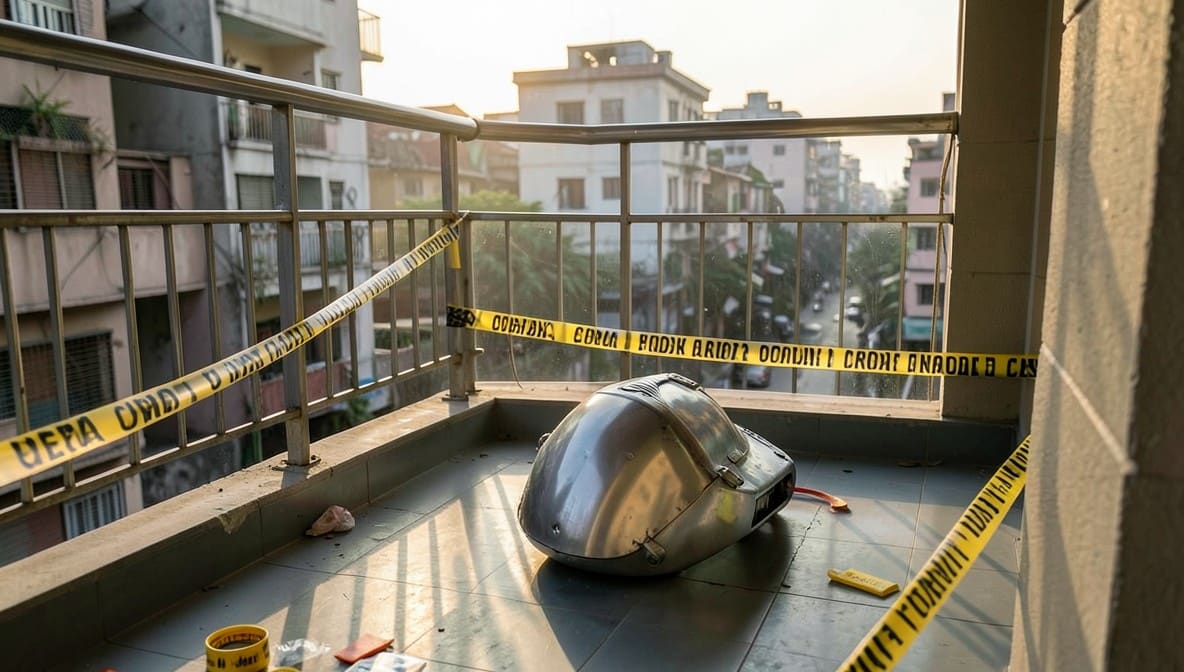
- On the night of 15/16.03.2025, Amrit Preet Singh drove the appellant to the complainant’s residence, where the appellant threw the grenade onto the balcony, which failed to explode.
Procedural History
- 15/16.03.2025: Alleged incident of grenade throwing at complainant’s residence.
- 17.03.2025: FIR No. 109/2025 registered; Bomb Disposal Team confirms live grenade; appellant arrested same day.
- 17.03.2025: DDR No. 26 records nomination of appellant as accused.
- 18.03.2025: Co-accused Dheeraj Kumar, Santosh Kumar, and Lachhmi arrested.
- 06.06.2025: Additional Sessions Judge, Jalandhar, rejects bail application.
- 05.03.2026: Custody certificate submitted, confirming appellant’s custody of approximately one year.
- 28.03.2026: Present appeal filed before the Punjab and Haryana High Court.
The Parties' Positions
For the Appellant
- Argues that evidence is based solely on confidential police reports with no direct eyewitness or forensic link to the appellant.
- Claims the object thrown was not conclusively proven to be a hand grenade.
- Highlights that the only physical recovery was a motorcycle, not the grenade.
- Seeks bail on grounds of prolonged custody (approx. one year) and absence of prima facie evidence.
For the Respondent (State)
- Contends that the use of a live hand grenade constitutes a grave threat to public safety and national security.
- Relies on the disclosure statement of co-accused Amrit Preet Singh, corroborated by recovery of weapons and financial transaction.
- Points to the appellant’s prior criminal history: two prior FIRs involving arms and UAPA offences.
- Argues that granting bail would undermine the rule of law and embolden terror-related activities.
Relief Sought
The appellant seeks grant of regular bail in FIR No. 109/2025, arguing that his prolonged custody and lack of direct evidence warrant release pending trial.
The Legal Issue
The central question was whether Section 43(D)(5) of the Unlawful Activities (Prevention) Act, 1967 bars bail when the prosecution presents prima facie evidence of involvement in a terrorist act involving a live explosive device, and the accused has prior criminal antecedents under similar statutes.
Arguments Presented
For the Appellant
The appellant’s counsel relied on the principle that bail is the rule and jail the exception, citing State of Rajasthan v. Balchand and Sanjay Chandra v. CBI. He argued that the prosecution’s case rests on uncorroborated confidential inputs and hearsay disclosures, with no recovery of the grenade or CCTV footage. He emphasized that the appellant’s custody has exceeded one year and that the charges under UAPA are not substantiated by tangible evidence.
For the Respondent
The State countered that the use of a live hand grenade in a residential area constitutes a terrorist act under Section 18 of UAPA, and the disclosure statement of the co-accused, coupled with financial trail and recovery of weapons, satisfies the threshold under Section 43(D)(5). It cited Union of India v. Barakathullah (2024) to argue that when the prosecution presents prima facie material indicating involvement in terrorism, bail must be denied even if custody is prolonged. The State further highlighted the appellant’s two prior criminal cases under arms and UAPA laws, establishing a pattern of violent conduct.
The Court's Analysis
The Court undertook a rigorous examination of the material on record, particularly the disclosure statement of co-accused Amrit Preet Singh, the financial transaction of Rs. 30,000 via Google Pay, and the recovery of weapons from the appellant’s possession. The Court noted that the appellant was not merely an associate but the direct actor who lobbed the grenade into a residential balcony - an act that, if successful, could have resulted in mass casualties.
"The usage of a hand grenade itself makes the offense heinous, creating an environment of terrorism, fear, and insecurity amongst the people."
The Court emphasized that Section 43(D)(5) of UAPA imposes a stringent condition: bail shall not be granted if the court is satisfied that there are reasonable grounds for believing the accusations are prima facie true. The Court found that the prosecution’s material - including the appellant’s nomination based on confidential input, the disclosure statement, the financial motive, and the recovery of arms - collectively satisfied this threshold.
The Court further distinguished this case from ordinary criminal offences, noting that the involvement of a foreign-based actor, the use of a military-grade explosive, and the targeting of a public figure through terror tactics elevate the matter to the realm of national security. The Court also considered the appellant’s prior criminal history, including two earlier FIRs under the Arms Act and UAPA, which demonstrated a recurring propensity for violent, unlawful conduct.
The Court rejected the argument that prolonged custody alone entitles the accused to bail, holding that Section 43(D)(5) explicitly overrides the general principle of bail in cases involving terrorism. It relied on Union of India v. Barakathullah, where the Supreme Court held that even with over a year of custody, bail cannot be granted if the material prima facie supports the charge of terrorism.
The Court concluded that the order of the Additional Sessions Judge was neither illegal nor perverse, and that interference would be unwarranted.
The Verdict
The appeal is dismissed. The appellant’s bail application is rejected. The order dated 06.06.2025 of the Additional Sessions Judge, Jalandhar, rejecting bail is upheld. The appellant shall remain in custody pending trial. No interim relief is granted. The Court directs that the trial be expedited and completed within 12 months from the date of this judgment.
What This Means For Similar Cases
UAPA Bail Is Not a Right - It Is a Privilege Reserved for Exceptional Circumstances
- Practitioners must now treat Section 43(D)(5) UAPA as a near-absolute bar to bail when a live explosive device is involved, regardless of custody duration.
- Mere delay in trial does not override the statutory mandate under UAPA if the prosecution presents prima facie evidence of terrorist intent.
Prior Criminal History Under Arms or UAPA Statutes Is a Critical Factor
- A history of prior offences under the Arms Act, Explosive Substances Act, or UAPA will be treated as aggravating circumstances, not merely background.
- Courts will now routinely consider such antecedents as indicative of a continuing threat to public order.
Disclosure Statements and Financial Trails Are Sufficient for Prima Facie Case
- Even without direct eyewitnesses or forensic recovery of the weapon, a disclosure statement by a co-accused, corroborated by financial evidence and mobile data, can satisfy the threshold under Section 43(D)(5).
- Confidential inputs, when combined with corroborative material, are now legally sufficient to justify denial of bail.
The Target Matters: Attacks on Public Figures Are Treated as Terrorism
- Targeting social media influencers, journalists, or public figures with explosives will be viewed as acts designed to instill societal fear, thereby triggering UAPA’s stringent bail regime.
- Courts will not distinguish between attacks on government officials and public influencers when the method involves terror tactics.
Procedural Delays Do Not Entitle Accused to Bail in UAPA Cases
- The Court explicitly rejected the argument that prolonged custody (even one year) mandates bail.
- Practitioners must now argue for trial expeditiousness, not bail, in UAPA cases involving explosives.