The Gauhati High Court has reaffirmed that in cases under the Unlawful Activities (Prevention) Act, 2023, bail cannot be denied merely on the basis of suspicion or unverified allegations. The judgment underscores that the threshold for denying bail under stringent statutes like UAPA requires concrete, prima facie evidence linking the accused to terrorist activity - not speculative inferences drawn from cash possession.
Background & Facts
The Dispute
The accused applicants, Anowar Hussain and Malikuddin Sheikh, were arrested on 29.01.2026 in connection with Basistha P.S. Case No. 42/2026 under Section 147 of the BNS, 2023 read with Sections 15, 16, 17, and 18 of the Unlawful Activities (Prevention) Act, 1967. The police alleged that Rs. 70,88,000 in cash and nine cheques worth Rs. 43,00,000 recovered from their vehicle were intended for terrorist funding. The accused were remanded to police custody for five days and subsequently to judicial custody.
Procedural History
- 28.01.2026: Vehicle intercepted on NH-27 at 9th Mile; cash and cheques seized
- 29.01.2026: FIR registered; accused arrested and produced before District Judge
- 02.02.2026: Remanded to judicial custody
- 20.02.2026: Bail application heard before Gauhati High Court
- 24.02.2026: Judgment delivered
Relief Sought
The petitioners sought bail on grounds that the recovered funds were proceeds from a legitimate land sale and that no tangible evidence connected them to terrorist activities. They argued that their detention was arbitrary and violated the principle of presumption of innocence.
The Legal Issue
The central question was whether Section 43D(5) of the Unlawful Activities (Prevention) Act permits denial of bail solely on the basis of uncorroborated suspicion and speculative allegations, or whether the prosecution must establish a prima facie case linking the accused to terrorist activity.
Arguments Presented
For the Petitioner
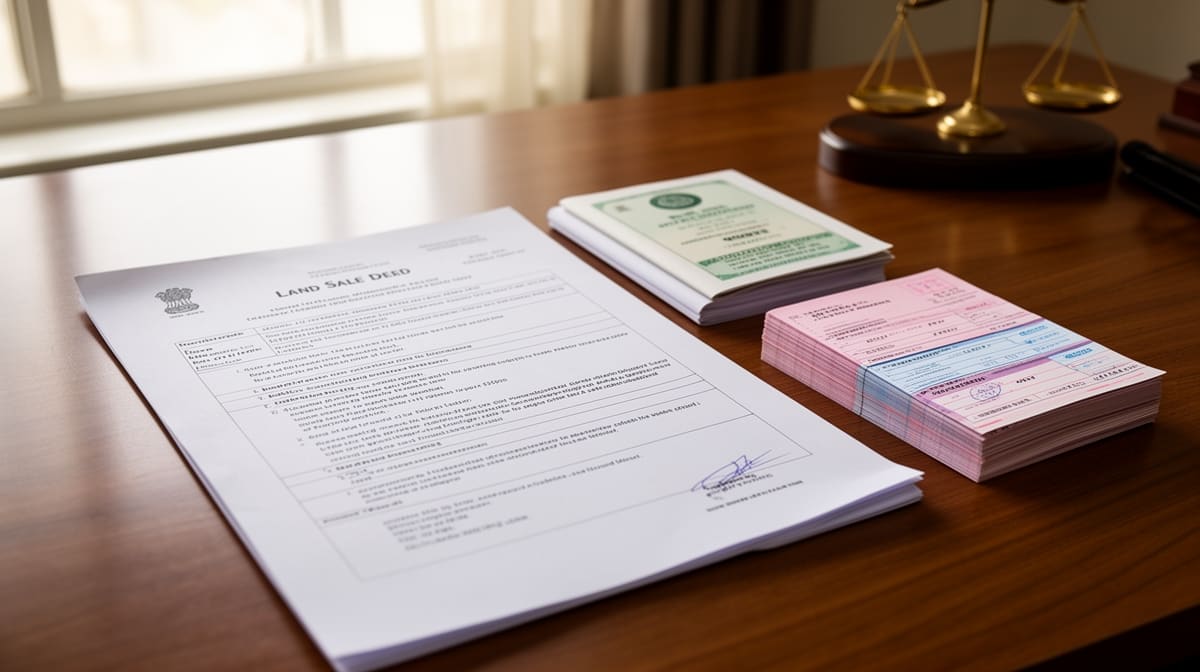
The petitioner’s counsel relied on Thwaha Fasal v. Union of India to argue that bail cannot be denied unless there are reasonable grounds to believe the accusation is prima facie true. They submitted documentary evidence - land sale deed, bank loan records, and property purchase records - to prove the cash and cheques were proceeds of a lawful transaction. They emphasized that no incriminating material was recovered from the accused’s persons or residences, and that the confessional statements lacked corroboration.
For the Respondent
The State contended that the total amount recovered (over Rs. 1.3 crore) exceeded the declared sale consideration (Rs. 60 lakh), raising suspicion of illicit funding. The Additional Public Prosecutor argued that the investigation was nascent, the cheques were yet to be verified, and the confessional statements indicated intent to fund a Jihadi organization. They asserted that UAPA cases demand strict bail control due to national security implications.
The Court's Analysis
The Court examined the materials in the Case Diary and found no direct evidence connecting the accused to any terrorist organization or activity. While acknowledging the seriousness of UAPA offences, the Court held that the burden to establish a prima facie case rests squarely on the prosecution. The Court distinguished between mere possession of large sums and proof of criminal intent.
"It is seen that though the Accused Applicants were in police custody for five (5) days and in judicial custody for the last eighteen (18) days, the police are yet to gather any convincing materials implicating the Accused Applicants in any terrorist activities. At least, no such prima facie material is available in the Case Diary before this Court."
The Court applied the test laid down in Thwaha Fasal v. Union of India, emphasizing that bail is the rule and custody the exception, even in UAPA cases. The absence of recovered weapons, communications, organizational links, or financial trails to terror networks rendered the allegations speculative. The Court noted that the overdraft loan and land sale documents provided a plausible, lawful explanation for the funds.
The Verdict
The petitioners won. The Court held that denial of bail under UAPA requires prima facie evidence of involvement in terrorist activity, not suspicion or unverified confessions. The accused were granted bail on conditions ensuring cooperation with the investigation.
What This Means For Similar Cases
Prima Facie Evidence Is Non-Negotiable
- Practitioners must insist that the prosecution produce tangible, corroborated evidence linking the accused to terrorist acts before opposing bail
- Mere possession of cash or cheques, even in large amounts, cannot substitute for proof of intent or association
- Courts must scrutinize whether the prosecution’s theory is supported by material evidence or is based on conjecture
Confessions Alone Are Insufficient
- Uncorroborated confessions, especially those recorded without legal safeguards, cannot form the basis for denying bail
- The Court’s reliance on the absence of corroborative evidence signals a shift toward stricter evidentiary standards in UAPA bail hearings
- Defence counsel should challenge the admissibility and reliability of confessional statements at the earliest opportunity
Documentary Evidence Prevails Over Allegations
- Land sale deeds, bank statements, and loan documents can effectively rebut prosecution narratives in financial UAPA cases
- Courts are increasingly willing to accept credible documentary trails as proof of lawful origin of funds
- Practitioners should proactively compile and submit financial histories, property records, and transactional evidence in bail applications under UAPA