The Delhi High Court has held that a trial court returning a plaint under Order VII Rule 10 CPC may only determine its own territorial jurisdiction and cannot issue a conclusive finding on the jurisdiction of all courts in Delhi. This clarification impacts how parties plead and argue jurisdiction in commercial disputes.
Background & Facts
The Dispute
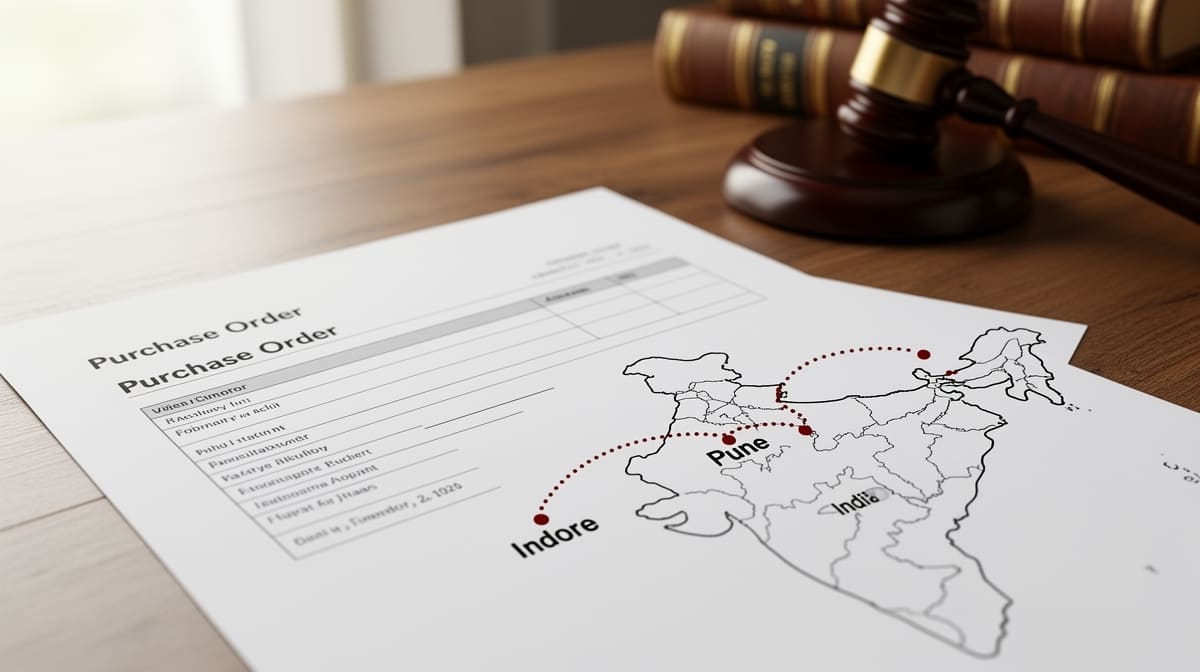
The petitioner, Sudhir Kumar, proprietor of M/s Vijay Iron Works, entered into two purchase orders dated 12.08.2021 with respondents Monika Makkar (R-1) and another respondent (R-2) for supply of structural material and execution of installation and fabrication works for a studio project at FC-7, Sector-16A, Film City, Noida, Uttar Pradesh. The purchase orders were issued from Delhi, the goods were supplied from Delhi, and payments amounting to approximately Rs. 66.26 lakhs were remitted by Respondent No. 1 through RTGS into the petitioner’s HDFC Bank account at Saket, New Delhi. The invoices contained a clause stipulating that disputes would be subject to the jurisdiction of the Courts at Delhi.
Key Facts
- 12.08.2021: Two purchase orders issued in favour of the petitioner.
- Payments: Substantial sums (≈ Rs. 66.26 lakhs) received by RTGS into HDFC Bank, Saket.
- Work Completed: Structural fabrication and installation completed; additional works undertaken on respondents’ instructions.
- Outstanding Dues: Plaintiff claimed Rs. 32,80,065 as principal outstanding plus interest.
- Legal Notice: Issued by petitioner before filing suit.
- Cause of Action: Alleged non-payment and retention of tools, machinery, and scrap by Respondent No. 3.
Procedural History
- CS(COMM) No. 379/2025: Petition filed before the District Judge (Commercial-06), South-East District, Saket Courts (Trial Court) seeking recovery of dues.
- 07.08.2025: Trial Court held that South-East District, Saket lacked territorial jurisdiction and further recorded that no Court in Delhi possessed jurisdiction; returned the plaint under Order VII Rule 10 CPC.
- 23.08.2025: Trial Court dismissed the petitioner’s application under Order VII Rule 10A CPC seeking fixation of a hearing date before South District, Saket, and directed return of the plaint.
- FAO (COMM) 279/2025: Appellant filed appeal under Order XLIII Rule 1(a) CPC read with Section 13 of the Commercial Courts Act, 2015, challenging the 07.08.2025 order.
- CM(M) 1936/2025: Writ petition under Article 227 of the Constitution challenging the 23.08.2025 order.
- 08.12.2025: High Court ordered both proceedings to be heard together.
- 28.07.2026: Judgment delivered.
Parties' Positions
- Petitioner/Appellant: Argues that the trial court exceeded its jurisdiction by conclusively stating that no Delhi court has jurisdiction; contends that receipt of payments in Delhi creates a cause of action within South District, Saket.
- Respondents: Maintain that the entire cause of action arose in Noida; allege suppression of material facts by petitioner; assert that the trial court correctly limited its enquiry to its own jurisdiction.
Relief Sought
The petitioner sought:
- Modification of the 07.08.2025 order to limit the jurisdictional finding to South-East District, Saket only.
- Confirmation that the 23.08.2025 order should not be interfered with.
- Dismissal of the writ petition.
The Legal Issue
What is the proper scope of a trial court’s jurisdictional finding when it returns a plaint under Order VII Rule 10 CPC - can it conclusively determine that no Court in Delhi possesses territorial jurisdiction, or must it limit its finding to its own territorial jurisdiction only?