The Calcutta High Court has clarified a critical procedural safeguard in civil litigation: the proviso to Order XXXIX Rule 4 of the Code of Civil Procedure cannot be invoked to vacate an ex parte interim injunction. This ruling reinforces the distinction between injunctions granted after notice and those granted without it, ensuring that litigants are not deprived of remedies based on misapplied legal standards.
Background & Facts
The Dispute
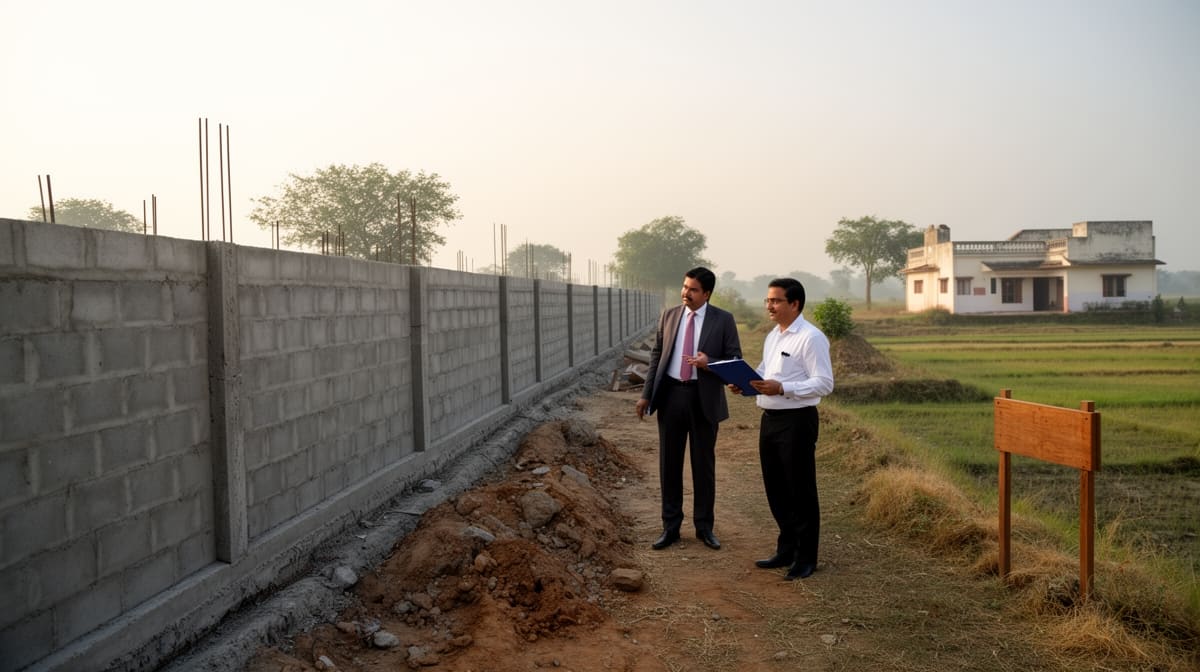
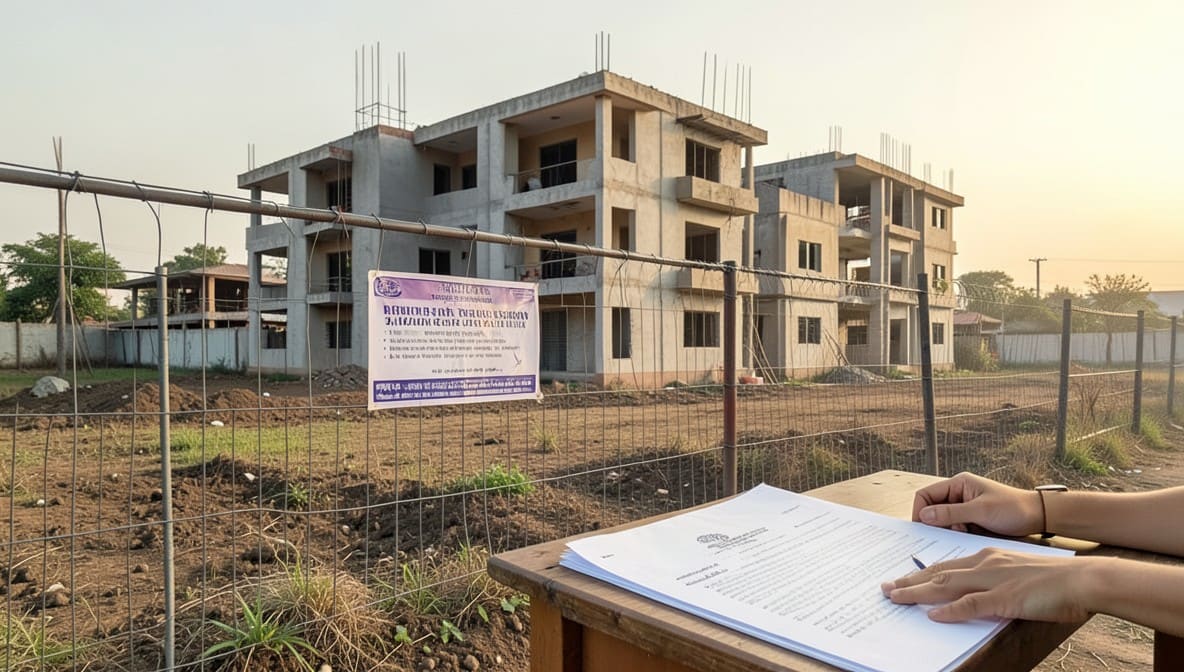
The dispute arose from a title suit concerning a residential property in Arambagh, Hooghly District. The plaintiff (respondent no. 1) filed a suit for permanent injunction seeking to restrain the defendant (appellant, defendant no. 1) from constructing on the suit property. Prior to any hearing, the plaintiff applied for and obtained an ad interim injunction on July 17, 2020, which was granted ex parte, as the defendant was not present.
Key Facts
- The suit was filed in Title Suit No. 54 of 2020 before the Civil Judge (Senior Division), Arambagh
- The ad interim injunction order was passed on 17.07.2020 ex parte, without notice to the defendant
- The defendant alleged that, prior to the injunction, he had substantially constructed a building on the property, including erection of concrete pillars, casting of the roof, and completion of approximately half the structure
- On 28.04.2025, the defendant filed an application under Order XXXIX Rule 4 CPC seeking variation, modification, or vacation of the ex parte injunction
- The application included an undertaking that the defendant would not claim any equity if permitted to complete construction
- The Trial Judge dismissed the application on 02.05.2025
- The dismissal order was cryptic, citing the proviso to Order XXXIX Rule 4 CPC and stating the application did not disclose a "clear picture" justifying its invocation
- The defendant filed FMAT No. 424 of 2025 challenging the dismissal and CAN 1 of 2025 seeking condonation of delay
- A separate application for condonation of delay (CAN 2 of 2025) was filed for the delay in preferring FMAT No. 424 of 2025
Procedural History
- 17.07.2020: Ad interim injunction granted ex parte by Trial Court
- 28.04.2025: Defendant filed application under Order XXXIX Rule 4 CPC seeking vacation of injunction
- 02.05.2025: Trial Court dismissed application with cryptic reasoning invoking proviso to Order XXXIX Rule 4 CPC
- 05.05.2025: Defendant filed FMAT No. 424 of 2025 before Calcutta High Court
- 15.05.2025: Defendant filed CAN 1 of 2025 for condonation of delay in filing FMAT
- 18.05.2025: Defendant filed CAN 2 of 2025 for condonation of delay in preferring FMAT
- 06.04.2026: Hearing before Division Bench of Calcutta High Court
Relief Sought
The appellant sought:
- Setting aside of the impugned order dated 02.05.2025
- Vacation or modification of the ex parte injunction
- Direction to the Trial Court to hear the application under Order XXXIX Rule 4 CPC on its merits
The Legal Issue
The central question was whether the proviso to Order XXXIX Rule 4 of the Code of Civil Procedure can be applied to vacate an ad interim injunction granted ex parte, or whether it is limited only to injunctions passed after contest.
Arguments Presented
For the Appellant
The appellant’s counsel argued that the Trial Court erred in applying the proviso to Order XXXIX Rule 4 CPC, which explicitly applies only to injunctions granted after notice and contest. The ex parte nature of the injunction rendered the proviso inapplicable. The appellant further submitted that substantial construction had already been completed before the injunction, and the dismissal order failed to engage with the factual allegations or the undertaking given. Reliance was placed on the principle that procedural fairness requires courts to apply the correct legal framework.
For the Respondent
The respondent’s counsel contended that the construction was undertaken after the filing of the suit and was therefore in violation of the status quo. He argued that the Trial Court’s discretion in refusing vacation should be upheld, and that the appellant’s undertaking not to claim equity was insufficient to override the plaintiff’s right to protect the subject matter of the suit. He did not dispute the ex parte nature of the injunction but sought to justify the dismissal on factual grounds.
The Court's Analysis
The Division Bench of the Calcutta High Court undertook a rigorous textual and contextual analysis of Order XXXIX Rule 4 CPC and its proviso. The Court observed that the proviso applies only when the ad interim injunction has been granted after notice and contest. In this case, the injunction was granted ex parte, as the defendant was not present at the hearing on 17.07.2020.
"The proviso to Order XXXIX Rule 4 of the Code, which applies in respect of ad interim injunction orders passed on contest, which has been quoted in bold letters in the impugned order, is not attracted to the present case at all, since the ad interim order sought to be vacated was passed ex parte, in the absence of the defendant no. 1/appellant, and not on contest."
The Court held that the Trial Judge’s reliance on the proviso was legally untenable. The reasoning in the impugned order was described as "cryptic" and "unintelligible," failing to address the factual matrix or the legal threshold required under the main body of Order XXXIX Rule 4, which permits modification or vacation of an injunction if the court is satisfied that the circumstances have changed.
The Court further noted that affidavits and local commissioner reports had already been filed in the trial court, indicating that the matter was ripe for adjudication. Rather than remanding the matter for a fresh hearing on the Rule 4 application alone, the Court directed that the application be heard along with the pending temporary injunction application, to avoid multiplicity of proceedings and ensure expeditious justice.
The Verdict
The appellant succeeded. The Calcutta High Court set aside the impugned order dated 02.05.2025 passed by the Civil Judge (Senior Division), Arambagh. The Court directed the Trial Judge to rehear and dispose of the application under Order XXXIX Rule 4 CPC afresh on its merits, concurrently with the pending temporary injunction application, as expeditiously as the court’s business permits. There will be no order as to costs. CAN 1 of 2025 and CAN 2 of 2025 were disposed of accordingly.
What This Means For Similar Cases
Proviso to Order XXXIX Rule 4 CPC Applies Only to Contest Orders
- Practitioners must now argue that any attempt to invoke the proviso to Order XXXIX Rule 4 CPC against an ex parte injunction is legally invalid
- Courts must distinguish between injunctions granted after notice and those granted without notice
- Applications under Order XXXIX Rule 4 CPC must be adjudicated under the main body of the rule when the injunction is ex parte
Trial Courts Must Provide Clear Reasoning for Injunction Orders
- Cryptic or conclusory orders dismissing applications under Order XXXIX Rule 4 CPC will be set aside
- Courts must engage with factual submissions and legal provisions explicitly
- Failure to apply the correct legal test constitutes a jurisdictional error
Concurrent Hearing of Rule 4 Applications and Injunction Matters Is Permissible
- Where the record is complete and affidavits are exchanged, courts may consolidate the hearing of Rule 4 applications with the main injunction matter
- This avoids delay and promotes judicial efficiency
- Practitioners should seek such consolidation where appropriate to prevent procedural stagnation