The Kerala High Court has reaffirmed that temple grounds under the Travancore Devaswom Board cannot be utilized for programmes perceived as political or communal in nature, even when framed as religious gatherings. This judgment clarifies the boundaries of religious expression on state-managed religious property and reinforces the statutory authority of the Board to regulate usage under its administrative mandate.
Background & Facts
The Dispute
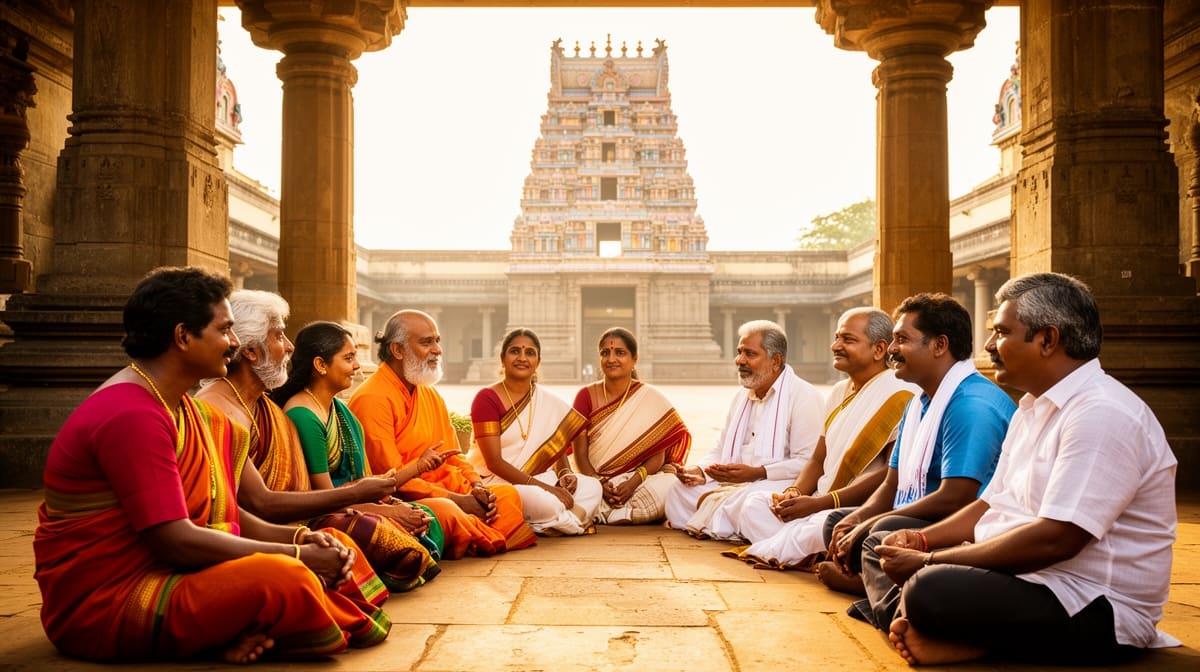
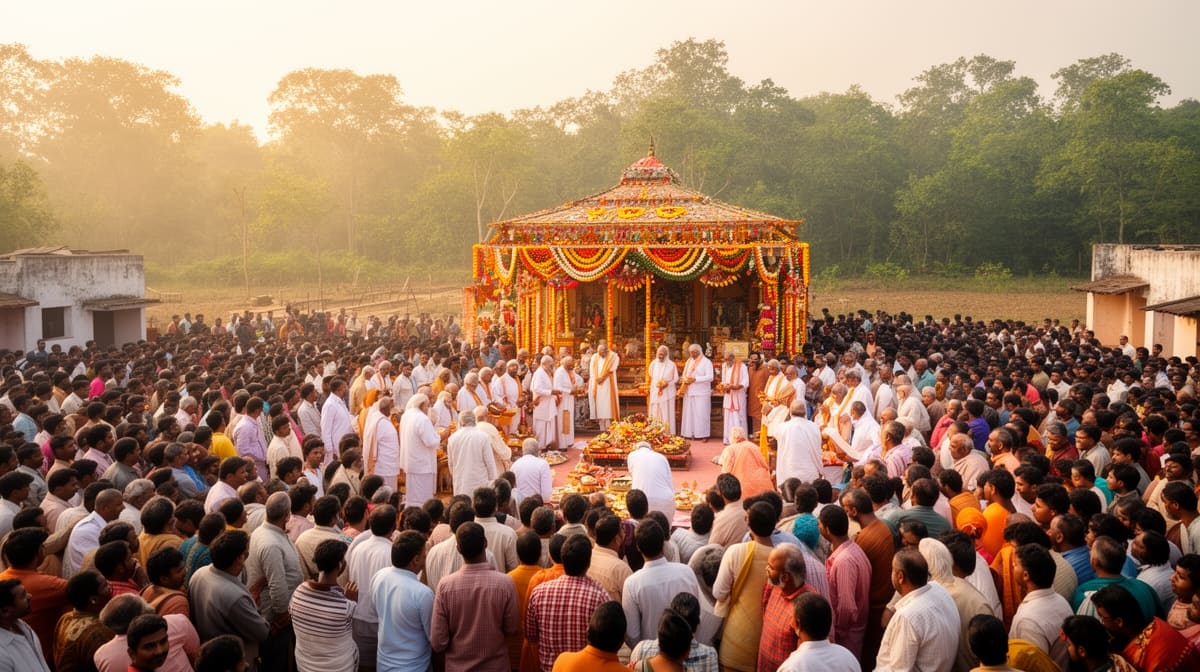
The petitioner, Rajesh S., sought permission to conduct a "Hindu Ekatha Sammelan" - a spiritual summit featuring discourses by Sanyasis and Bhajans - at the Nediyanickal Bhagavathy Temple ground on 1 March 2026. He submitted a request (Ext.P1) to the Temple Advisory Committee, which endorsed the proposal (Ext.P2). However, the Travancore Devaswom Board rejected the request via order dated 13 February 2026 (Ext.P3), citing non-compliance with its 2013 circular.
Procedural History
- 16 January 2026: Petitioner submits request to Temple Advisory Committee.
- 25 January 2026: Committee approves request (Ext.P2).
- 13 February 2026: Travancore Devaswom Board denies permission (Ext.P3), invoking Circular dated 18.03.2013.
- 26 February 2026: Writ petition filed under Article 226 before the Kerala High Court.
Relief Sought
The petitioner sought: (a) quashing of Ext.P3 order via writ of certiorari; and (b) a writ of mandamus directing the Board to permit the event, relying on the Committee’s approval and Section 24 of the Travancore Cochin Hindu Religious Institutions Act.
The Legal Issue
The central question was whether the Travancore Devaswom Board acted ultra vires or arbitrarily in denying permission for a spiritual gathering on temple grounds, given its 2013 circular prohibiting use by political or communal organizations, and whether the petitioner had a legal right under the Act to compel such permission.
Arguments Presented
For the Petitioner
The petitioner’s counsel argued that the event was purely religious and aimed at cultural upliftment of the Hindu community, protected under Section 24 of the Travancore Cochin Hindu Religious Institutions Act, which mandates the Board to promote social and cultural advancement. They contended that the Board had permitted secular events like the Onam Agricultural Festival, making the denial discriminatory and arbitrary. They further asserted that the Temple Advisory Committee’s approval conferred legitimacy.
For the Respondent
The Standing Counsel for the Board countered that the proposed event was being organized at the behest of a political entity, invoking the Board’s 2013 circular which explicitly bars temple grounds from being used by political parties or communal organizations. They emphasized that the petitioner never applied to the Board directly, bypassing statutory procedure. The circular, they argued, was a valid exercise of administrative control under Sections 15A, 16, and 31 of the Act, and the Board’s discretion was not arbitrary.
The Court's Analysis
The Court examined the statutory framework under the Travancore-Cochin Hindu Religious and Charitable Endowments Act, 1950. It noted that Section 15A imposes duties on the Board to ensure proper functioning of religious institutions, while Section 31 entrusts it with management of temple properties and affairs. The Board’s authority to regulate usage of temple premises is not merely administrative but statutory.
The Court held that the petitioner’s application was submitted to the Temple Advisory Committee, which has no statutory power to grant permissions for non-religious events on temple grounds. Only the Board, under Section 16, exercises supervisory control over such matters.
The 2013 circular, though not a statute, was found to be a reasonable administrative guideline consistent with the Act’s objectives. The Court observed:
"The circular prohibits the use of temple premises for programmes organised by political organisations or communal bodies. The petitioner’s failure to demonstrate that the event is free from any political or communal overtones, coupled with the absence of a direct application to the Board, renders the rejection lawful."
The Court distinguished Dr. Raj Shivendra Bahadur v. Governing Body of Nalanda College, emphasizing that a writ of mandamus requires a clear legal duty and a corresponding legal right - neither of which the petitioner established. The Board’s decision was not malafide or irrational; it was grounded in a long-standing policy to prevent misuse of religious spaces.
The Verdict
The petition was dismissed. The Court held that the Travancore Devaswom Board acted within its statutory authority in rejecting the application, and the petitioner failed to establish a legal right to compel permission under the Act. The 2013 circular remains a valid administrative instrument to safeguard temple premises from politicization.
What This Means For Similar Cases
Religious Events Must Be Purely Devotional
- Practitioners must ensure that any event on temple grounds is demonstrably religious, not cultural, political, or social in disguise.
- Organizers must submit applications directly to the Devaswom Board - not to advisory committees - to satisfy procedural requirements.
- Evidence of political affiliations, even indirect, will trigger application of the 2013 circular.
Administrative Circulars Carry Legal Weight
- Administrative circulars issued under statutory authority are binding if they align with the parent Act’s objectives.
- Courts will uphold such circulars unless they are manifestly arbitrary or ultra vires.
- The Board’s discretion to deny usage based on perceived communal or political intent is protected under Section 16.
Non-Discrimination Claims Require Comparative Evidence
- Merely showing that other events (e.g., Onam Festival) were permitted does not establish discrimination unless the nature of the events is identical in purpose and character.
- The Court distinguished secular cultural festivals from spiritual summits that may attract political actors - a nuanced but critical distinction for future litigants.