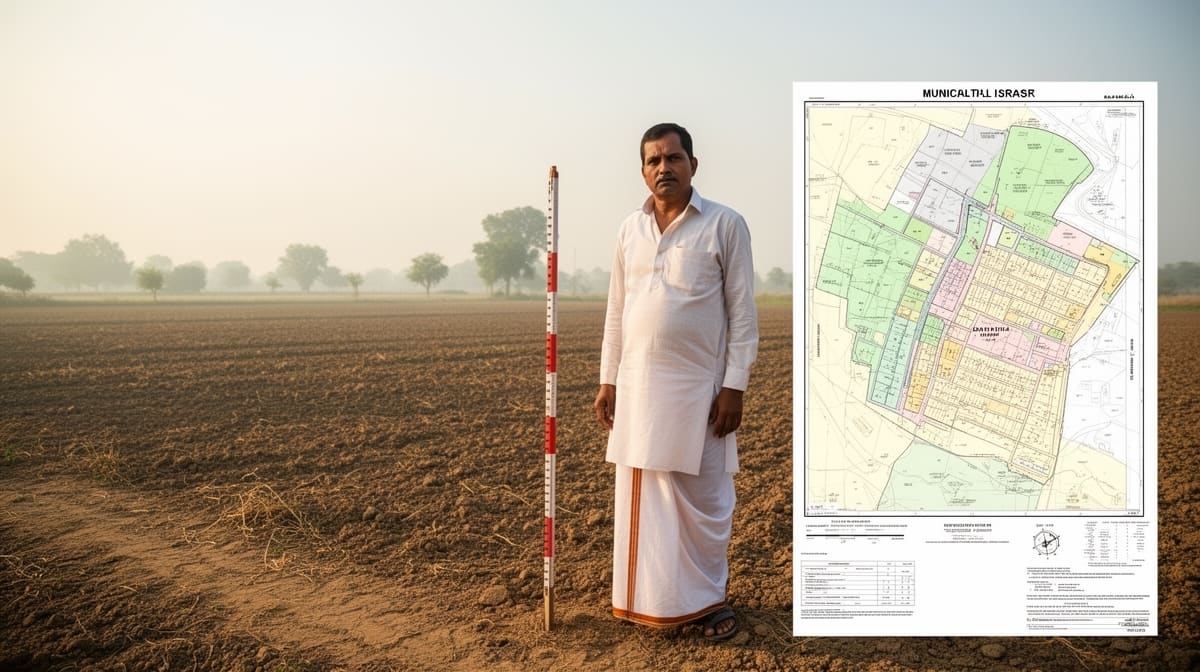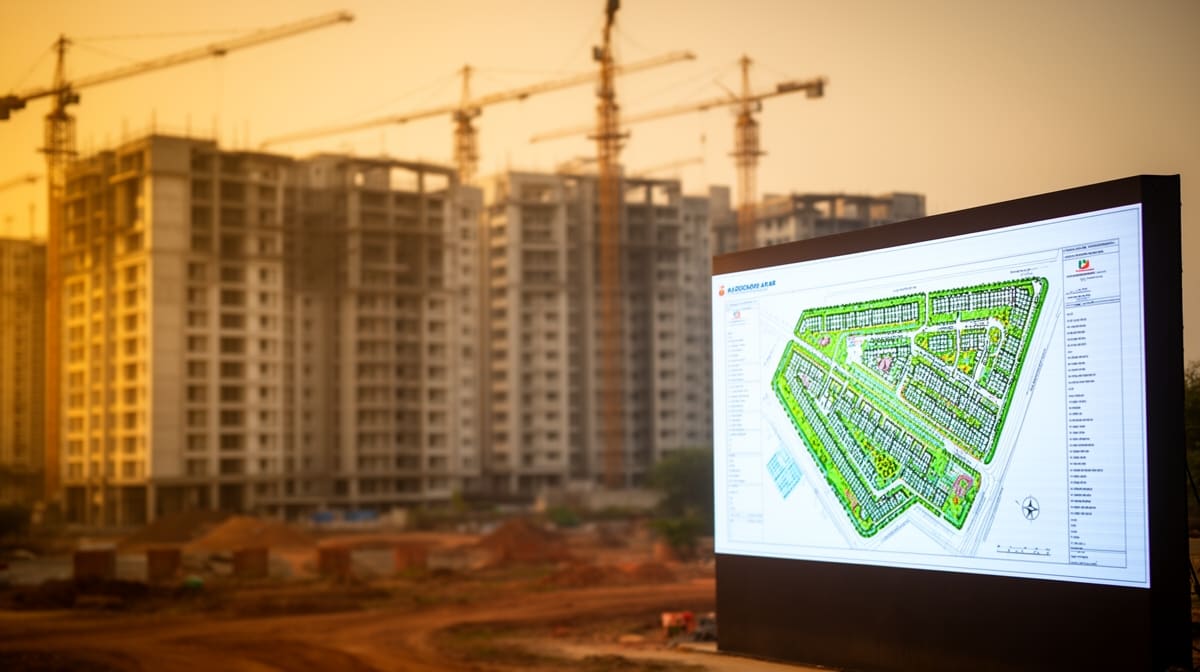
The Bombay High Court has affirmed the legal validity of a transitory regulatory mechanism allowing developers to utilise up to 75% of Transferable Development Rights (TDR) upon payment of a premium, rejecting constitutional and statutory challenges to its implementation under the Maharashtra Regional and Town Planning Act, 1966. The judgment clarifies the boundaries of delegated legislation in urban planning and reinforces the state’s authority to address market distortions in TDR availability.
Background & Facts
The Dispute
The dispute centres on Notification dated 7th October 2024, which inserted Clause 10.16 into the Unified Development Control and Promotion Regulations (UDCPR) for the Panvel Municipal Corporation area. This clause permits developers to utilise 75% of the permissible TDR component - specified in Table 6G of Regulation 6.3 - by paying a premium equivalent to 60% of the Annual Schedule of Rates (ASR), while mandating that the remaining 25% must be sourced from the open market or landowners. The provision is explicitly transitory, operative only until the final Development Plan for Panvel is sanctioned under Section 31(1) of the MRTP Act.
Procedural History
- 2nd December 2020: UDCPR was sanctioned for Maharashtra, including Panvel Municipal Corporation.
- 28th April 2023: CREDAI Banm-Raigad submitted a representation highlighting TDR scarcity in CIDCO areas.
- 5th September 2023: Panvel Municipal Corporation opposed TDR premium proposals, citing reduced land surrender incentives.
- 15th March 2024: Draft notification inviting public objections was issued under Section 37(1AA)(c) of the MRTP Act.
- 3rd July 2024: Bombay High Court stayed immediate implementation but permitted procedural continuation.
- 7th October 2024: Final Notification issued after receipt and consideration of 14 objections, public hearing, and recommendations from the Joint Director of Town Planning and Director of Town Planning.
- 2024 - 2025: Multiple writ petitions filed challenging the Notification on grounds of arbitrariness, ultra vires delegation, and violation of Article 300A.
Relief Sought
The petitioners sought quashing of the Notification, arguing that it undermined statutory TDR compensation under Section 126 of the MRTP Act, violated Article 14 and 300A of the Constitution, and constituted an illegal levy under Article 265. They contended that the mechanism effectively nullified landowners’ right to receive TDR as compensation and distorted market dynamics.
The Legal Issue
The central question was whether Section 37(1AA)(c) of the Maharashtra Regional and Town Planning Act, 1966 permits the State Government to introduce a transitory provision allowing developers to utilise a portion of TDR upon payment of premium, and whether such a measure violates Section 126, Article 14, or Article 300A of the Constitution.
Arguments Presented
For the Petitioner
Petitioners, led by Dr. Milind Sathe and Mr. Anil Anturkar, argued that Clause 10.16 fundamentally alters the statutory framework under Section 126, which provides TDR as compensation for land surrender, not as a tradable commodity subject to premium. They contended that the UDCPR, as delegated legislation, cannot override the parent statute by monetising TDR, which is meant to be non-monetary compensation. Reliance was placed on Bharti Tele-Ventures Ltd. and Amit Maru, which held that premium on TDR was ultra vires prior to the 2010 amendment to Section 22(m). Petitioners further asserted that the Notification was procedurally flawed, ignored objections, and violated Article 14 by creating arbitrary differentiation within the same municipal area.
For the Respondent
The State, represented by Mr. Ashutosh Kumbhakoni, defended the Notification as a legitimate exercise of power under Section 22(m) and Section 37(1AA). It argued that the provision merely introduces an optional source of TDR, not a replacement of statutory compensation. The State highlighted that 25% of TDR must still be sourced from landowners, preserving their incentive to surrender land. It cited Indian Express Newspapers and Dental Council of India to assert that delegated legislation is valid unless manifestly arbitrary or ultra vires. The State also noted that the 2010 amendment to Section 22(m) explicitly empowered authorities to levy premiums, rendering prior judgments inapplicable.
The Court's Analysis
The Court undertook a rigorous analysis of statutory intent, procedural compliance, and constitutional limits on delegated legislation. It first rejected the petitioners’ claim that the Notification constituted a compulsory acquisition under Section 126, noting that the communication to the petitioner was an invitation to agree, not a unilateral imposition.
"The value of TDR is governed by market forces of demand and supply. A regulatory measure that incidentally impacts commercial expectations or market valuation cannot, by itself, be a ground to invalidate delegated legislation under Article 14 of the Constitution of India."
The Court held that Section 22(m), as amended in 2010, expressly empowers the State to regulate development through fees, charges, and premiums. The impugned clause does not alter the base FSI or the total permissible TDR of 1.40; it merely offers an alternative source for 75% of that component. The Court distinguished between the source of TDR and its value, affirming that the statutory option under Section 126 remains intact: landowners may still surrender land for TDR, and developers may still purchase TDR from them.
The Court found no violation of Article 300A, as the right to property under this provision does not guarantee market value or commercial profit. It also rejected the argument that the premium constituted a tax under Article 265, noting that the payment is a regulatory charge for development rights, not a fiscal levy.
The Court further held that due process under Section 37(1AA) was fully complied with: public notice, receipt of objections, consultation with the Planning Authority, and a hearing. The judgment in Pushpam was distinguished as factually inapplicable. The Court emphasized that judicial review of delegated legislation is limited to arbitrariness, ultra vires, or constitutional violation - not policy wisdom.
The Verdict
The petitioners’ challenge failed. The Bombay High Court dismissed all writ petitions, upholding the validity of the Notification dated 7th October 2024. The Court held that Clause 10.16 is a lawful, transitory measure within the statutory framework of the MRTP Act, does not violate constitutional guarantees, and does not extinguish landowners’ rights under Section 126.
What This Means For Similar Cases
TDR Premium Is Not a Tax, But a Regulatory Charge
- Practitioners must distinguish between levies that are fiscal (requiring legislative authority under Article 265) and those that are regulatory (permissible under Section 22(m) of MRTP Act).
- Any challenge to TDR-based premiums must now focus on whether the authority has statutory power to impose such charges, not on whether the charge is "fair" or "market-aligned."
Statutory Compensation Options Remain Intact
- Landowners retain the right to surrender land for TDR under Section 126; the availability of a premium option does not negate this.
- Developers cannot be compelled to use the premium route; the 25% TDR requirement ensures continued demand for landowner-supplied TDR.
Delegated Legislation Must Be Manifestly Arbitrary to Be Struck Down
- Courts will not substitute policy judgment for that of planning authorities.
- Procedural compliance under Section 37(1AA) - notice, objections, consultation - is sufficient to validate amendments, even if controversial.
- Challenges based on economic impact alone, without proof of arbitrariness or ultra vires action, are unlikely to succeed.