Topic

legal aid

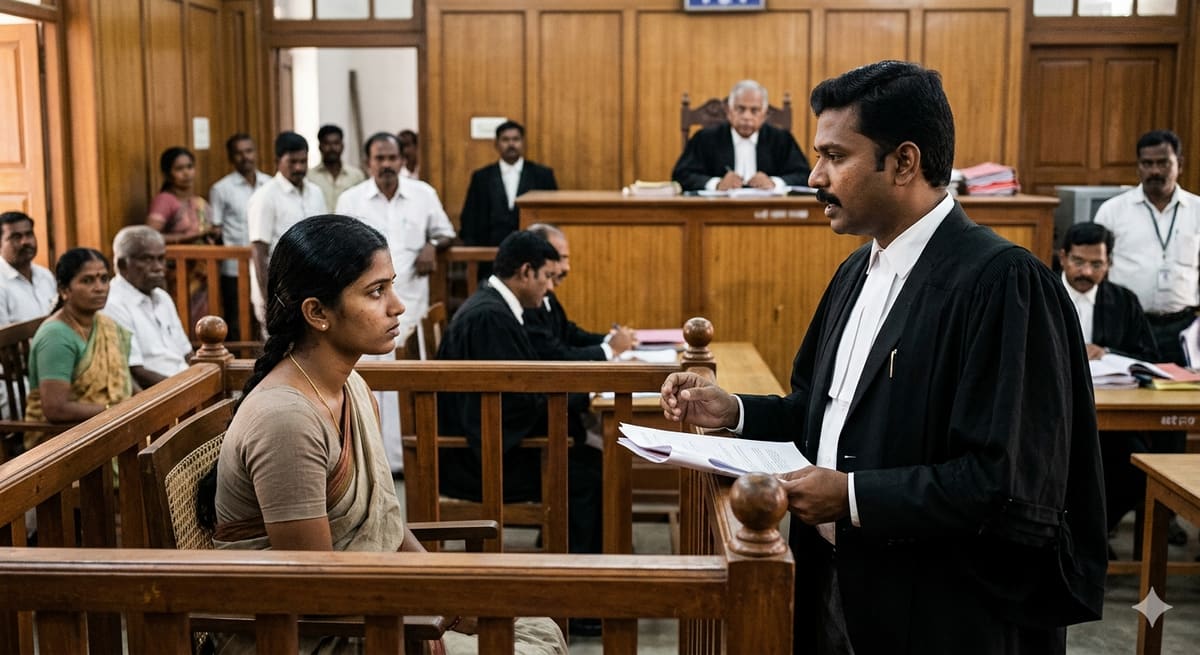
Legal aid in India ensures access to justice for indigent or marginalized individuals facing criminal or civil proceedings, as guaranteed under Article 21 and statutes like the Legal Services Authorities Act, 1987.

9 articlesLatest April 2026
Section 311 CrPC | Statutory Right to Cross-Examine Victims Survives Legal Aid Counsel's Inaction : Madurai HC
Case Law Analysis
|Madras High Court

Section 311 CrPC | Statutory Right to Cross-Examine Victims Survives Legal Aid Counsel's Inaction : Madurai HC

Madurai Bench of Madras High Court rules that administrative circulars cannot override an accused's statutory right under Section 311 CrPC to cross-examine witnesses, even when legal aid counsel fails to act. The judgment reinforces fair trial guarantees and mandates trial courts to permit recall of witnesses for cross-examination upon accused's request.


Section 5 Limitation Act | Illiteracy and Economic Hardship Constitute Sufficient Cause for Condoning Delay in Criminal Appeal: Meghalaya HC
Case Law Analysis
|Meghalaya High Court

Section 5 Limitation Act | Illiteracy and Economic Hardship Constitute Sufficient Cause for Condoning Delay in Criminal Appeal: Meghalaya HC

The Meghalaya High Court has ruled that an illiterate accused, serving as the sole breadwinner and unaware of legal rights, can rely on socio-economic vulnerability as sufficient cause to condone a 244-day delay in filing a criminal appeal. This sets a critical precedent for access to justice, ensuring that poverty and lack of legal education do not bar marginalized individuals from appealing convictions.

Section 5 Limitation Act | Indigence and Reliance on Legal Aid Constitute Sufficient Cause for Condoning 753-Day Delay in POCSO Appeal : Meghalaya HC
Case Law Analysis
|Meghalaya High Court

Section 5 Limitation Act | Indigence and Reliance on Legal Aid Constitute Sufficient Cause for Condoning 753-Day Delay in POCSO Appeal : Meghalaya HC

The Meghalaya High Court has ruled that extreme poverty and dependence on legal aid constitute sufficient cause under Section 5 of the Limitation Act to condone a 753-day delay in filing a POCSO appeal. This sets a critical precedent for marginalized accused persons who cannot afford private counsel, affirming that economic disadvantage cannot bar access to appellate justice under India’s child protection laws.

Article 21 | Right to Legal Aid Mandates De Novo Trial in Death Penalty Case for Fair Trial Violation : Bombay HC
Case Law Analysis
|Bombay High Court

Article 21 | Right to Legal Aid Mandates De Novo Trial in Death Penalty Case for Fair Trial Violation : Bombay HC

Bombay High Court sets aside a death sentence after finding gross violations of the accused's right to legal aid under Article 21, emphasizing that fair trial guarantees are non-negotiable in capital punishment cases. The ruling mandates a fresh trial, reinforcing that procedural lapses cannot compromise constitutional rights, especially where liberty or life is at stake.

Section 15 Consumer Protection Act | Delay Condonation Requires Bona Fide Cause with Documentary Proof : Delhi State Commission
Case Law Analysis
|Delhi High Court

Section 15 Consumer Protection Act | Delay Condonation Requires Bona Fide Cause with Documentary Proof : Delhi State Commission

Delhi State Consumer Disputes Redressal Commission dismisses an appeal filed 109 days late, ruling that relocation for employment and reliance on legal aid without documentary evidence do not constitute sufficient cause for condonation of delay. The decision underscores the need for appellants to substantiate delays with verifiable proof to avoid dismissal under Section 15 of the Consumer Protection Act.

BNSS Section 438 | Jail Incarceration Without Legal Aid Justifies Liberal Delay Condonation in Criminal Appeals : Telangana HC
Case Law Analysis
|Telangana High Court

BNSS Section 438 | Jail Incarceration Without Legal Aid Justifies Liberal Delay Condonation in Criminal Appeals : Telangana HC

Telangana High Court condoned a 180-day delay in filing a criminal appeal, holding that systemic deprivation of legal aid for an incarcerated accused constitutes sufficient cause under BNSS. The ruling reinforces the right to appeal as a fundamental liberty under Article 21, mandating liberal condonation where access to justice is structurally denied.