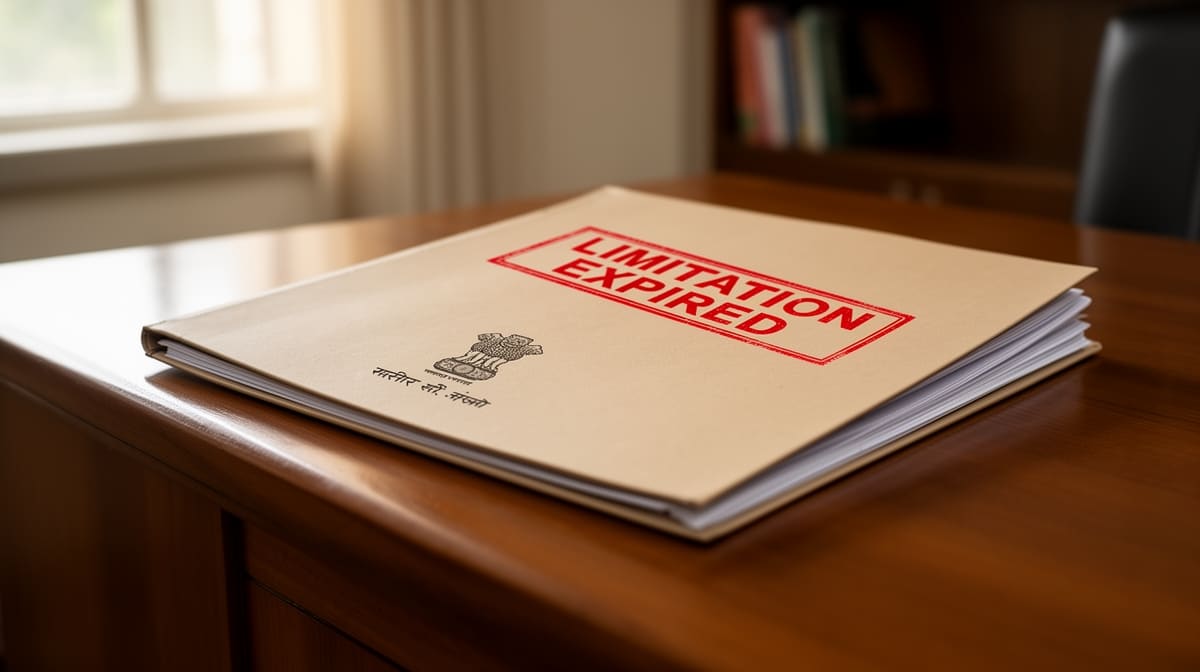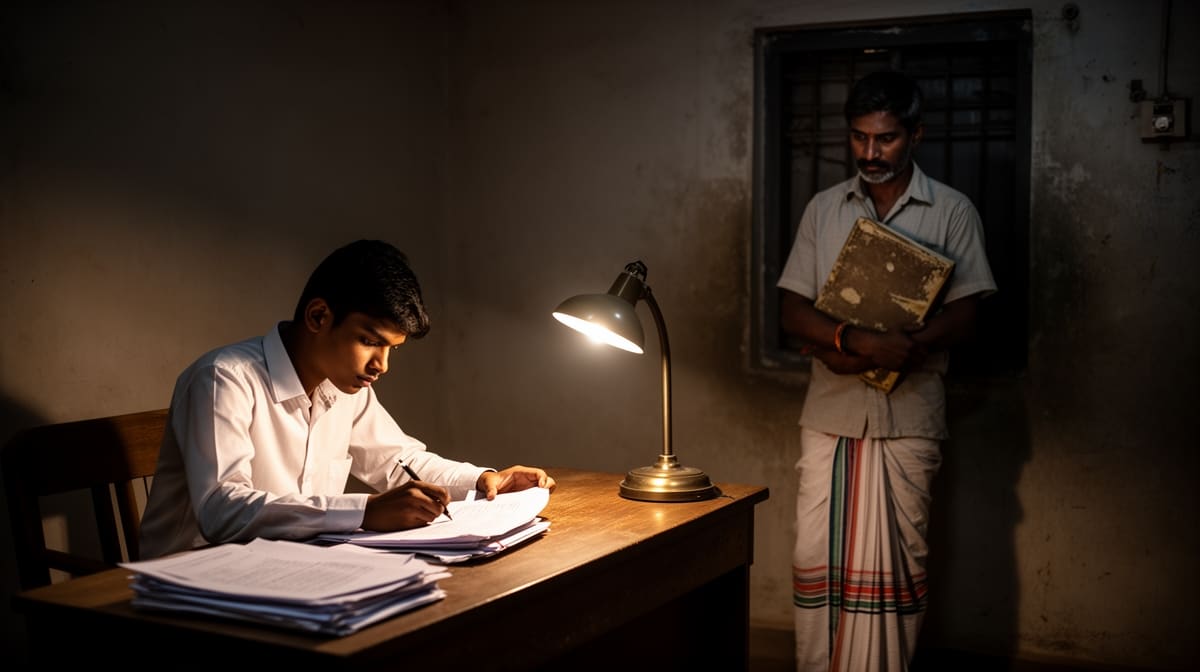
The Meghalaya High Court's recent decision in Rajesh Lamin v. State of Meghalaya establishes that financial inability to engage private counsel constitutes sufficient cause for condoning delay in criminal appeals. This judgment clarifies the application of Section 5 of the Limitation Act, 1963 to appellate proceedings under special statutes like the Protection of Children from Sexual Offences Act, 2012 (POCSO Act).
Background & Facts
The Conviction
The applicant, a laborer from East Jaintia Hills District, was convicted under Sections 3 and 4 of the POCSO Act by the Special Judge (POCSO), Khliehriat. The trial court sentenced him to 15 years' imprisonment with fine in December 2024. The severity of the sentence and the applicant's economic status became central to the subsequent legal proceedings.
Procedural History
The case followed this trajectory:
- December 2024: Conviction and sentencing by Special POCSO Court
- 2025: Applicant sought legal aid due to financial constraints
- 2026: Appeal filed with a 368-day delay before the Meghalaya High Court
- February 2026: High Court condones delay and admits appeal for hearing
Relief Sought
The applicant sought two primary reliefs:
- Condonation of 368-day delay in filing the appeal, citing financial inability to engage private counsel
- Admission of the appeal against the POCSO conviction for hearing on merits
The Legal Issue
The court confronted a dual question:
- Whether Section 5 of the Limitation Act, 1963 applies to appeals under special statutes like the POCSO Act, which prescribe no limitation period
- If applicable, whether the applicant's financial constraints and reliance on legal aid constitute sufficient cause for condoning the delay
Arguments Presented
For the Applicant
Ms. S. Nongsiej, Legal Aid Counsel, advanced these contentions:
- The applicant's economic vulnerability as a laborer prevented timely engagement of private counsel
- The delay was not willful but resulted from systemic constraints in accessing legal aid
- Section 5 of the Limitation Act should apply by analogy to criminal appeals, even under special statutes
- The right to appeal under Article 21 of the Constitution would be rendered illusory without condonation
For the Respondent
Mr. H. Kharmih, Additional Public Prosecutor, adopted a neutral stance:
- No objection was raised to the condonation of delay
- The State acknowledged the applicant's financial incapacity as a valid ground
- No counter-arguments were presented regarding the applicability of Section 5 or the sufficiency of cause
The Court's Analysis
The Division Bench, comprising Justices W. Diengdoh and B. Bhattacharjee, conducted a two-pronged analysis:
- Applicability of Section 5 to POCSO Appeals The Court implicitly accepted that Section 5 of the Limitation Act applies to criminal appeals under special statutes like the POCSO Act, despite the absence of an express limitation period. This aligns with the Supreme Court's holding in Mangu Ram v. Municipal Corporation of Delhi that Section 5 is a procedural provision that supplements statutory limitation periods.
"The absence of a prescribed limitation period in special statutes does not preclude the application of Section 5. The right to appeal is a substantive right, but the procedure for its exercise is governed by general principles of limitation."
- Sufficient Cause for Delay The Court examined the sufficient cause standard under Section 5, which requires the applicant to show that the delay was:
- Not willful or negligent
- Attributable to circumstances beyond control
- Supported by credible explanation
The judgment emphasized the applicant's economic vulnerability as the decisive factor:
- The applicant's status as a laborer with no means to engage private counsel
- The reliance on legal aid, which introduced unavoidable delays
- The absence of mala fide intent in seeking condonation
The Court distinguished this case from precedents like Ramlal v. Rewa Coalfields Ltd., where delay was attributed to negligence or inaction. Here, the delay stemmed from systemic constraints rather than individual fault.
The Verdict
The High Court allowed the application, holding:
- The 368-day delay in filing the appeal was condoned under Section 5 of the Limitation Act
- The applicant's financial inability and reliance on legal aid constituted sufficient cause
- The appeal against the POCSO conviction was admitted for hearing on merits
- The Registry was directed to list the appeal for admission after one week
What This Means For Similar Cases
Financial Constraints as Sufficient Cause
The judgment reinforces that economic vulnerability can justify condonation of delay in criminal appeals. Practitioners should:
- Document financial incapacity with affidavits or income certificates
- Highlight systemic delays in legal aid processes
- Distinguish from negligence by showing proactive steps to file the appeal
Applicability of Section 5 to Special Statutes
The decision clarifies that Section 5 of the Limitation Act applies to appeals under statutes like the POCSO Act, even in the absence of express limitation periods. This has implications for:
- POCSO Act cases, where appeals often face delays due to legal aid constraints
- Other special statutes (e.g., NDPS Act, UAPA) where limitation periods are silent
- Constitutional challenges to limitation periods that disproportionately affect indigent litigants
Procedural Safeguards for Indigent Appellants
The judgment underscores the need for procedural safeguards to protect the right to appeal for economically disadvantaged litigants:
- Expedited legal aid for indigent appellants in criminal cases
- Flexible condonation standards where delay is attributable to systemic factors
- Judicial scrutiny of financial incapacity to prevent misuse of the sufficient cause standard