Topic

income tax assessment

Income tax assessment in India refers to the process by which the Income Tax Department examines a taxpayer's return to verify income, deductions, and compliance with the Income Tax Act, 1961.

60 articlesLatest September 2026
Section 148 notice barred by Section 149(1)(b) limitation; Rs 20.04 cr share-capital addition quashed | Income-Tax reassessment : ITAT (Kolkata)
Case Law Analysis
|Income Tax Appellate Tribunal

Section 148 notice barred by Section 149(1)(b) limitation; Rs 20.04 cr share-capital addition quashed | Income-Tax reassessment : ITAT (Kolkata)

ITAT Kolkata ruled the Section 148 reassessment notice for AY 2015-16 was barred by Section 149(1)(b) and set aside the ₹20.04 crore share-capital addition treated as unexplained cash credit. The decision protects taxpayers from reassessment notices served outside the statutory limitation period.

Section 153C ITA | Jurisdiction Triggered by Handover Date of Incriminating Material, Not Search Date: ITAT Delhi Sets Precedent
Case Law Analysis
|Income Tax Appellate Tribunal

Section 153C ITA | Jurisdiction Triggered by Handover Date of Incriminating Material, Not Search Date: ITAT Delhi Sets Precedent

ITAT Delhi rules that proceedings under Section 153C of the Income Tax Act are invalid if incriminating material is handed over after 01.04.2021, even if the search occurred earlier. This holding establishes that the jurisdictional trigger is the date of handover, not the search date, impacting all pending assessments under the repealed provision.

Section 148 IT Act | Approval Authority Must Align with Notice Timing: ITAT Delhi Quashes Reassessment for Wrong Competent Authority
Case Law Analysis
|Income Tax Appellate Tribunal

Section 148 IT Act | Approval Authority Must Align with Notice Timing: ITAT Delhi Quashes Reassessment for Wrong Competent Authority

ITAT Delhi ruled that reassessment notices under Section 148 of the Income Tax Act must be approved by the competent authority based on the timing of issuance. For notices issued after three years, only the Pr. Chief Commissioner-not the Pr. CIT-can grant approval. The Tribunal quashed the assessment order, reinforcing strict procedural compliance in tax reassessment.

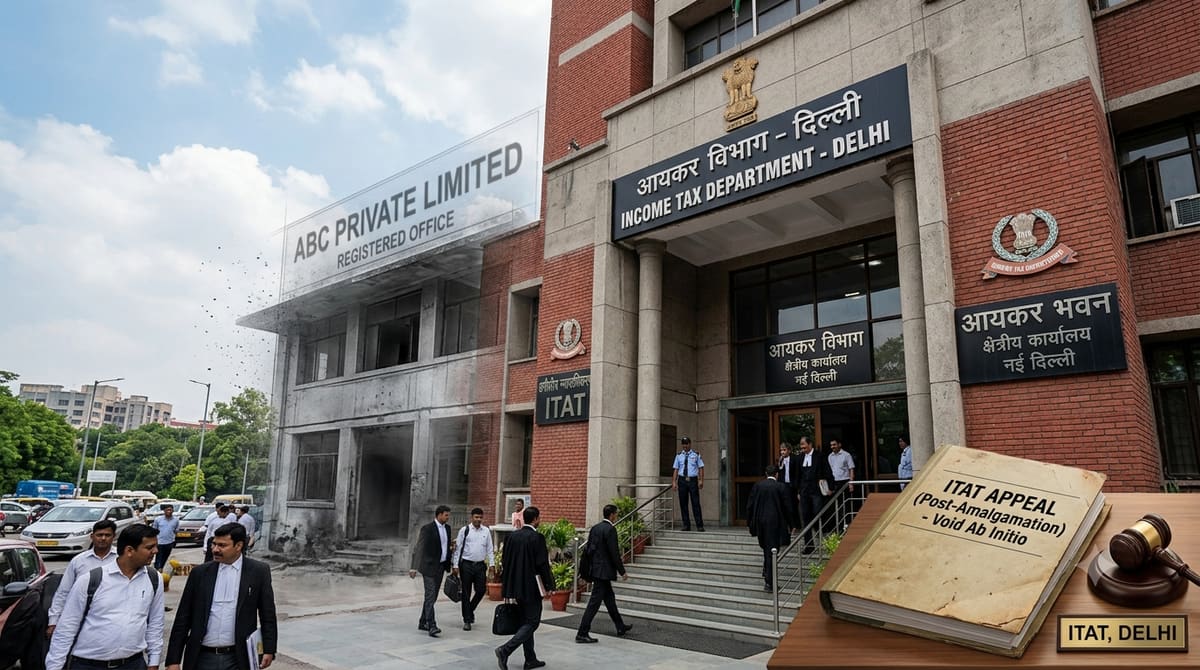
Section 147 Income Tax Act | Assessment Against Non-Existent Entity Void Ab Initio: ITAT Delhi Quashes Reassessment Post-Amalgamation
Case Law Analysis
|Income Tax Appellate Tribunal

Section 147 Income Tax Act | Assessment Against Non-Existent Entity Void Ab Initio: ITAT Delhi Quashes Reassessment Post-Amalgamation

ITAT Delhi rules that tax assessments under Section 147 against a merged entity are legally unsustainable, as proceedings cannot be initiated against a non-existent legal person. The ruling reinforces that jurisdictional defects render such assessments void, impacting tax authorities' powers in post-amalgamation scenarios.

Principle of Consistency in Taxation | ITAT Raipur Bars Revenue from Shifting Stance on Identical Facts Across AYs : ITAT
|Income Tax Appellate Tribunal

Principle of Consistency in Taxation | ITAT Raipur Bars Revenue from Shifting Stance on Identical Facts Across AYs : ITAT

ITAT Raipur ruled that revenue authorities cannot alter their position on identical factual matrices across assessment years without material change, setting aside a ₹64.32 lakh addition. The decision reinforces the binding nature of the 'principle of consistency' for tax assessments, protecting assessees from arbitrary reassessments.

Section 151A IT Act | Faceless Assessment Invalid If Notification Issued After Order Framing : ITAT Kolkata
Case Law Analysis
|Income Tax Appellate Tribunal

Section 151A IT Act | Faceless Assessment Invalid If Notification Issued After Order Framing : ITAT Kolkata

The ITAT Kolkata has ruled that a faceless assessment under Section 151A is jurisdictionally void if the statutory notification empowering the National Faceless Assessment Centre was issued only after the assessment order was framed. This sets a critical precedent: procedural compliance with notification timelines is not optional but foundational to the validity of faceless assessments, affecting all taxpayers subject to centralized scrutiny under the Income Tax Act.

Section 143(1) IT Act | Show-Cause Notice Mandatory Before CPC Adjustment Under Natural Justice: ITAT Kolkata
Case Law Analysis
|Income Tax Appellate Tribunal

Section 143(1) IT Act | Show-Cause Notice Mandatory Before CPC Adjustment Under Natural Justice: ITAT Kolkata

The ITAT Kolkata has ruled that the Centralized Processing Centre cannot make tax adjustments under Section 143(1) without first issuing a show-cause notice to the assessee, violating the foundational principle of natural justice. This sets a critical precedent for all taxpayers whose returns are processed automatically, ensuring procedural fairness in AI-driven tax assessments.

Section 159 Income Tax Act | Assessment Against Legal Heir Without Establishing Legal Representative Status Is Invalid : ITAT Agra
Case Law Analysis
|Income Tax Appellate Tribunal

Section 159 Income Tax Act | Assessment Against Legal Heir Without Establishing Legal Representative Status Is Invalid : ITAT Agra

The ITAT Agra has ruled that income tax assessments cannot be framed directly against a legal heir unless they are formally recognized as the legal representative under Section 159 of the Income Tax Act. This clarifies that succession rights alone do not confer statutory authority to represent a deceased assessee, impacting how tax authorities must proceed in estate-related assessments and protecting heirs from procedural overreach.

Section 10(20) IT Act | Local Authority Entitled to Exemption Despite Erroneous Claim Under Section 57: ITAT Pune
Case Law Analysis
|Income Tax Appellate Tribunal

Section 10(20) IT Act | Local Authority Entitled to Exemption Despite Erroneous Claim Under Section 57: ITAT Pune

A local authority is entitled to income tax exemption under Section 10(20) even if it mistakenly claimed deductions under Section 57, as long as its status as a qualifying local authority is established. This ruling protects municipal bodies from losing statutory exemptions due to technical filing errors, reinforcing that substance overrides form in tax exemption claims.

Section 144C(13) IT Act | Covid-19 Limitation Relief Does Not Extend Statutory Assessment Deadlines : ITAT Delhi
Case Law Analysis
|Income Tax Appellate Tribunal

Section 144C(13) IT Act | Covid-19 Limitation Relief Does Not Extend Statutory Assessment Deadlines : ITAT Delhi

The ITAT Delhi has ruled that the Supreme Court's Covid-19 limitation extension order does not apply to mandatory timelines under Section 144C(13) of the Income-tax Act, reinforcing that statutory compliance in tax assessments remains unaffected by judicial relief meant for courts and tribunals. This clarifies that tax authorities cannot rely on pandemic-era extensions to bypass strict procedural deadlines, impacting compliance strategies for corporates and tax practitioners alike.

Section 147 Income Tax Act | Revenue Must Prove Sale Transaction Beyond TDS Portal Data When Assessee Denies It : ITAT Delhi
Case Law Analysis
|Income Tax Appellate Tribunal

Section 147 Income Tax Act | Revenue Must Prove Sale Transaction Beyond TDS Portal Data When Assessee Denies It : ITAT Delhi

When an assessee denies a sale transaction, the Income Tax Department cannot rely solely on TDS portal records to justify an addition under reassessment. ITAT Delhi holds that conclusive evidence - such as sale deeds, consideration flow, or third-party verification - is mandatory, reinforcing the principle that mere administrative data does not discharge the Revenue’s burden of proof.

Section 153C IT Act | DVO Valuation Alone Insufficient for Unexplained Investment Additions Without Incriminating Evidence : ITAT Delhi
|Income Tax Appellate Tribunal

Section 153C IT Act | DVO Valuation Alone Insufficient for Unexplained Investment Additions Without Incriminating Evidence : ITAT Delhi

The ITAT Delhi has ruled that assessments under Section 153C cannot be sustained solely on Departmental Valuation Officer reports when no incriminating material links the assessee to the unexplained investments. This sets a critical precedent for taxpayers facing post-search assessments, requiring the revenue to establish a direct evidentiary connection beyond mere valuation discrepancies.

Section 69A IT Act | Peak Credit Theory Must Apply to Unexplained Cash Deposits When No Books Are Maintained : ITAT Agra
Case Law Analysis
|Income Tax Appellate Tribunal

Section 69A IT Act | Peak Credit Theory Must Apply to Unexplained Cash Deposits When No Books Are Maintained : ITAT Agra

When a taxpayer in the informal sector declares business income but maintains no books, the ITAT Agra rules that unexplained cash deposits cannot be fully added under Section 69A without applying the peak credit theory. This ensures fair assessment by focusing on the highest balance reached during the year, not total inflows - a critical safeguard for small traders and cash-based businesses.