Topic

cyber crime

Cyber crime in India refers to illegal activities conducted through digital means, such as online fraud, phishing, and unauthorized access to financial accounts, governed by the IT Act and CrPC provisions.

24 articlesLatest July 2026
Bank Account Freezing Without Notice Violates Natural Justice | Andhra Pradesh HC Directs Defreezing in UPI Fraud Case : AP HC
Case Law Analysis
|Andhra Pradesh High Court

Bank Account Freezing Without Notice Violates Natural Justice | Andhra Pradesh HC Directs Defreezing in UPI Fraud Case : AP HC

The Andhra Pradesh High Court ruled that freezing a bank account without prior notice or hearing violates principles of natural justice under Articles 14, 19(1)(g), and 21 of the Constitution. The court directed the defreezing of an account holding Rs. 8.26 lakh, emphasizing that businesses cannot be held liable for third-party UPI fraud without due process. This judgment sets a precedent for safeguarding commercial entities from arbitrary financial restrictions.

Sections 66-C & 66-D IT Act | Compromise Cannot Quash Identity Theft or Personation Offences Affecting Public Interest : Rajasthan HC
Case Law Analysis
|Rajasthan High Court

Sections 66-C & 66-D IT Act | Compromise Cannot Quash Identity Theft or Personation Offences Affecting Public Interest : Rajasthan HC

The Rajasthan High Court ruled that offences under Sections 66-C and 66-D of the IT Act, involving identity theft and cheating by personation, are not merely private disputes but crimes against public order and digital integrity. Even if parties reach a compromise, such offences cannot be quashed under Section 482 BNSS because they strike at the foundation of trust in digital transactions and affect societal interests beyond the complainant.

Successive Anticipatory Bail Applications | No Substantial Change in Circumstances Bars Reconsideration Under Section 482 BNS : Punjab & Haryana HC
Case Law Analysis
|Punjab and Haryana High Court

Successive Anticipatory Bail Applications | No Substantial Change in Circumstances Bars Reconsideration Under Section 482 BNS : Punjab & Haryana HC

The Punjab & Haryana High Court has ruled that a second anticipatory bail plea cannot be entertained merely because the accused now offers to surrender a mobile phone, if the original denial was grounded in the gravity of the offence and investigative necessity. This reinforces that procedural willingness without substantive new facts does not override judicial finality on bail denials, setting a strict precedent for repeat applications in cybercrime and serious criminal cases.

POCSO & IT Act | Hacking Minor’s Social Media Account Constitutes Cyber Exploitation & National Security Threat: Allahabad HC
Case Law Analysis
|Allahabad High Court

POCSO & IT Act | Hacking Minor’s Social Media Account Constitutes Cyber Exploitation & National Security Threat: Allahabad HC

Allahabad HC refuses to quash an FIR involving hacking of a 10-year-old’s Instagram account, holding that cyber exploitation of minors under POCSO and IT Act may also implicate national security. The court directs thorough investigation into the petitioner’s digital links and syndicate involvement, emphasizing the gravity of such offences.

Section 438 CrPC & BNSS | Transit Anticipatory Bail Mandatory for Non-Resident Accused to Approach Jurisdictional Court: Karnataka HC
Case Law Analysis
|Karnataka High Court

Section 438 CrPC & BNSS | Transit Anticipatory Bail Mandatory for Non-Resident Accused to Approach Jurisdictional Court: Karnataka HC

The Karnataka High Court ruled that accused persons outside the jurisdiction of the investigating agency must be granted 30-day transit anticipatory bail to seek relief from the proper court. This holding reinforces procedural fairness under Section 438 CrPC and BNSS, ensuring non-resident accused in cyber crimes are not denied access to justice due to geographical constraints.

Bank Account Freeze | Cyber Cell Notices Insufficient for Freezing Without Magistrate's Order Within 90 Days: MP HC
Case Law Analysis
|Madhya Pradesh High Court

Bank Account Freeze | Cyber Cell Notices Insufficient for Freezing Without Magistrate's Order Within 90 Days: MP HC

The Madhya Pradesh High Court has ruled that banks cannot freeze accounts solely on the basis of cyber cell alerts; disputed funds must be preserved in fixed deposits and subject to judicial review by a magistrate within three months. This sets a critical precedent protecting account holders from arbitrary financial disruption during unverified cybercrime investigations.

Preliminary Inquiry in Cyber Crime Complaints | Bank Freezes Lawful During Investigation of Invoice Fraud in Commercial Disputes : Chhattisgarh HC
Case Law Analysis
|Chhattisgarh High Court

Preliminary Inquiry in Cyber Crime Complaints | Bank Freezes Lawful During Investigation of Invoice Fraud in Commercial Disputes : Chhattisgarh HC

The Chhattisgarh High Court has ruled that preliminary inquiry into cyber complaints alleging invoice manipulation and fund routing in commercial transactions cannot be prematurely quashed, and that bank account freezes initiated during such investigations are lawful. This sets a critical precedent for businesses facing digital fraud allegations, affirming investigative powers even before formal charges are filed.

Section 420 IPC & IT Act Sections 66(C)/(D) | Vague Allegations Without Prima Facie Evidence Insufficient to Sustain Prosecution: Karnataka HC Quashes Charges
Case Law Analysis
|Karnataka High Court

Section 420 IPC & IT Act Sections 66(C)/(D) | Vague Allegations Without Prima Facie Evidence Insufficient to Sustain Prosecution: Karnataka HC Quashes Charges

The Karnataka High Court quashed criminal proceedings against two computer operators, ruling that generalized allegations of impersonation or dishonest intent under the IT Act and IPC lack legal merit without concrete evidence. The judgment underscores that prosecution cannot proceed on omnibus accusations alone, offering relief to accused facing similar unsupported cyber crime charges.

Section 107 BNSS | Bank Account Freeze Without FIR or Magistrate Order Illegal : Punjab & Haryana HC
Case Law Analysis
|Punjab and Haryana High Court

Section 107 BNSS | Bank Account Freeze Without FIR or Magistrate Order Illegal : Punjab & Haryana HC

Punjab & Haryana HC rules that freezing bank accounts under Section 107 of BNSS without an FIR or Magistrate order violates due process. The court directed de-freezing of the petitioner’s account, allowing operation subject to retaining the disputed Rs. 23,400. The ruling reinforces safeguards against arbitrary account freezes during cyber crime investigations.

Section 318(4) BNS | No Prima Facie Fraud Where SIMs Issued Under Digital KYC Without Recovery or Direct Intent: Chhattisgarh HC
Case Law Analysis
|Chhattisgarh High Court

Section 318(4) BNS | No Prima Facie Fraud Where SIMs Issued Under Digital KYC Without Recovery or Direct Intent: Chhattisgarh HC

The Chhattisgarh High Court granted regular bail to a SIM distributor accused of issuing 48 fake SIMs, holding that mere distribution under authorized POS systems, with compliance of digital KYC and no recovery of fraudulent devices, does not establish direct fraudulent intent under Section 318(4) BNS. This clarifies the boundary between administrative facilitation and criminal culpability in telecom fraud cases, protecting distributors from overbroad prosecution.

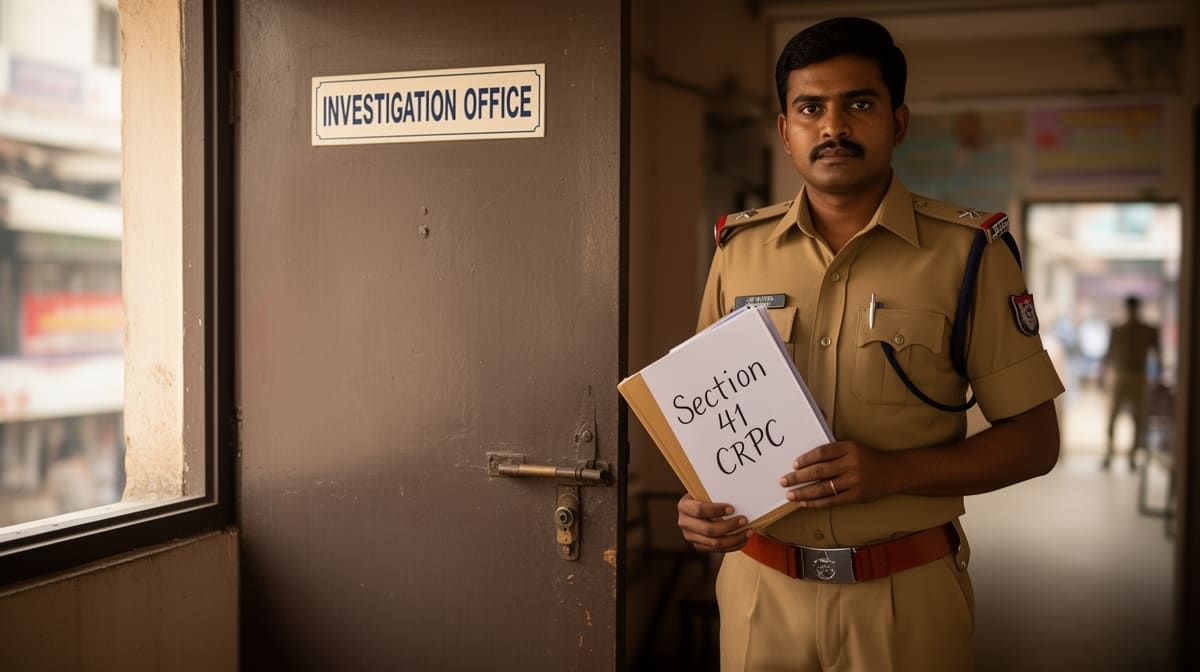
Section 41 CrPC | Mandatory Compliance Required Before Arrest in Cyber Fraud Cases: MP HC Upholds Arnesh Kumar Guidelines
Case Law Analysis
|Madhya Pradesh High Court

Section 41 CrPC | Mandatory Compliance Required Before Arrest in Cyber Fraud Cases: MP HC Upholds Arnesh Kumar Guidelines

Madhya Pradesh High Court reinforces that non-compliance with Section 41 CrPC-requiring prior notice and satisfaction of arrest conditions-invalidates arrest even in cyber fraud cases involving substantial sums. The ruling extends Arnesh Kumar principles to digital offenses, mandating strict adherence to procedural safeguards before detention.