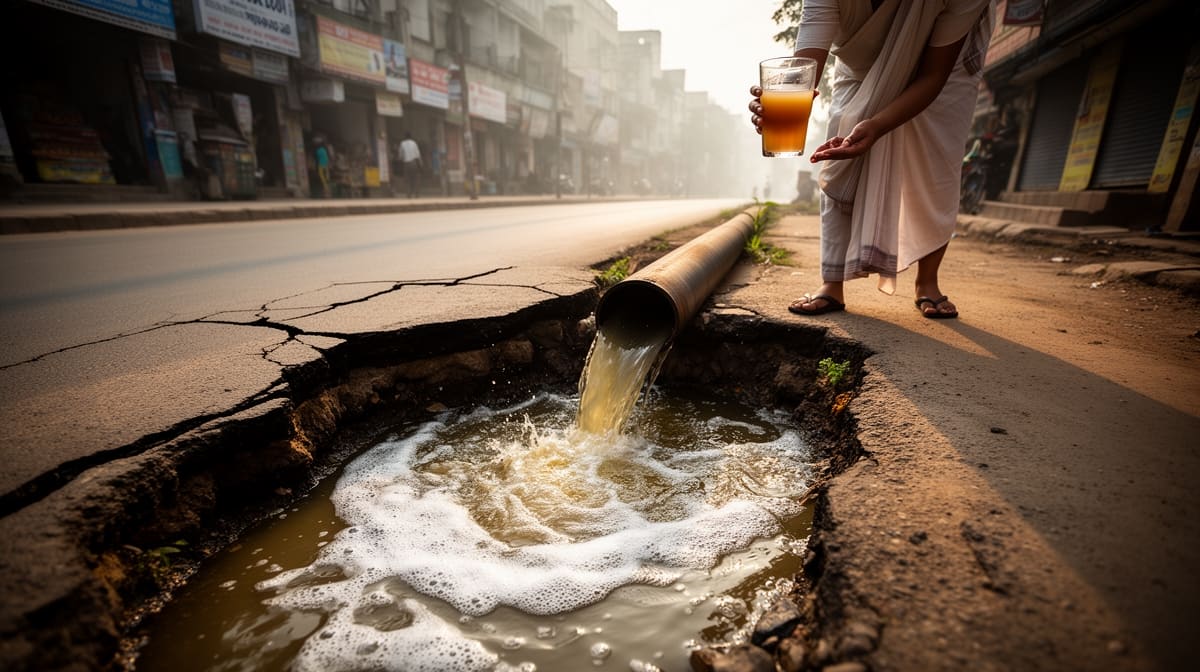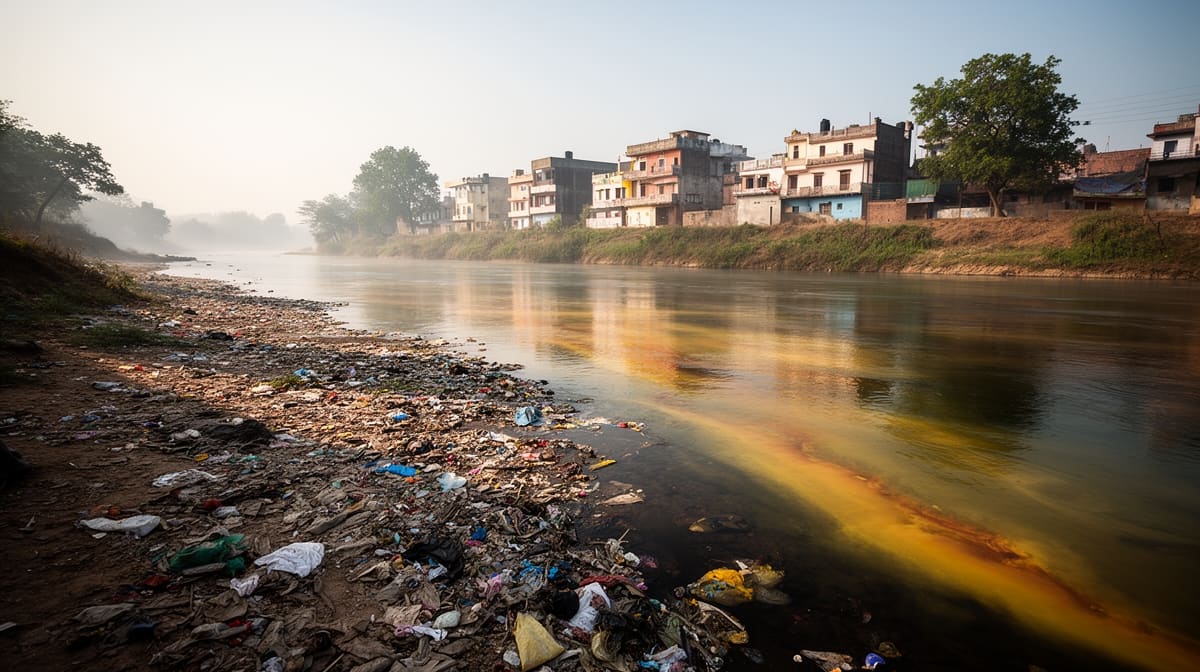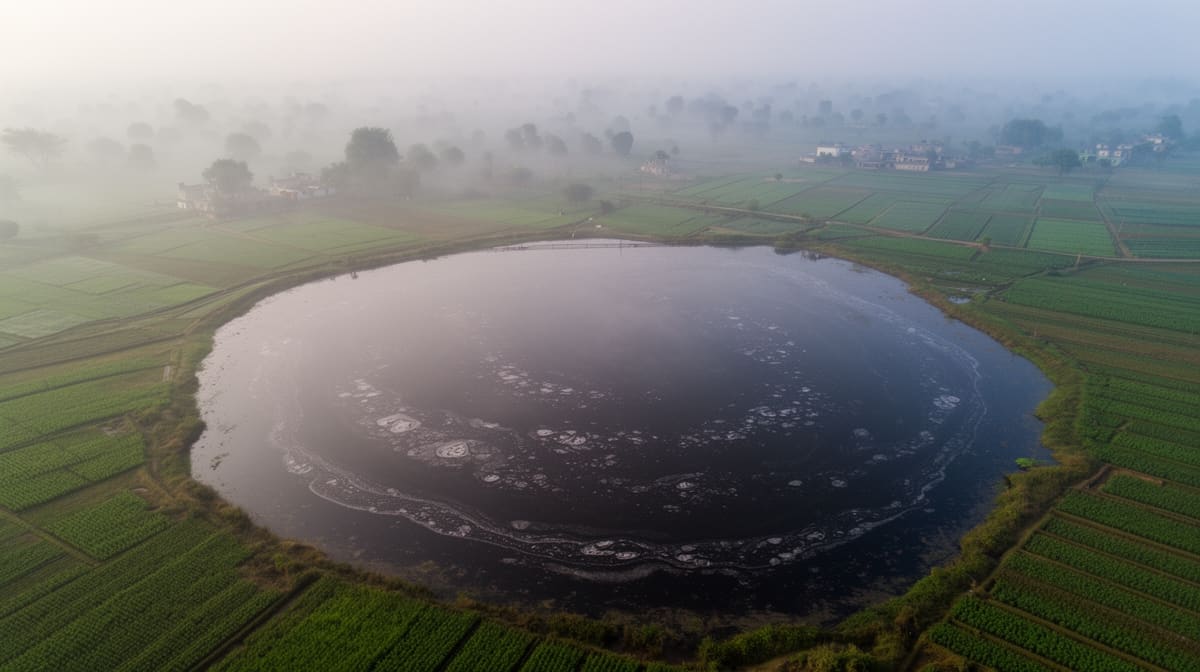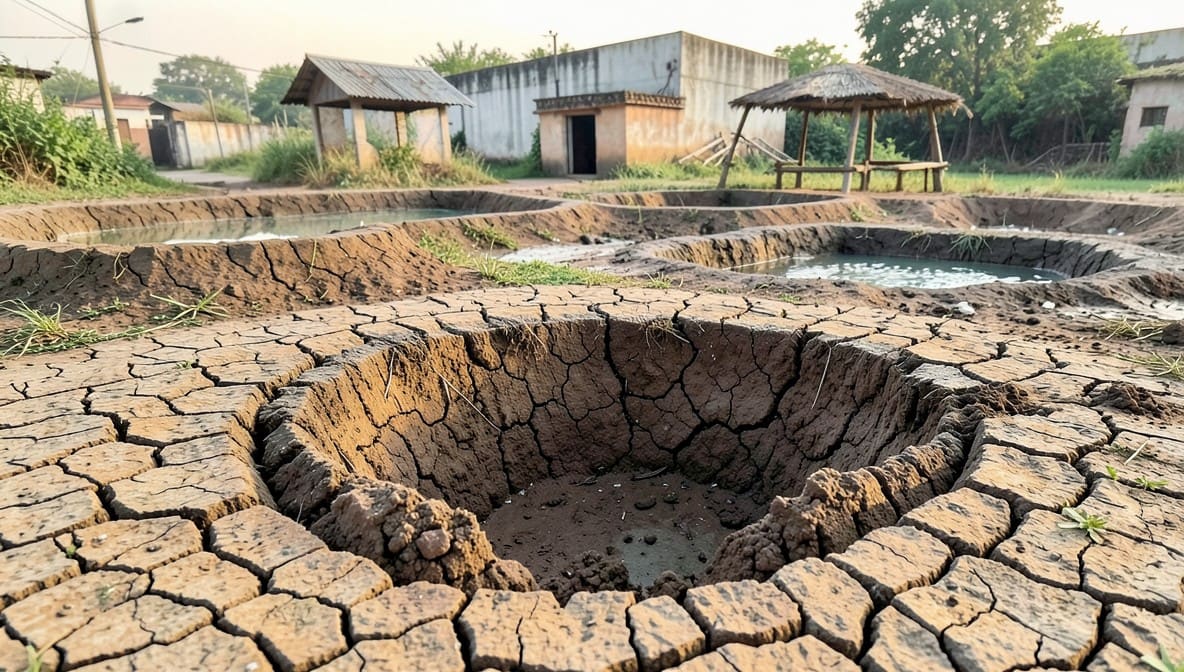
The National Green Tribunal (NGT) has taken suo moto cognizance of a news report highlighting the alarming depletion of groundwater in Bhopal, which has been classified as a semi-critical zone. The Tribunal directed the Central Ground Water Board to suggest remedial measures to the Madhya Pradesh government, emphasizing the urgent need for conservation efforts to prevent the city from reaching a critical groundwater crisis.
Background & Facts
The Genesis
The case originated from a news report published in People’s Samachar on 16.03.2026, based on the Central Ground Water Board’s Dynamic Ground Water Resource Development Report 2024. The report titled Patal Mein Jata Pani: Semi Critical Zone Me Bhopal highlighted the following critical findings:
- Bhopal extracts over 8 crore litres of water daily from more than 40,000 tube wells.
- Groundwater exploitation in the district has reached 79%, placing it in the semi-critical category.
- Post-monsoon groundwater levels range between 4 to 8 meters, while pre-monsoon levels drop to 12 to 17 meters.
- The district’s annual extractable groundwater resource is 37,553 hectare-meters, of which 29,776 hectare-meters are already being utilized.
- Rapid urbanization and the proliferation of private borewells have exacerbated groundwater depletion.
Key Facts
- District Collector Kaushlendra Vikram Singh declared Bhopal a water-scarcity area and banned the digging of private tube wells.
- The Central Ground Water Board and the State’s Dynamic Groundwater Resources Report 2024 confirmed the semi-critical status of the district.
- Experts warned that without immediate intervention, Bhopal could soon reach the critical zone, where groundwater levels become unsustainable.
- Traditional water conservation methods, such as pond conservation and groundwater recharge structures, were recommended alongside restrictions.
Procedural History
- 16.03.2026: News report published in People’s Samachar, highlighting groundwater depletion in Bhopal.
- Suo Moto Cognizance: The NGT registered Original Application No. 75/2026(CZ) based on the news report.
- 13.04.2026: The NGT heard the matter and issued directions to the Director, Central Ground Water Board to suggest remedial measures.
Relief Sought
The NGT, acting suo moto, sought:
- Identification of remedial measures to address groundwater depletion in Bhopal.
- Communication of these measures to the State of Madhya Pradesh for implementation.
The Legal Issue
The central question before the NGT was whether suo moto intervention was warranted under Section 14 of the National Green Tribunal Act, 2010 to address the environmental crisis of groundwater depletion in Bhopal, and what remedial measures could be suggested to the State Government to mitigate the situation.
Arguments Presented
As this was a suo moto proceeding, no formal arguments were presented by adversarial parties. However, the NGT relied on:
- The news report as the factual basis for intervention.
- The Central Ground Water Board’s report, which provided scientific data on groundwater exploitation.
- Expert opinions highlighting the urgency of conservation measures.
The Court's Analysis
The NGT observed that the Central Ground Water Board’s report established Bhopal’s status as a semi-critical zone, with groundwater exploitation nearing unsustainable levels. The Tribunal emphasized the following:
"The semi-critical category indicates that if groundwater exploitation continues at the current pace, the water table could fall to dangerous levels within a few years. Therefore, immediate and drastic measures are required."
The NGT further noted that restrictions alone were insufficient to address the crisis. It underscored the need for:
- Conservation of ponds and traditional water sources.
- Construction of groundwater recharge structures.
- Coordination between the Central Ground Water Board and the State Government to implement these measures.
The Tribunal relied on its suo moto powers under Section 14 of the NGT Act, which empowers it to take cognizance of environmental issues on its own initiative. The NGT’s intervention was guided by the precautionary principle and the principle of sustainable development, both of which are enshrined in environmental jurisprudence.
The Verdict
The NGT disposed of the Original Application with the following directions:
- The Director, Central Ground Water Board was directed to identify and suggest remedial measures to address groundwater depletion in Bhopal.
- These measures were to be communicated to the State of Madhya Pradesh for implementation.
- The matter was disposed of with the observation that the State Government must take immediate and drastic steps to prevent Bhopal from reaching the critical zone.
What This Means For Similar Cases
Suo Moto Powers of NGT in Environmental Crises
The judgment reaffirms the NGT’s proactive role in addressing environmental crises. Practitioners can rely on this precedent to:
- Argue for suo moto intervention in cases where scientific reports or media reports highlight environmental degradation.
- Emphasize the precautionary principle to urge courts to take preemptive action before irreversible damage occurs.
Mandatory Conservation Measures
- Groundwater recharge structures must be prioritized alongside restrictions on extraction.
- Traditional water sources, such as ponds, must be conserved to ensure long-term sustainability.
- Coordination between central and state agencies is essential for effective implementation of conservation policies.
Burden on State Governments
State Governments must:
- Monitor groundwater levels regularly and classify regions based on exploitation levels.
- Enforce restrictions on private borewells in semi-critical and critical zones.
- Implement conservation measures proactively, rather than waiting for judicial intervention.