Case Law Analysis

Substantial Performance Doctrine | Payment Due for Completed Work Despite Minor Deficiencies Under Contract Law: Karnataka HC

Karnataka High Court upholds payment liability for refurbishment and O&M services under a commercial contract, ruling that minor deficiencies do not absolve the defendant of payment obligations. The judgment reinforces the 'substantial performance' doctrine, ensuring contractors receive dues for completed work, subject to 18% interest for delayed payments.

Cassie News NetworkCassie News Network
Jun 16, 2026, 5:02 PM(Updated: Nov 3, 2026)
•2 min read
Be the first to share in your circle
Substantial Performance Doctrine | Payment Due for Completed Work Despite Minor Deficiencies Under Contract Law: Karnataka HC

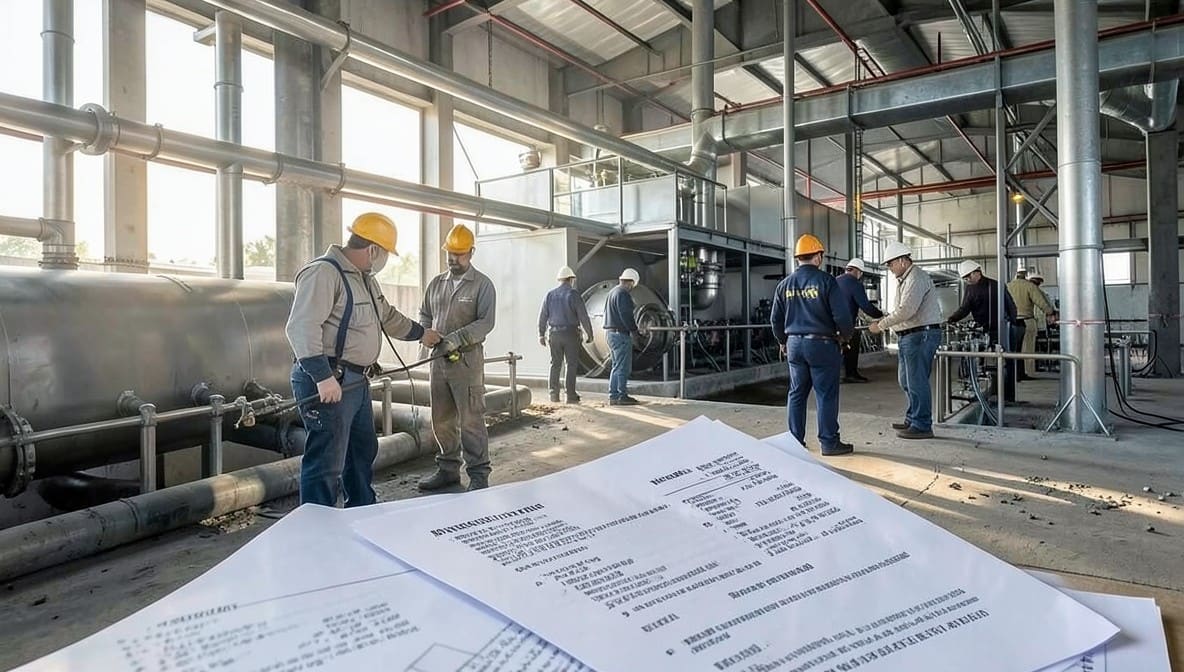
The Karnataka High Court recently delivered a nuanced judgment in a commercial dispute involving the refurbishment of a Sewage Treatment Plant (STP) and subsequent Operation & Maintenance (O&M) works. The Court upheld the plaintiff’s claim for payment while modifying the decree amount, emphasizing that minor deficiencies in performance do not absolve the defendant of its payment obligations under the contract. This judgment reinforces the principle that contractual liability persists even when works are substantially completed, provided the deficiencies do not fundamentally vitiate the contract’s purpose.

Background & Facts

The Dispute

The dispute arose between M/s. MVJ College of Engineering Venkatesha Education Trust (appellant/defendant) and M/s. Living Waterfine Technologies Pvt. Ltd. (respondent/plaintiff). The plaintiff was engaged to refurbish the defendant’s non-operational STP and provide O&M services. Despite completing the refurbishment and partial O&M works, the defendant failed to pay the outstanding amounts, leading to litigation.

Key Facts

  • 14.06.2017: Plaintiff submitted a quotation for refurbishing the STP at ₹29,98,900 + GST, along with O&M charges of ₹57,500 per month (with a 10% annual increase).
  • 15.06.2017: Defendant issued a purchase order accepting the plaintiff’s quotation. The scope of work excluded civil works, which were to be carried out by the defendant.
  • 01.07.2017 to 25.09.2017: Plaintiff supplied materials for refurbishment, raising two invoices on 16.08.2017:
    • ₹24,58,207 (for materials)
    • ₹6,94,973 (for design, repair, and erection works).
  • 15.06.2017 and 06.09.2017: Defendant made partial payments totaling ₹23,09,778, leaving a balance of ₹8,43,402 for refurbishment.
  • 21.09.2017 to 16.08.2018: Plaintiff carried out O&M works and raised six invoices totaling ₹8,82,050, none of which were paid.
  • 27.01.2018: Joint inspection conducted in the presence of an independent observer. The minutes (Ex.D2) noted that the STP was functioning smoothly for three weeks prior to the inspection, though minor issues were identified.
  • 02.08.2018: Plaintiff submitted test reports (Ex.P10) demonstrating the STP’s functionality, as stipulated by the independent observer.

Procedural History

  • Com.OS No. 25013/2019: Plaintiff filed a suit before the LXXXVI Additional City Civil and Sessions Judge, Bengaluru (Commercial Court)
Case Details

M/s. MVJ College of Engineering Venkatesha Education Trust v. M/s. Living Waterfine Technologies Pvt. Ltd.

PDF
Court
High Court of Karnataka at Bengaluru
Date
12 June 2026
Case Number
Commercial Appeal No. 467 of 2025
Bench
Hon'ble Mr. Vibhu Bakhru, Chief Justice, Hon'ble Mr. Justice C.M. Poonacha
Counsel
Pet: Smt. Manasi Kumar, Advocate
Res: Sri C.K. Dharaneswaran, Advocate

Frequently Asked Questions

The Court held that payment liability persists if the contractor substantially completes the works, even if minor deficiencies exist. The defendant must prove fundamental non-performance to avoid payment, not merely allege deficiencies. This principle is derived from the Court’s reliance on the joint inspection report and test reports demonstrating the STP’s functionality.
No. The Court ruled that if the defendant continues to accept O&M services without objection, it cannot later deny liability for payment. The plaintiff’s continued supply of materials and maintenance of the STP created an implied obligation to pay, even if invoices were not explicitly demanded.
The defendant must prove actual expenses incurred, including payments to subsequent vendors. This requires examination of witnesses (e.g., the subsequent vendor’s representative) and production of payment proofs (e.g., bank statements, receipts). The Court dismissed the counterclaim in this case due to lack of such evidence.
In the absence of an agreed rate, courts may award 18% interest on commercial transactions. This is based on the Commercial Courts Act, 2015, which presumes a higher interest rate for commercial disputes to compensate for delayed payments.
0

Disclaimer

This article is for informational purposes only and does not constitute legal advice. The views expressed are based on the judgment analysis and should not be taken as professional counsel. Please consult with a qualified attorney for advice specific to your situation.