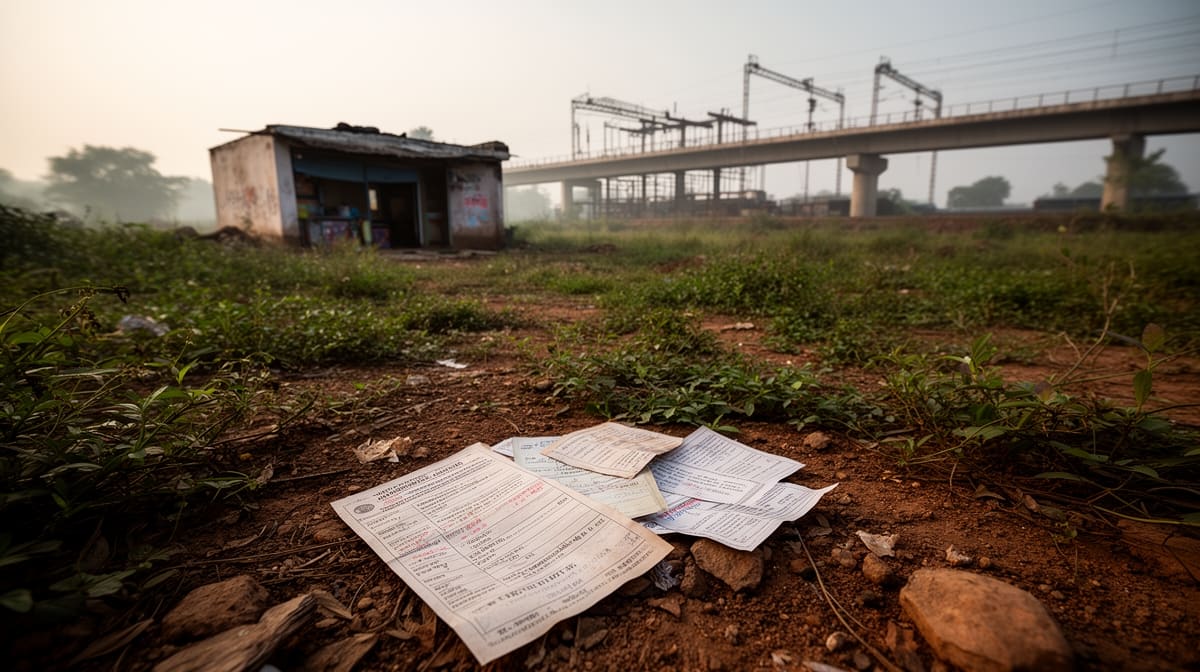
The Supreme Court has decisively affirmed that statutory provisions for regularising unauthorized occupation under Section 123 of the Uttar Pradesh Zamindari Abolition and Land Reforms Act, 1950, operate as a non-obstante clause that overrides private title and even a declaration under Section 143 converting land to non-agricultural use. This judgment reasserts the primacy of land reform objectives over individual property claims in post-abolition contexts.
Background & Facts
The Dispute
The dispute centers on Plot No. 2362, measuring 1 bigha 14 biswas, in Shamli, Muzaffarnagar, Uttar Pradesh. The Appellants, successors-in-interest of Khazan Singh, purchased the land via a registered sale deed dated 10.08.1984. They obtained a declaration under Section 143 of the U.P. Z.A. & L.R. Act on 11.10.1984, seeking to convert the land from agricultural to residential use and thereby exclude it from the purview of Chapter VIII of the Act. The Respondents, members of Scheduled Castes and Scheduled Tribes, had occupied the land and constructed houses on it since 1976 - 1977, prior to the Appellants’ purchase.
Procedural History
- 1960 - 1962: Eviction notices issued against Khazan Singh under Rule 115-C of the U.P. Z.A. & L.R. Rules were discharged.
- 1965: Eviction proceedings under the Uttar Pradesh Public Land (Eviction and Recovery of Rent and Damages) Act, 1959, were dropped in favor of Khazan Singh.
- 1971: A suit under Section 229-B was decreed in favor of Khazan Singh, upheld by the Board of Revenue in 1978.
- 1976 - 1977: Respondents took possession and built houses on the land.
- 1984: Appellants purchased the land and obtained Section 143 declaration.
- 1988: Notice issued under Section 123 seeking regularisation of Respondents’ possession.
- 20.06.1989: Sub-Divisional Officer ordered recording of Respondents’ names in revenue records.
- 07.09.2007: High Court dismissed Appellants’ writ petition, upholding the SDO’s order.
- 2026: Supreme Court dismissed Civil Appeal and Special Leave Petitions.
Relief Sought
The Appellants sought quashing of the Section 123 notice and SDO’s order, and a mandamus directing the Respondents not to be recognized as owners. They claimed that the Section 143 declaration rendered the land immune from revenue proceedings under Chapter VII, including Section 123.
The Legal Issue
The central question was whether a declaration under Section 143 of the U.P. Z.A. & L.R. Act, converting land to non-agricultural use, extinguishes the applicability of Section 123, which permits statutory regularisation of unauthorized occupation by eligible persons who built houses on the land before 30.06.1985.
Arguments Presented
For the Appellant/Petitioner
The Appellants contended that Section 143 divests revenue authorities of jurisdiction over land declared non-agricultural, thereby rendering Section 123 inapplicable. They relied on civil court decrees and the principle that private title, once established, cannot be overridden by administrative orders. They argued that the Respondents were trespassers whose possession was unlawful and that the High Court erred in ignoring the binding effect of civil court findings.
For the Respondent/State
The State contended that Section 123 operates as a non-obstante provision designed to regularise socio-economically vulnerable occupants who built houses before the cut-off date of 30.06.1985, regardless of the nature of possession or subsequent declarations. It was argued that Section 143 only excludes Chapter VIII (succession and inheritance) and does not affect Chapter VII (regularisation of occupation). The Respondents’ possession was admitted by the Appellants themselves in pleadings, and the Legislature’s intent to protect house owners, even if unauthorized, was clear.
The Court's Analysis
The Court examined the statutory architecture of the U.P. Z.A. & L.R. Act and found that Section 123 is a remedial provision rooted in the constitutional mandate of social justice and land reform. The Court emphasized that Section 123(2) creates a legal fiction: "any person who, on or before 30.06.1985, had built a house on land held by a tenure holder, shall be deemed to have been settled with such land." This deeming provision is not contingent on consent, legality of possession, or subsequent declarations.
"To effectuate the socio-economic ‘deeming provision’ of the Statute, it was entirely immaterial whether the houses were built with the tenure holder’s consent, forcefully, or as trespassers. If the Legislature intended to exclude unauthorised occupants, it would have explicitly stated so."
The Court rejected the Appellants’ reliance on Section 143, holding that it only excludes Chapter VIII of the Act, which governs succession and inheritance, and does not remove the land from the definition of "land" under Section 3(14) or from the operation of Chapter VII, which includes Section 123. The declaration under Section 143 was found to be non-binding on third parties who were not parties to the proceeding, and could not be used to defeat statutory rights accrued under Section 123.
The Court also noted that the Appellants’ own pleadings admitted the Respondents’ possession since 1976 - 1977, and that the purchase of land in 1984 was subject to existing statutory rights. The Court concluded that allowing private title to override statutory regularisation would defeat the very purpose of the land reform legislation.
The Verdict
The Appellants’ appeal was dismissed. The Supreme Court held that Section 123 of the U.P. Z.A. & L.R. Act operates as a non-obstante provision that regularises possession of eligible occupants who built houses before 30.06.1985, irrespective of private title or a subsequent Section 143 declaration. The Respondents’ names were lawfully recorded in revenue records.
What This Means For Similar Cases
Statutory Regularisation Trumps Private Title
- Practitioners must now assess whether a landholding falls under Section 123 before initiating eviction suits or seeking declarations under Section 143.
- A private sale deed or civil court decree cannot extinguish rights accrued under Section 123 if the statutory conditions are met.
- Revenue authorities retain jurisdiction to regularise occupation even if the land has been declared non-agricultural.
Section 143 Declaration Has Limited Scope
- Section 143 only excludes Chapter VIII (succession and inheritance) and does not bar application of Chapter VII (regularisation).
- A Section 143 declaration is not binding on unauthorized occupants who were not parties to the proceeding.
- Land declared non-agricultural under Section 143 remains subject to Section 123 if eligible occupants meet the cut-off date.
Possession Before 30.06.1985 Is Decisive
- The date of construction, not the nature of possession (authorized or unauthorized), determines eligibility under Section 123.
- Evidence of house construction before 30.06.1985 must be documented and verified through revenue records, Tehsildar reports, or sworn affidavits.
- Courts will not entertain suits for eviction if the statutory conditions for regularisation are satisfied, even if the land was later purchased.