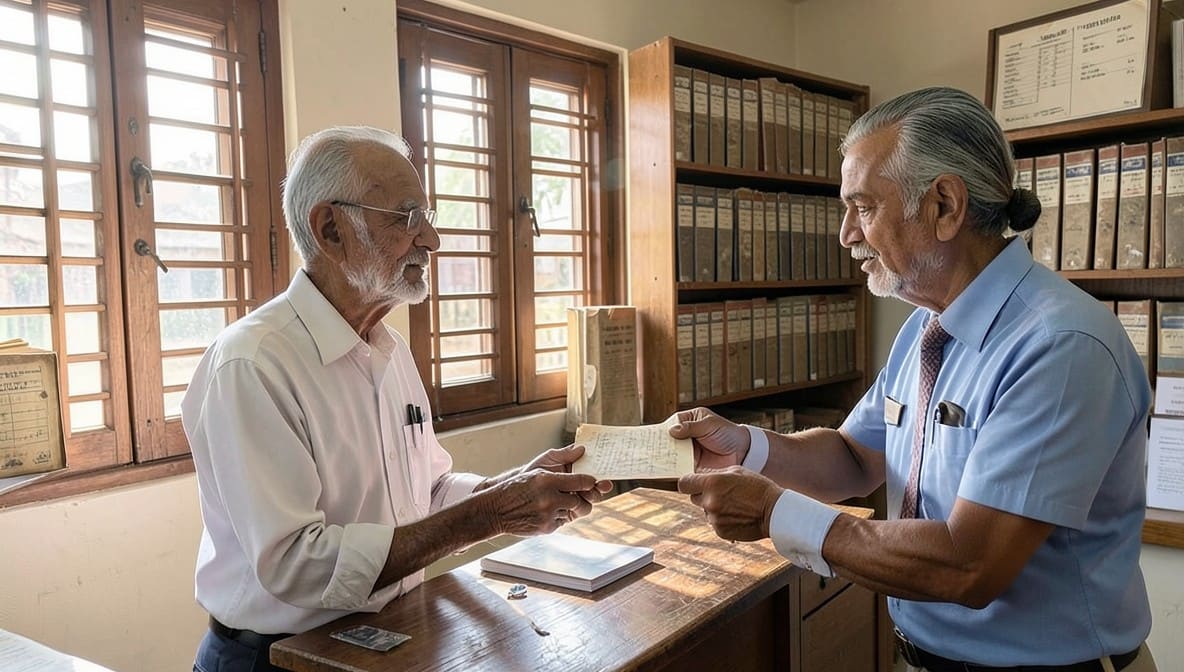
The Uttarakhand High Court has clarified that allotment of surplus land under Section 25 of the U.P. Imposition of Ceiling on Land Holdings Act, 1960 does not automatically entitle the recipient to be recorded as a Bhumidhar with non-transferable rights. This ruling resolves a recurring dispute in revenue administration and sets a critical boundary between administrative convenience and statutory entitlement under land reform laws.
Background & Facts
The Dispute
The petitioners, including M/s Swarn Kaur, are landless individuals who were allotted surplus agricultural land declared under the U.P. Imposition of Ceiling on Land Holdings Act, 1960. They seek to be recorded as Bhumidhars with non-transferable rights in Category 1 kha (revenue records), asserting that such status is mandated under Section 131(d) of the Uttarakhand Zamidari Abolition and Land Reforms Act, 1950. However, the Revenue Department has refused, citing that the allotment was made under Section 25 of the Ceiling Act, which permits land use for public purposes, not for conferring proprietary rights.
Procedural History
- 2006: Petitioners were allotted surplus land via order invoking Section 25 of the U.P. Ceiling Act.
- 2026: Multiple writ petitions filed before the Uttarakhand High Court seeking recordal as Bhumidhars.
- Clubbed together: Seven related petitions (WPMS Nos. 435 - 441 of 2026) were heard jointly due to identical legal issues.
- Reference to prior orders: The Court examined two earlier coordinate bench orders (WPMS Nos. 28 and 30 of 2026) addressing the same issue.
Relief Sought
The petitioners sought a direction to the District Magistrate to record their names as Bhumidhars with non-transferable rights in the revenue records, arguing that Section 131(d) of the 1950 Act grants them an indefeasible right upon allotment of surplus land.
The Legal Issue
The central question was whether Section 131(d) of the Uttarakhand Zamidari Abolition and Land Reforms Act, 1950, confers Bhumidhar status on persons allotted surplus land under Section 25 of the U.P. Imposition of Ceiling on Land Holdings Act, 1960, or whether such status is available only to those allotted under Section 27(3).
Arguments Presented
For the Petitioner
Counsel for the petitioners relied on Section 131(d), which states that every person with whom surplus land is settled under Section 26A or Section 27(3) of the Ceiling Act is entitled to Bhumidhar status. They argued that the term "settled" is broad and includes all allotments of surplus land, regardless of the provision invoked. They cited State of U.P. v. Hari Ram to support the principle that land reform statutes must be interpreted liberally in favor of the landless.
For the Respondent/State
The State contended that Section 25 is a distinct mechanism allowing the government to use surplus land for public purposes - such as infrastructure or institutional buildings - without conferring proprietary rights. They emphasized that Section 27(3), not Section 25, is the only provision under which surplus land can be settled with the intent of granting Bhumidhar rights. The State further argued that the erroneous invocation of Section 25 in the allotment order created a procedural irregularity, not a substantive legal right.
The Court's Analysis
The Court examined the statutory scheme of the U.P. Ceiling Act and the Uttarakhand Land Reforms Act. It noted that Section 131(d) explicitly links Bhumidhar status to settlement under Section 26A or Section 27(3), both of which contemplate redistribution to beneficiaries. In contrast, Section 25 permits the State to retain or use surplus land for public purposes, akin to acquisition under the Land Acquisition Act, 1894. The Court held that these are mutually exclusive pathways.
"The legislature has deliberately drawn a distinction between settlement under Section 27(3) and use under Section 25. The former is for redistribution to the landless; the latter is for public utility."
The Court rejected the argument that "settled" in Section 131(d) includes all allotments, noting that statutory interpretation must respect legislative intent. It further observed that the Revenue Record Manual correctly classifies land allotted under Section 25 as 4(ka)(ka), indicating temporary or non-proprietory status. The Court declined to direct immediate recordal, as the error lay in the original allotment order, not in the Revenue Department’s implementation.
The Verdict
The petitioners prevailed in obtaining procedural relief. The Court held that Bhumidhar status cannot be claimed under Section 131(d) if land was allotted under Section 25, but granted liberty to petitioners to file representations for correction of the statutory basis. The District Magistrate was directed to decide such representations within eight weeks, after hearing stakeholders.
What This Means For Similar Cases
Statutory Basis Determines Land Status
- Practitioners must verify the exact provision invoked in land allotment orders before filing claims for Bhumidhar status.
- Allotments under Section 25 do not trigger rights under Section 131(d), regardless of the petitioner’s socio-economic status.
- Revenue authorities are justified in refusing Bhumidhar recordal where Section 25 was applied.
Representation Is the Correct Remedy, Not Writs
- Writ petitions seeking direct recordal as Bhumidhars will be dismissed if the original allotment order is flawed.
- Petitioners must first exhaust administrative remedies by filing representations for correction of the allotment order.
- Courts will not substitute their discretion for administrative decision-making unless there is clear illegality or mala fide.
Revenue Records Reflect Legal Status, Not Aspirations
- Entries in revenue records (e.g., 4(ka)(ka)) are not mere formalities - they reflect the legal nature of the interest granted.
- Courts will uphold revenue classifications when they align with the statutory basis of allotment.
- Claims based on equity or need cannot override the statutory framework governing land reform.