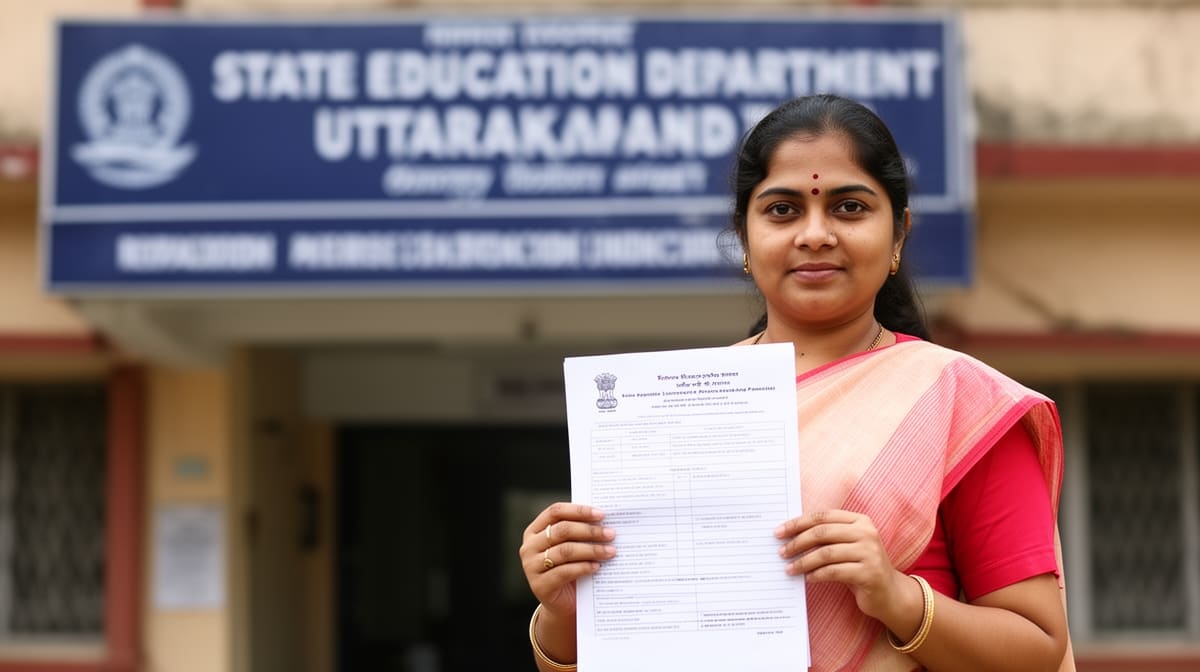
The Rajasthan High Court has affirmed that Scheduled Tribe status recognised in one State does not confer reservation benefits in another State, dismissing an appeal by a Gujarat-origin ST candidate who sought ST quota for a Nursing Officer post in Rajasthan after marriage. The Division Bench upheld the Single Judge's reliance on Ranjana Kumari v. State of Uttarakhand and Constitution Bench authorities holding that Articles 341 and 342 tether reservation to the specifying State's local disadvantages.
Background & Facts
The Dispute
The appellant, Baria Sharmishtha Ben, a resident of Ward No. 07, Jhanjharwa Kalla, Banswara, Rajasthan, originally hails from the State of Gujarat where her caste is recognised in the Scheduled Tribe category. Following her marriage to a person belonging to the same caste residing in Rajasthan, she relocated to Rajasthan and applied for appointment to the post of Nursing Officer, claiming reservation under the ST category. The respondent State rejected her ST category candidature and considered her application under the General Category, prompting litigation.
Key Facts
- The appellant belongs to a caste categorised as Scheduled Tribe in the State of Gujarat
- Her marriage was solemnised with a person living in Rajasthan belonging to the same caste
- After marriage, she applied for the post of Nursing Officer in Rajasthan claiming ST reservation
- The respondent State rejected her ST category claim and considered her candidature in General Category
- The advertisement for the Nursing Officer post contained a specific condition: candidates belonging to reserved categories migrating to Rajasthan would be considered in General Category
Procedural History
- Date unspecified: Appellant applied for Nursing Officer post claiming ST reservation
- Date unspecified: Respondent State rejected ST claim, considered candidature in General Category
- Date unspecified: Appellant filed S.B. Civil Writ Petition No. 17547/2025 before the Single Bench
- 23.09.2025: Learned Single Bench dismissed the writ petition, relying on Ranjana Kumari v. State of Uttarakhand & Ors. (Civil Appeal No. 8425/2003, decided 01.11.2018) [(2019) 15 SCC 664]
- Date unspecified: Present D.B. Special Appeal Writ No. 1695/2025 filed against the Single Bench order
- 05.11.2026: Division Bench heard the appeal and reserved judgment
- 05.11.2026: Judgment pronounced dismissing the appeal
The Parties' Positions
Appellant: Contended that since her caste is recognised as ST in both Gujarat and Rajasthan, her candidature should be considered in ST category; the Single Bench erred in applying Ranjana Kumari which involved migration from Uttar Pradesh to Uttarakhand.
Respondent State: Argued that Marri Chandra Shekhar Rao v. Dean Geth G.S. Medical College (1990) 3 SCC 130 and Action Committee v. UOI (1994) 5 SCC 244 establish that migration to another State extinguishes reservation benefits; the advertisement condition explicitly mandated General Category consideration for migrants.
Relief Sought
The appellant prayed for quashing of the Single Bench order dated 23.09.2025 and a direction to the respondent State to consider her candidature in ST category for appointment to the post of Nursing Officer.
The Legal Issue
Whether a candidate belonging to a Scheduled Tribe in one State (Gujarat), upon migrating to another State (Rajasthan) by virtue of marriage, can claim reservation benefits under the ST category for public employment in the latter State, particularly when the advertisement stipulates that such migrants shall be considered under the General Category.
Arguments Presented
For the Appellant
Mr. C.S. Kotwani argued that the appellant's caste is recognised as ST in both Gujarat and Rajasthan, distinguishing Ranjana Kumari where the candidate migrated from Uttar Pradesh to Uttarakhand. He contended that the identity of caste nomenclature across both States should entitle her to ST reservation benefits, and that the Single Bench mechanically applied precedent without examining the specific caste correspondence.
For the Respondent State
Mr. N.S. Rajpurohit, Additional Advocate General, relied on the Constitution Bench decisions in Marri Chandra Shekhar Rao and Action Committee, which categorically hold that a person belonging to a reserved category in one State, upon migrating for appointment in another State, shall be considered in the General Category. He emphasised that the considerations for specifying a caste as ST differ across States based on local disadvantages, and that the advertisement contained an explicit condition to this effect.
The Court's Analysis
The Division Bench, comprising Justice Vinit Kumar Mathur and Justice Chandra Shekhar Sharma, undertook a detailed examination of the constitutional scheme under Articles 341 and 342. The Court reproduced extensive passages from Marri Chandra Shekhar Rao (para 13) and Action Committee (paras 16-17), which constitute binding Constitution Bench authority.
"It, however, appears to us that the expression 'for the purposes of this Constitution' in Articles 341 as well as in Article 342 do imply that the Scheduled Castes and the Scheduled Tribes so specified would be entitled to enjoy all the constitutional rights that are enjoyable by all the citizens as such. Constitutional right, e.g., it has been argued that right to migration or right to move from one part to another is a right given to all--to scheduled castes or tribes and to non-scheduled castes or tribes. But when a Scheduled Caste or tribe migrates, there is no inhibition in migrating but when he migrates, he does not and cannot carry any special rights or privileges attributed to him or granted to him in the original State specified for that State or area or part thereof."
The Court emphasised that the phrase "in relation to that State" in Articles 341 and 342 would become nugatory if special privileges were carried forward across all States. The Action Committee judgment further clarified that coincidentally identical caste nomenclature in two States does not entail identical disadvantages or specification rationale. Dr. Ambedkar's statement in the Constituent Assembly debates was cited approvingly: a Scheduled Tribe member migrating outside the scheduled area "would certainly not be entitled to carry with him the privileges that he is entitled to when he is residing in a scheduled area or a tribal area."
The Court noted the undisputed facts: the appellant belongs to an ST caste in Gujarat, migrated to Rajasthan after marriage, and applied for a post where the advertisement stipulated General Category consideration for migrants from reserved categories. In view of the settled law, the Court agreed with the Single Judge's conclusion that the appellant was disentitled to ST reservation benefits.
The Verdict
The appeal was dismissed. The Division Bench upheld the Single Bench order dated 23.09.2025, holding that the appellant, having migrated from Gujarat to Rajasthan, could not claim ST reservation for the Nursing Officer post and was correctly considered under the General Category. All pending applications, if any, were disposed of accordingly. No costs were awarded.
What This Means For Similar Cases
Reservation Benefits Are State-Specific, Not Portable
The judgment reinforces the constitutional principle that Scheduled Caste and Scheduled Tribe designations under Articles 341 and 342 are intrinsically tied to the specifying State's assessment of local social and educational backwardness. Practitioners must advise clients that migration - whether for marriage, employment, or otherwise - severs the nexus with the State of origin's reservation regime. The Marri Chandra Shekhar Rao and Action Committee Constitution Bench rulings remain the governing authority; Ranjana Kumari merely applied this settled law.
Advertisement Conditions Reflect Constitutional Mandate
- The explicit condition in the Nursing Officer advertisement - that candidates from reserved categories migrating to Rajasthan shall be considered in General Category - is not an administrative innovation but a faithful reflection of Articles 341/342
- Practitioners should scrutinise recruitment advertisements for such conditions; their presence forecloses any argument for inter-State reservation portability
- Even absent an explicit condition, the constitutional position would be identical; the advertisement condition merely makes the consequence transparent
Caste Nomenclature Identity Is Insufficient
- Mere coincidence of caste name across two States' ST lists does not establish entitlement
- The Action Committee Constitution Bench expressly rejected this argument: "merely because a given caste is specified in State A as a Scheduled Caste does not necessarily mean that if there be another caste bearing the same nomenclature in another State the person belonging to the former would be entitled to the rights, privileges and benefits admissible to a member of the Scheduled Caste of the latter State"
- The rationale for specification - the nature and extent of disadvantages suffered in that specific State - is determinative, not the label