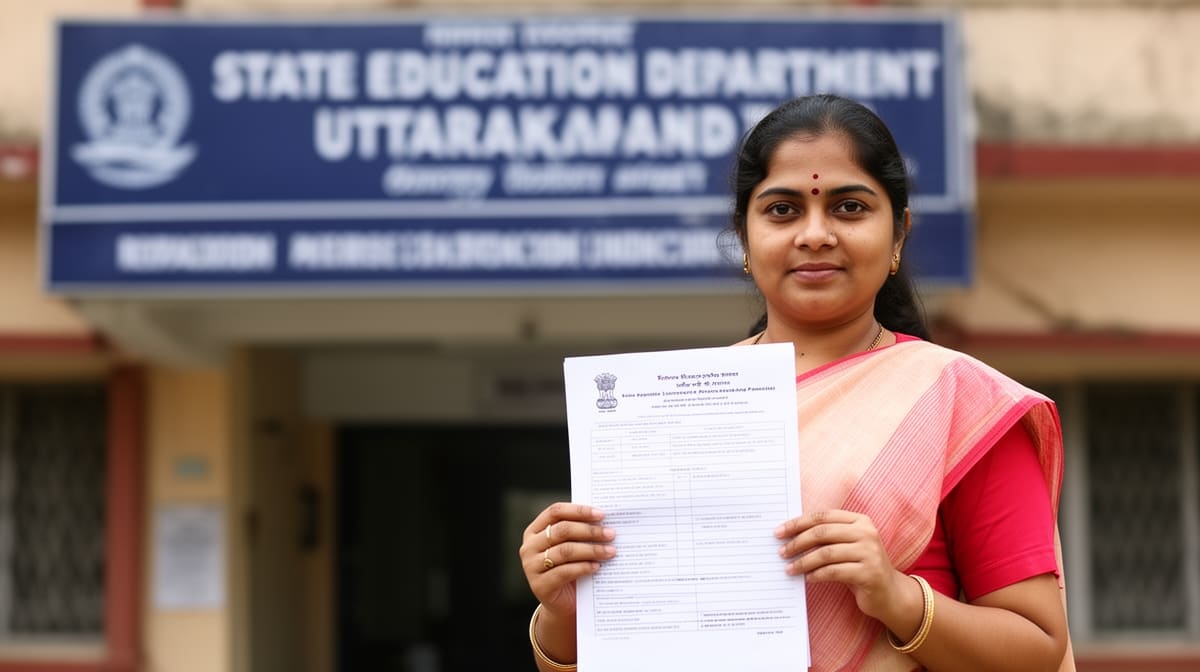
The Uttarakhand High Court has reaffirmed that eligibility for reservation in state government services is tied to original domicile, not acquired domicile through marriage. This ruling clarifies a persistent ambiguity in state-level recruitment policies and reinforces the principle that reservation benefits are territorial, not personal.
Background & Facts
The Dispute
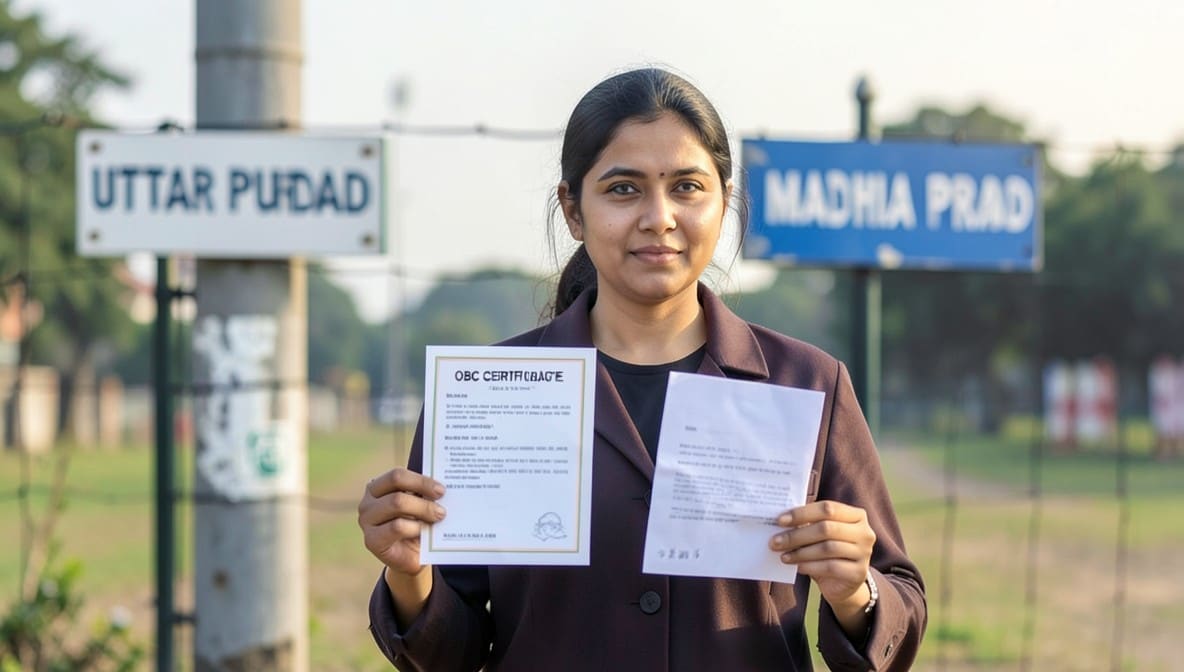
The petitioner, a woman originally from District Bijnor in Uttar Pradesh, applied for the post of Assistant Teacher in a Government Primary School in Champawat, Uttarakhand, pursuant to an advertisement issued by the District Education Officer (Elementary), Champawat. She claimed reservation under the Other Backward Classes (OBC) category. Her candidature was rejected on the ground that she was not a domicile of Uttarakhand and therefore ineligible for reservation benefits in the state.
Key Facts
- The petitioner was born in District Bijnor, Uttar Pradesh
- Both her parents are permanent residents of Uttar Pradesh
- She married a man who is a permanent resident of Champawat district, Uttarakhand
- Upon marriage, she relocated to Uttarakhand
- She claimed that by virtue of her marriage and residence, she acquired the domicile of her husband and thus became eligible for reservation in Uttarakhand
- The state authorities rejected her claim, citing her origin in Uttar Pradesh
Procedural History
- The petitioner filed the writ petition (WPSS/668/2026) before the Uttarakhand High Court challenging the rejection of her candidature
- No prior administrative appeal or departmental proceeding was undertaken before approaching the Court
- The matter was heard on the basis of legal submissions and reliance on a prior judgment of the same Court
Relief Sought
The petitioner sought quashing of the rejection order and direction to the authorities to consider her application for reservation under OBC category in Uttarakhand on the ground of acquired domicile through marriage.
The Legal Issue
The central question was whether a person who is originally a domicile of one state and acquires domicile of another state through marriage is entitled to claim reservation benefits in the new state for government service recruitment.
Arguments Presented
For the Petitioner
Learned counsel for the petitioner argued that upon marriage, the petitioner acquired the domicile of her husband, who is a permanent resident of Uttarakhand. Citing principles of personal law and the doctrine of domicile by choice, counsel contended that her legal domicile shifted from Uttar Pradesh to Uttarakhand, thereby entitling her to reservation benefits in the latter state. The argument rested on the premise that reservation is a personal right that follows the individual’s current domicile.
For the Respondent/State
The Standing Counsel for the State relied on a binding precedent from the same High Court in Writ Petition No. 462 of 2025 (SS), which held that reservation benefits are available only in the state to which a person originally belonged. Migration to another state, regardless of the reason - including marriage - does not confer eligibility for reservation in the new state. The counsel emphasized that the state’s reservation policy is designed to uplift historically disadvantaged groups within its own territorial boundaries, and extending benefits to migrants would undermine the policy’s objective.
The Court's Analysis
The Court examined the precedent cited by the State, particularly Writ Petition No. 462 of 2025 (SS), and found it directly applicable. The judgment in that case had been affirmed by the Supreme Court in Civil Appeal No. 8425 of 2013, dated 02.11.2018, which upheld the principle that reservation is tied to origin, not acquisition.
"From perusal of the judgments referred to above, it is apparent that benefit of reservation can be availed of by a person only in the State to which he/she originally belonged and upon migration to some other State, for whatever reason, one would not be entitled to reservation in State Services of State to which he/she migrates."
The Court held that the petitioner’s claim, though grounded in personal circumstances, could not override the settled legal principle that reservation in state services is not transferable through marriage or residence. The Court emphasized that the purpose of reservation is remedial and territorial - it seeks to correct historical disadvantages within a specific state’s population, not to provide mobility-based entitlements. The Court further noted that allowing such claims would lead to arbitrary expansion of reservation benefits and create administrative chaos in recruitment processes.
The Verdict
The writ petition was dismissed. The Court upheld the rejection of the petitioner’s candidature for reservation benefits in Uttarakhand, holding that she was not eligible because her original domicile was Uttar Pradesh. No monetary relief or direction for reconsideration was granted. The Court directed that the petitioner’s application be processed only under the general category.
What This Means For Similar Cases
Reservation Benefits Are Origin-Based, Not Residence-Based
- Practitioners must advise clients that marriage or long-term residence in a new state does not confer eligibility for reservation in that state’s government services
- Applications for reservation must be evaluated based on the state of origin, as recorded in birth certificates, parentage documents, or prior domicile certificates
Precedent Binding Across Similar Facts
- Any petition challenging rejection on grounds of non-domicile in the state of recruitment will be dismissed if the facts mirror those in WPSS/462/2025
- Advocates must cite Writ Petition No. 462 of 2025 (SS) and Civil Appeal No. 8425 of 2013 as binding authority in all state service recruitment disputes involving migration
State Policies Must Be Interpreted Strictly
- State government recruitment rules that tie reservation to "domicile of origin" are legally enforceable and will not be relaxed by courts on equitable grounds
- Petitioners seeking reservation must establish original domicile through documentary proof - residence, marriage, or family ties in the new state are insufficient