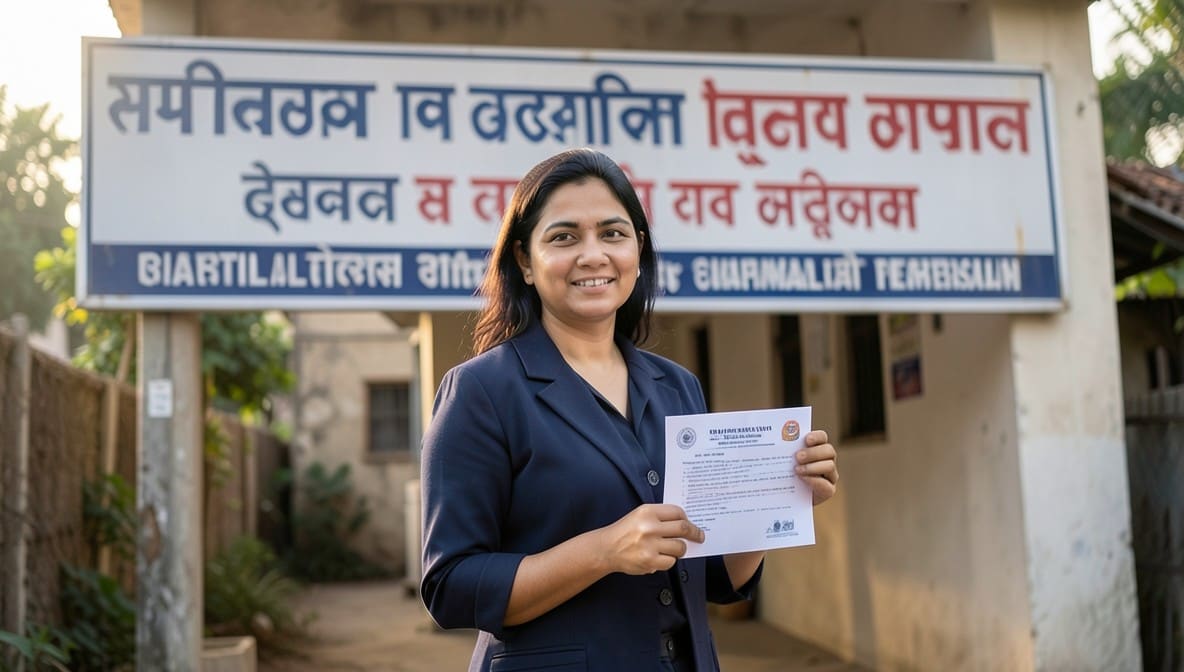
The Rajasthan High Court has clarified that a woman who migrates to Rajasthan after marriage is entitled to an OBC caste certificate in her new state of residence, even if she is not eligible for reservation in public employment. This decision affirms the distinction between the right to documentation and the right to benefit from reservation, reinforcing access to welfare schemes tied to caste certification.
Background & Facts
The Dispute
The petitioner, Suman Devi, daughter of Gyani Ram and widow of Late Rampat Ram, aged approximately 39 years, resides in Village Jatan, Tehsil Bhadra, District Hanumangarh, Rajasthan. She was born in the State of Haryana but migrated to Rajasthan upon marriage. She applied for an OBC caste certificate from the Tehsildar, Bhadra, on the ground that she belongs to the Ahir community, which is recognized as Other Backward Class (OBC) in both Haryana and Rajasthan. Her application was rejected on the ground that she must obtain the certificate from her parental state - Haryana - where she was born and originally registered.
Key Facts
- The petitioner was born in Haryana and is a native of the Ahir community
- The Ahir community is listed as OBC in both the State of Haryana and the State of Rajasthan
- The petitioner has been residing in Rajasthan since her marriage and considers herself a permanent resident of the state
- Her application for OBC certificate was filed with the Tehsildar, Bhadra, Rajasthan
- The Tehsildar rejected the application, directing her to approach authorities in Haryana
- The petitioner contends that the rejection violates her right to access welfare schemes, housing benefits, and educational concessions that require caste certification
Procedural History
- Date of Application: Exact date not specified in judgment, but application submitted prior to filing of writ petition
- Date of Rejection: Not explicitly stated, but occurred before filing of writ petition
- 29.11.2017: Rajasthan High Court delivered judgment in Manju Yadav v. State of Rajasthan (S.B. Civil Writ Petition No. 3968/2017), establishing procedure for issuance of caste certificates to migrant women
- 18.09.2018: Division Bench of Rajasthan High Court upheld the Manju Yadav judgment in State of Rajasthan & Ors. v. Smt. Manju Yadav (D.B. Special Appeal (W) No. 1116/2018), clarifying that caste certificate issuance is distinct from reservation benefits
- 2026: Petitioner filed Civil Writ Petition No. 2985/2026 before the Rajasthan High Court, Jodhpur Bench
The Parties' Positions
Petitioner’s Position: The rejection of her application is arbitrary and contrary to the binding precedent in Manju Yadav. The right to obtain a caste certificate is independent of eligibility for reservation in employment. She seeks issuance of the certificate to access housing, scholarships, and other state-sponsored schemes that require proof of OBC status.
Respondents’ Position: The Tehsildar and State authorities contended that caste certificates must be issued by the state of origin. They relied on Saroj Kumari v. State of Rajasthan (2019), which denied reservation benefits to migrants, arguing that the same logic should apply to certificate issuance.
Relief Sought
The petitioner sought:
- A direction to the competent authorities in Rajasthan to issue an OBC caste certificate
- A declaration that the rejection of her application is illegal and violative of her constitutional rights
- A direction to follow the procedure laid down in Manju Yadav v. State of Rajasthan
The Legal Issue
The central question was whether a woman who has migrated to Rajasthan after marriage and is a permanent resident of the state is entitled to an OBC caste certificate from Rajasthan authorities, even if she is not eligible for reservation in public employment.
Arguments Presented
For the Petitioner
Learned counsel relied on the binding precedent of Manju Yadav v. State of Rajasthan (2017) and its affirmation by the Division Bench in 2018. They argued that the Supreme Court in Bir Singh v. Delhi Jal Board (2018) had held that reservation benefits cannot be availed across states, but this does not negate the right to obtain a caste certificate for non-employment purposes such as housing, education, or welfare schemes. The petitioner’s application was not for employment reservation but for documentation to access other state benefits.
For the Respondent/State
The State’s counsel conceded that the Manju Yadav judgment was binding but attempted to distinguish it by citing Saroj Kumari v. State of Rajasthan (2019), which dealt with denial of reservation in public employment. They argued that the issuance of caste certificates should be restricted to the state of origin to prevent misuse. However, they failed to dispute the factual or legal basis of Manju Yadav.
The Court's Analysis
The Court examined the distinction between the right to obtain a caste certificate and the right to avail reservation benefits in public employment. It noted that the Constitution Bench in Bir Singh v. Delhi Jal Board had conclusively held that a person belonging to a Scheduled Caste, Scheduled Tribe, or Other Backward Class in one state cannot claim reservation benefits in another state. However, the Court emphasized that this ruling pertains exclusively to public employment and does not extend to the issuance of caste certificates.
"Females outside the State of Rajasthan on migrating to Rajasthan, post marriage, may not be entitled to the benefit of reservation in public employment in the State of Rajasthan on account of being a member of a SC or ST or OBC in another State. But these ladies would certainly be entitled to be issued a SC or ST or OBC certificate. For the reason, apart from reservation in public employment these certificates may be relevant for grant of some benefit. For example, it may be a housing scheme. A migrant lady may claim benefit on the strength of the certificate if the scheme envisages domicile or residence as the entitlement for a house or a flat with reservation provided."
The Court held that the Manju Yadav judgment had already laid down a clear procedure: the competent authority in Rajasthan must seek verification of caste and income from the state of origin (Haryana), and upon receipt of such verification, issue the certificate if the community is recognized as OBC in both states. The Court found no legal basis to deviate from this settled position.
The reliance on Saroj Kumari was rejected as inapposite, as that case dealt with reservation in employment, not certificate issuance. The Court reiterated that the two issues are legally distinct.
The Verdict
The writ petition was allowed. The Court directed the respondents to issue an OBC caste certificate to the petitioner within ten days of the certified copy of this order being placed before the competent authority. The certificate shall be issued only after verification of caste and father’s income from the competent authority in Haryana, in accordance with the procedure laid down in Manju Yadav v. State of Rajasthan. The Court clarified that the certificate shall not entitle the petitioner to reservation in public employment, which remains governed by the Supreme Court’s judgment in Bir Singh.
What This Means For Similar Cases
Certificate Issuance Is Independent of Reservation Eligibility
- Practitioners must now argue that denial of caste certificates on grounds of inter-state migration is legally unsustainable
- Welfare schemes (housing, scholarships, subsidies) that require caste certification cannot deny applicants solely because they migrated after marriage
- Authorities must follow the Manju Yadav procedure: verification from origin state + issuance in current state if community is recognized in both
State Authorities Must Proactively Verify, Not Reject
- Tehsildars and SDOs cannot refuse applications outright; they must initiate verification with the state of origin
- Failure to seek verification constitutes arbitrary action and violates Article 14
- The burden of verification lies with the issuing authority, not the applicant
Clarification on Legal Boundaries
- This judgment does not permit cross-state reservation in jobs or education
- It only ensures access to documentation for non-employment benefits
- Lawyers should distinguish between "reservation eligibility" and "certificate entitlement" in pleadings and applications