The Punjab and Haryana High Court has clarified a critical principle in public service pension law: special pay drawn by a government employee during service must be included in the calculation of last drawn pay for pension and retiral benefits, even if departmental proceedings were pending. This ruling resolves long-standing ambiguity for retired employees and mandates immediate compliance by public sector employers.
Background & Facts
The Dispute
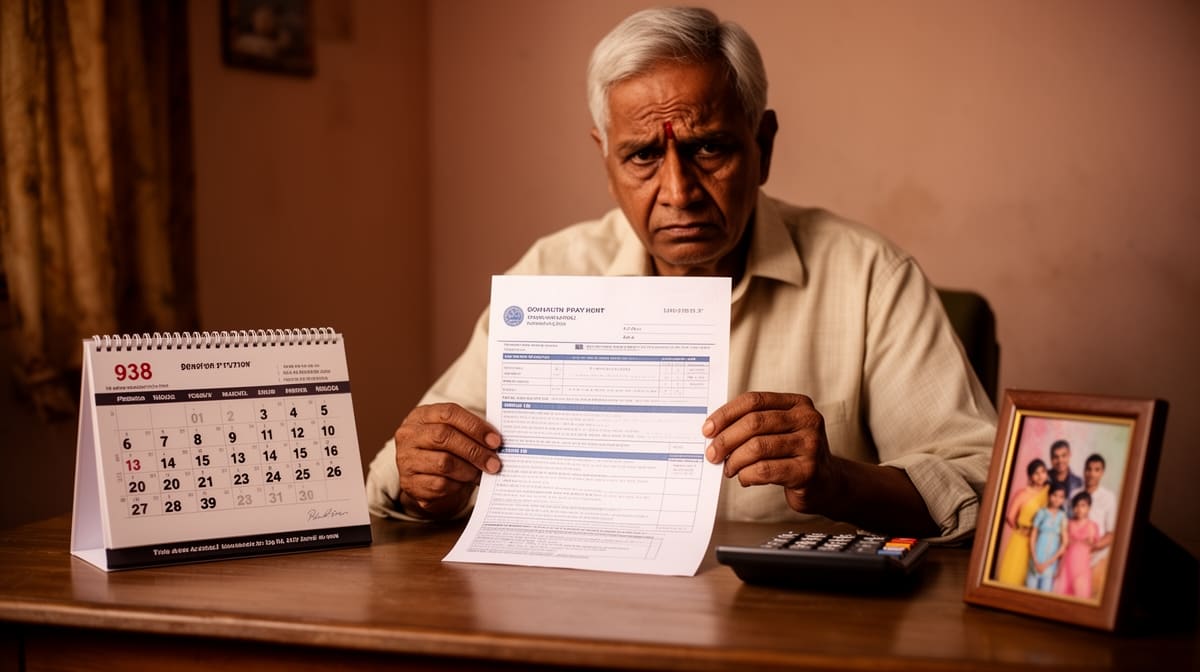
The appellant, Ram Gopal, a retired cashier of the Punjab State Electricity Board (PSEB), sought inclusion of a special pay of Rs.75 per month in his last drawn salary for the purpose of computing pension, gratuity, and other retiral benefits. Despite completing 38 years of service and retiring on superannuation on 30.06.1997, his retiral benefits were delayed for over two years and paid in installments without interest. The special pay, which he received continuously from before 26.11.1992 until retirement, was excluded from his pension calculation on the grounds of pending criminal proceedings related to alleged embezzlement.
Key Facts
- Appellant joined PSEB as Meter Reader on 22.06.1959
- Promoted to LDC (Cashier) and drew special pay of Rs.75/- per month in lieu of cash handling allowance
- Special pay was sanctioned vide Finance Circular No.39/88 dated 09.12.1988
- Finance Circular No.77/89 dated 29.11.1989 directed that special pay be counted as pay for fixation on promotion
- Finance Circular No.57/92 confirmed that employees drawing special pay before 26.11.1992 would continue to receive it and it would be included in pay fixation
- Appellant was drawing Rs.75/- special pay continuously until retirement on 30.06.1997
- A chargesheet was issued against him and other cashiers for alleged embezzlement of municipal funds
- Departmental proceedings concluded on 29.12.1998 with an order (Ex.D-7) directing recovery of Rs.2,000/-
- Despite this, PSEB refused to include the Rs.75/- special pay in his last pay for pension computation
- Appellant filed representations in 1998-2000; received no substantive response until 24.10.2000, when he was asked to submit duplicate service book
- Civil suit filed seeking inclusion of special pay, commutation of pension, gratuity, and 18% interest from 30.06.1997
Procedural History
- 30.06.1997: Appellant retired on superannuation after 38 years of service
- 29.12.1998: Departmental proceedings concluded with recovery order of Rs.2,000/-
- 24.10.2000: PSEB issued letter requesting duplicate service book and posting details
- 2006: Civil suit filed before Civil Judge (Junior Division), Patiala
- 04.10.2006: Civil Judge dismissed suit, holding that criminal proceedings barred inclusion of special pay
- 18.05.2007: Additional District Judge dismissed appeal against the 2006 order
- 2007: Regular Second Appeal filed before Punjab and Haryana High Court
- 26.11.2009: High Court framed substantial question of law on inclusion of special pay and listed matter for hearing on 01.07.2010
- 17.03.2026: Judgment delivered by Justice Sudeepi Sharma
Relief Sought
The appellant sought:
- Inclusion of Rs.75/- per month special pay in last drawn pay for pension and retiral benefits
- Payment of arrears of pension, gratuity, and commutation benefits
- Interest at 18% per annum from 30.06.1997 until realization
- Costs of litigation
The Legal Issue
The central question was whether the special pay of Rs.75/- per month, which was lawfully drawn by the appellant until retirement and recognized by PSEB’s own finance circulars, must be included in the computation of last drawn pay for pension and retiral benefits, despite the pendency or conclusion of departmental proceedings and recovery of a nominal amount.
Arguments Presented
For the Appellant
Learned counsel argued that the special pay was not a temporary allowance but a fixed component of pay sanctioned by multiple PSEB circulars, including Finance Circular No.39/88 and No.57/92, which explicitly directed that such pay be included in pay fixation upon promotion. The pendency of criminal proceedings could not override statutory and circular-based entitlements. The departmental order dated 29.12.1998 had already adjudicated the allegations and imposed recovery, thereby closing the matter. The exclusion of special pay violated the principle of legitimate expectation and was contrary to the Board’s own policy.
For the Respondent
The respondent contended that the appellant’s involvement in alleged embezzlement rendered him ineligible for full retiral benefits. The civil courts below held that the inclusion of special pay would amount to rewarding misconduct. The Board argued that the special pay was a discretionary allowance and could be withheld pending finalization of disciplinary outcomes.
The Court's Analysis
The Court examined the PSEB’s own circulars and found no ambiguity in their language. Finance Circular No.39/88 sanctioned the special pay. Circular No.77/89 mandated its inclusion in pay fixation on promotion. Circular No.57/92 explicitly provided that employees drawing special pay before 26.11.1992 would continue to receive it and that it would be taken into account for fixation of pay. The appellant had been drawing this pay continuously from before 1992 until retirement.
"There is no rebuttal regarding the circulars and circular No.57/92, whereby, it was provided that those who were getting special pay before 26.11.1992 would continue to draw the same and it shall be taken into account while fixing his pay on the promotion to higher post or fixation of his pay."
The Court rejected the lower courts’ reasoning that criminal proceedings barred inclusion of the special pay. It emphasized that the departmental proceedings had already concluded with a recovery order of Rs.2,000/-, which was a proportionate punishment. The Board could not use the mere existence of prior allegations to deny a statutory and circular-based entitlement. The Court held that the exclusion of the special pay was arbitrary and contrary to the Board’s own policy.
The Court further noted that the appellant was a senior citizen who had served for 38 years and that the delay in payment of retiral benefits had caused undue hardship. The lower courts had failed to appreciate the binding nature of the circulars and the finality of the departmental order.
The Verdict
The appellant succeeded. The High Court set aside the judgments and decrees dated 04.10.2006 and 18.05.2007. Respondents are directed to recalculate the appellant’s pensionary benefits by including the special pay of Rs.75/- per month in the last drawn pay. Arrears of retiral benefits shall be paid along with interest at 12% per annum from 30.06.1997 until actual disbursement. The respondents shall pay the entire amount, including interest, within two months from the date of judgment. Parties shall bear their own costs.
What This Means For Similar Cases
Special Pay Is Part of Last Drawn Pay
- Practitioners must now argue that any fixed, recurring allowance sanctioned by official circulars and drawn continuously until retirement forms part of last drawn pay for pension computation
- The mere existence of pending or concluded disciplinary proceedings does not negate this entitlement unless explicitly barred by statute or service rules
- Circulars issued by public sector employers are binding unless revoked or amended
Departmental Finality Overrides Allegations
- Once departmental proceedings conclude with a punishment order, the matter is deemed closed for the purpose of retiral benefits
- Recovery of a specific amount (e.g., Rs.2,000/-) constitutes full adjudication; further denial of benefits is punitive and illegal
- Courts will not permit employers to use allegations as a pretext to withhold lawful dues
Interest on Delayed Pension Is Mandatory
-
Delay in payment of retiral benefits after superannuation attracts interest, even if not claimed at 18%
-
Courts may impose reasonable interest rates (here, 12%) from the date of retirement to ensure justice
-
Employers cannot avoid liability by procedural delays or non-response to representations
-
Practitioners representing retired employees should immediately review pension calculations for inclusion of all fixed allowances, even if labeled "special pay"
-
File writ petitions if benefits are withheld on grounds of pending or concluded disciplinary cases
-
Demand interest from the date of retirement, not from the date of claim or order