Topic

Retiral Benefits

Retiral benefits in Indian law encompass pensions, gratuity, leave encashment, and GPF dues payable to government and public sector employees upon retirement, governed by service rules and constitutional protections under Article 300-A.

29 articlesLatest June 2026
Scheduled Tribe Certificate Invalidated Post-Retirement | Retiral Benefits Protected Under Govt Resolution 14.12.2022 Despite Lack of Notice: Bombay HC
Case Law Analysis
|Bombay High Court

Scheduled Tribe Certificate Invalidated Post-Retirement | Retiral Benefits Protected Under Govt Resolution 14.12.2022 Despite Lack of Notice: Bombay HC

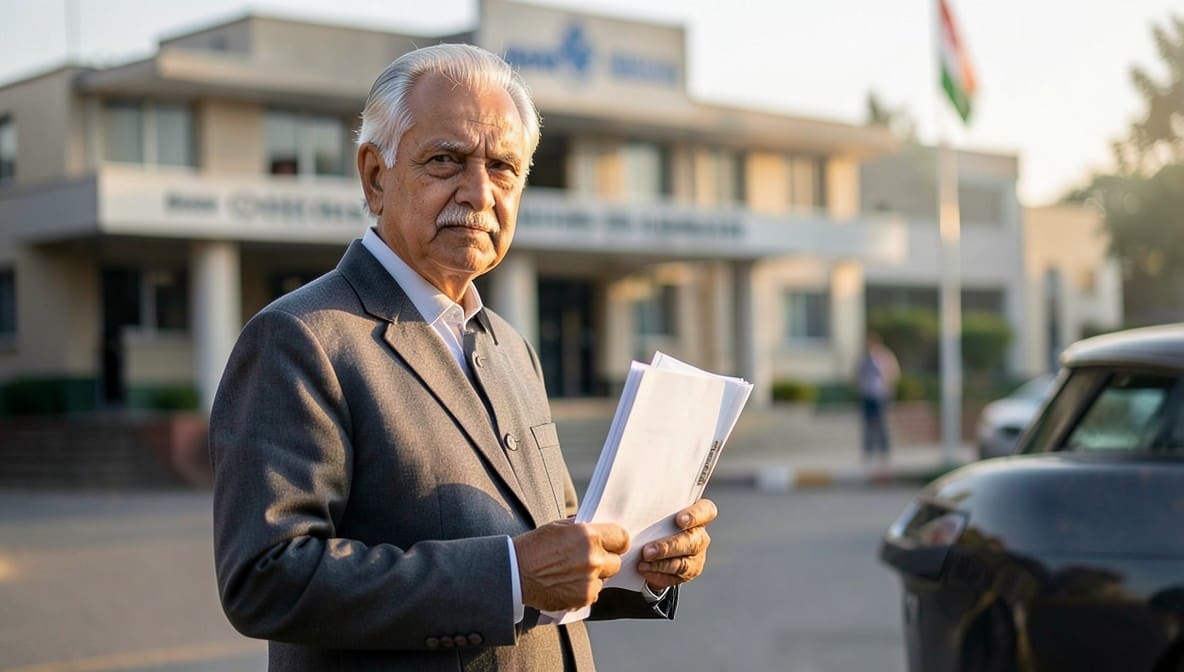
The Bombay High Court ruled that a retired employee’s retiral benefits cannot be denied merely because his Scheduled Tribe certificate was invalidated after service - especially when he was never served the cancellation order. This upholds natural justice in administrative actions and ensures that procedural lapses by the state do not deprive retirees of statutorily guaranteed benefits under Government Resolution 14.12.2022.
Article 300-A | Withholding Leave Encashment Without Statutory Authority Violates Right to Property: CAT Directs Payment with GPF Interest
Case Law Analysis
|Central Administrative Tribunal

Article 300-A | Withholding Leave Encashment Without Statutory Authority Violates Right to Property: CAT Directs Payment with GPF Interest

CAT Principal Bench ruled that arbitrary withholding of retiral dues, including leave encashment, without statutory backing constitutes a violation of Article 300-A. The Tribunal directed the respondent corporation to release the withheld amount along with GPF interest, reinforcing constitutional protections for retired employees' property rights.

Retiral Dues Cannot Be Withheld for Financial Crunch | Gratuity & Leave Encashment Must Be Paid Within 3 Months with Interest : Allahabad HC
Case Law Analysis
|Allahabad High Court

Retiral Dues Cannot Be Withheld for Financial Crunch | Gratuity & Leave Encashment Must Be Paid Within 3 Months with Interest : Allahabad HC

The Allahabad High Court has ruled that public employers cannot delay payment of gratuity, leave encashment, or pending salary to retired employees due to financial constraints. The order mandates full payment within three months, with interest at bank rate if no specific provision exists, reinforcing that statutory benefits are non-negotiable rights, not discretionary payouts.

Pension Rights | Administrative Failure to Maintain Service Records Cannot Justify Denial After 37 Years of Service : Rajasthan HC
Case Law Analysis
|Rajasthan High Court

Pension Rights | Administrative Failure to Maintain Service Records Cannot Justify Denial After 37 Years of Service : Rajasthan HC

The Rajasthan High Court has ruled that decades of uninterrupted government service cannot be nullified by the state’s own failure to preserve service records. This decision protects retired employees from punitive administrative negligence, affirming that procedural lapses by the employer cannot override substantive rights earned through long-term public service.

Judicial Precedent Mandates | HRTC Must Pay Gratuity, Leave Encashment & 9% Interest from Retirement Date : Himachal Pradesh HC
|Himachal Pradesh High Court

Judicial Precedent Mandates | HRTC Must Pay Gratuity, Leave Encashment & 9% Interest from Retirement Date : Himachal Pradesh HC

Himachal Pradesh High Court reinforces binding precedent, directing HRTC to pay full retiral benefits with 9% interest from the date of retirement. The ruling underscores that denial of statutory dues violates service law principles, setting a clear mandate for public sector employers to comply with judicial directions in similar cases.

Natural Justice in Pension Fixation | Unilateral Pay Revision After 30 Years Without Hearing Violates Retiral Benefits: Rajasthan HC
Case Law Analysis
|Rajasthan High Court

Natural Justice in Pension Fixation | Unilateral Pay Revision After 30 Years Without Hearing Violates Retiral Benefits: Rajasthan HC

Rajasthan High Court rules that post-retirement pay revisions affecting pension and gratuity calculations cannot be imposed unilaterally without notice or hearing, upholding principles of natural justice. The judgment mandates recalculation of retiral benefits based on the last pay certificate, setting a precedent for administrative fairness in service law.

Article 14, 19, 21 | 6% Interest on Delayed Leave Encashment Mandated Even Without Statutory Provision : MP HC Gwalior
Case Law Analysis
|Madhya Pradesh High Court

Article 14, 19, 21 | 6% Interest on Delayed Leave Encashment Mandated Even Without Statutory Provision : MP HC Gwalior

The Madhya Pradesh High Court has ruled that public employees are entitled to 6% interest on delayed retiral dues, including leave encashment, purely as a constitutional remedy under Articles 14, 19, and 21 - irrespective of whether any rule or policy mandates it. This sets a precedent for all state and municipal employees facing unjustified delays in final settlements, reinforcing that delay itself violates the right to fair treatment and livelihood.

Section 39 Punjab Cooperative Societies Act | Retiral Benefits Protected from Loan Recovery Deductions : Punjab & Haryana HC
Case Law Analysis
|Punjab and Haryana High Court

Section 39 Punjab Cooperative Societies Act | Retiral Benefits Protected from Loan Recovery Deductions : Punjab & Haryana HC

The Punjab & Haryana High Court ruled that Section 39 of the Punjab Cooperative Societies Act, 1961, restricts loan recoveries to salary deductions only, shielding retiral benefits like gratuity and leave encashment. The court directed the release of over Rs. 10 lakhs in pending dues to a retired employee, reinforcing natural justice in cooperative society loan recoveries.

Rule 89 Rajasthan Pension Rules | 9% Interest Mandatory for Delayed Retiral Benefits Attributable to State : Rajasthan HC
Case Law Analysis
|Rajasthan High Court

Rule 89 Rajasthan Pension Rules | 9% Interest Mandatory for Delayed Retiral Benefits Attributable to State : Rajasthan HC

Rajasthan High Court reinforces that interest at 9% per annum under Rule 89 of the Rajasthan Pension Rules, 1996 is compulsory for delayed payment of retiral benefits when the delay is solely attributable to state authorities. The ruling clarifies that administrative lapses, such as discrepancies in service records, do not absolve the state of its liability to compensate pensioners for financial losses due to delayed disbursements.

Delay in Retiral Benefits Violates Article 21 | State Must Pay 10% Interest if Not Released Within Six Weeks : Telangana HC
Case Law Analysis
|Telangana High Court

Delay in Retiral Benefits Violates Article 21 | State Must Pay 10% Interest if Not Released Within Six Weeks : Telangana HC

Telangana High Court rules that undue delay in releasing admitted retiral benefits-including gratuity, pension, and GPF arrears-violates constitutional rights under Articles 14, 16, and 21. The state must disburse dues within six weeks or pay 10% interest, reinforcing that tokenized dues are enforceable entitlements, not mere administrative formalities.

Old Pension Scheme Eligibility | Contract Service Prior to 01.01.2004 Counts Regardless of Regularization Date : Punjab & Haryana HC
Case Law Analysis
|Punjab and Haryana High Court

Old Pension Scheme Eligibility | Contract Service Prior to 01.01.2004 Counts Regardless of Regularization Date : Punjab & Haryana HC

Punjab & Haryana HC rules that employees with contract service before 01.01.2004 qualify for the Old Pension Scheme, even if regularized later. The ruling bars administrative attempts to apply the New Contributory Pension Scheme based on the regularization date, ensuring pension benefits align with the original appointment terms.

Employer Liability for Gratuity & Leave Encashment | Central Co-Operative Bank Cannot Shift Burden to Cooperative Societies: Rajasthan HC
Case Law Analysis
|Rajasthan High Court

Employer Liability for Gratuity & Leave Encashment | Central Co-Operative Bank Cannot Shift Burden to Cooperative Societies: Rajasthan HC

Rajasthan High Court rules that the Central Co-Operative Bank, as the entity issuing retirement orders and maintaining service records, remains statutorily liable for gratuity and leave encashment payments-irrespective of internal arrangements assigning liability to cooperative societies. The judgment reinforces that employer obligations under service law cannot be contractually delegated to avoid statutory benefits.

Employer Liability for Gratuity & Leave Encashment Irreversible Despite Internal Shifts: Rajasthan HC
Case Law Analysis
|Rajasthan High Court

Employer Liability for Gratuity & Leave Encashment Irreversible Despite Internal Shifts: Rajasthan HC

Rajasthan High Court rules that the Central Co-Operative Bank remains statutorily liable for gratuity and leave encashment payments to retired employees, even if internal arrangements shift liability to affiliated cooperatives. The judgment reinforces that retiral benefits cannot be evaded through administrative reallocations, directly impacting employer obligations under service law.