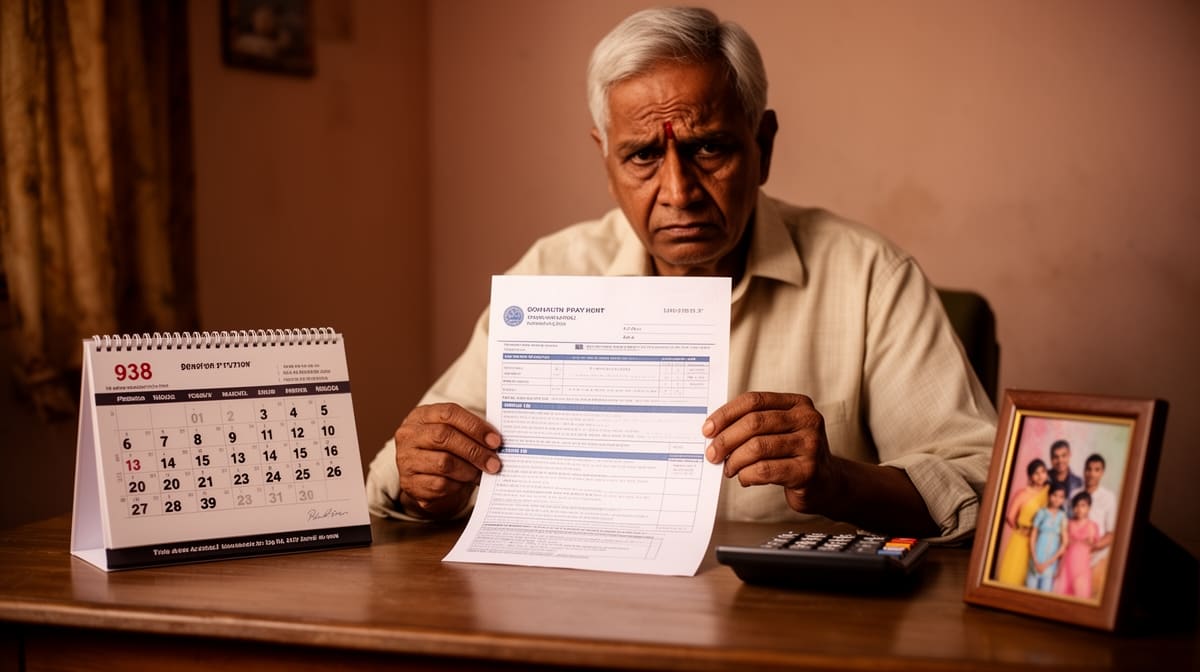
The Madras High Court has affirmed that public employers are legally obligated to pay interest at 6% per annum on delayed terminal benefits, establishing a clear benchmark for compliance in government service matters. This ruling reinforces the principle that delay in disbursement of earned entitlements constitutes a breach of the employee’s constitutional right to fair compensation.
Background & Facts
The Dispute
K. Balasubramaniam, a driver employed by the Tamil Nadu State Transport Corporation (Salem) Limited since 25 August 1994, retired on 31 May 2024 upon attaining superannuation. Despite his eligibility for Provident Fund, Gratuity, Pension Commutation, and Earned Leave surrender benefits, the respondents delayed payment until 2 December 2025 - nearly 19 months after retirement. No interest was paid for this period.
Procedural History
- 31 May 2024: Petitioner retired from service
- 2 December 2025: Terminal benefits disbursed without interest
- 24 January 2026: Petitioner submitted a formal representation demanding 6% interest for the delay
- March 2026: Writ petition filed under Article 226 of the Constitution
Relief Sought
The petitioner sought a writ of mandamus directing the respondents to pay 6% per annum interest on all delayed terminal benefits, calculated from the date of retirement until actual payment.
The Legal Issue
The central question was whether public employers are legally bound to pay interest at the rate of 6% per annum on delayed terminal benefits such as Provident Fund, Gratuity, Pension Commutation, and Earned Leave surrender, and if so, whether such interest is mandatory even in the absence of an explicit statutory provision.
Arguments Presented
For the Petitioner
The petitioner’s counsel argued that delay in payment of earned entitlements violates the principle of fair wage and equitable treatment under Article 14 and Article 21 of the Constitution. He relied on State of Punjab v. Jagjit Singh and Union of India v. Rameshwar Prasad to assert that interest at 6% is a recognized standard for delayed payments in public employment, especially where the employer is a state instrumentality.
For the Respondent
The Standing Counsel for the respondents conceded that interest at 6% per annum was due and offered to pay it voluntarily. No substantive legal opposition was raised to the rate or the principle, effectively conceding the petitioner’s claim.
The Court's Analysis
The Court examined the nature of terminal benefits as deferred wages earned through service, and emphasized that their delayed disbursement amounts to unjust enrichment of the employer. The Court noted that while no specific statute mandates 6% interest in this context, the rate has been consistently applied by courts across India as a reasonable and equitable standard.
"The State, as an employer, cannot be permitted to retain the benefits of delayed payment without compensating the employee for the loss of use of funds during the period of default."
The Court further observed that the petitioner’s representation was ignored despite the clear moral and legal obligation on the employer. The absence of a statutory provision does not absolve the State from its duty to act fairly. The Court held that 6% interest is not merely a guideline but a minimum standard of justice in public employment disputes.
The Verdict
The petitioner succeeded. The Madras High Court held that public employers must pay 6% interest per annum on delayed terminal benefits, calculated from the date of retirement until actual payment. The Court directed payment within six weeks of receipt of the order.
What This Means For Similar Cases
Interest Is Not Discretionary
- Practitioners representing retired government employees must now assert 6% interest as a default entitlement, not a request
- Delay beyond three months triggers automatic liability, regardless of administrative backlog
- No need to prove financial hardship - interest is due as a matter of right
State Employers Cannot Hide Behind Procedure
- Administrative delays, fund shortages, or internal approvals are not valid defenses
- The State’s fiduciary duty to its employees overrides bureaucratic inefficiency
- Writ petitions under Article 226 are now a reliable remedy for delayed terminal benefits
Uniform Standard Across States
- This ruling aligns Madras HC with precedents from Delhi, Bombay, and Karnataka High Courts
- Creates a national benchmark for public sector employers
- Encourages proactive settlement of claims to avoid litigation