In a significant order reinforcing environmental governance, the National Green Tribunal (NGT) has directed strict compliance with the Solid Waste Management Rules, 2026, mandating District Collectors to oversee implementation, penalize non-compliance, and explore Corporate Social Responsibility (CSR) funds for waste-to-energy projects. The judgment underscores the judiciary’s proactive role in enforcing environmental norms and holding local bodies accountable for scientific waste disposal.
Background & Facts
The Dispute
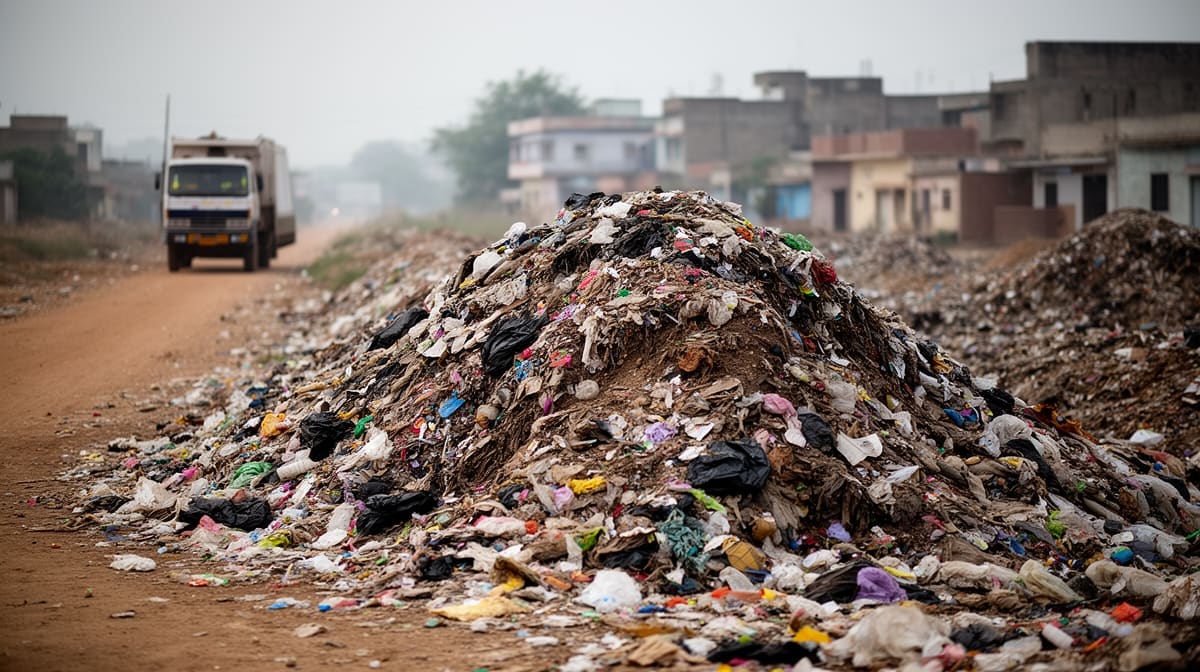
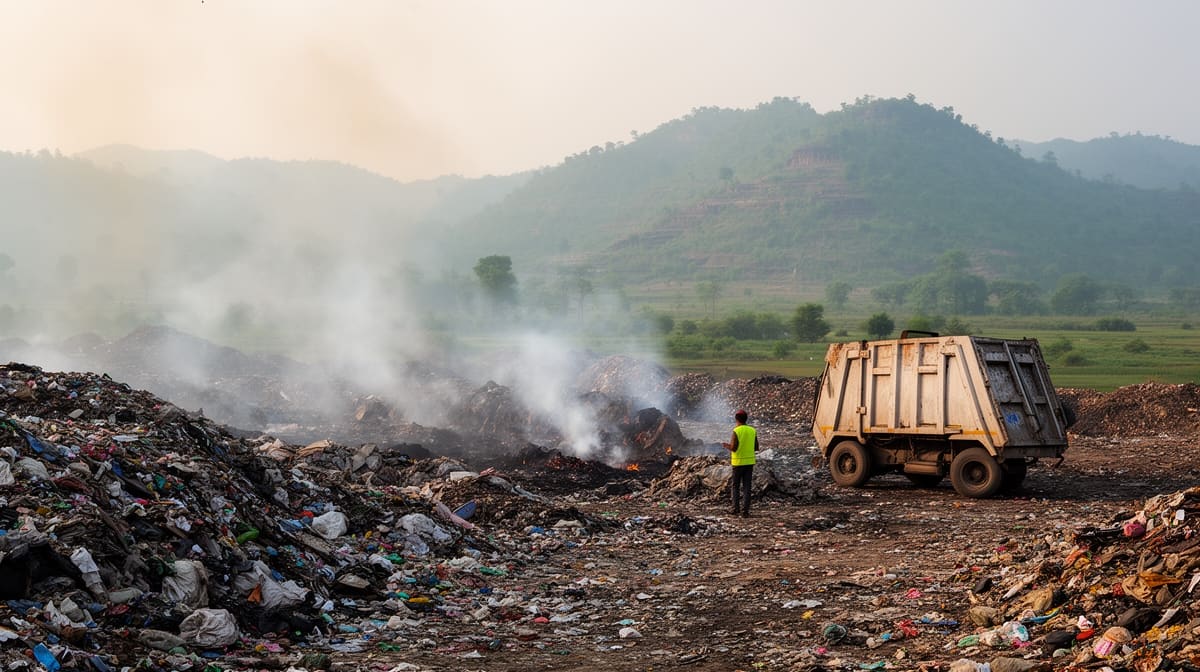
The applicant, Guddu Pathekar, filed an Original Application (OA No. 108/2025(CZ)) before the NGT’s Central Zone Bench, Bhopal, alleging violations of environmental laws by the State of Madhya Pradesh and Nagar Palika Parishad, Multai. The dispute centered on the improper management of solid waste, including unauthorized burning at dumping sites, non-compliance with statutory consents, and failure to implement the Solid Waste Management Rules, 2026.
Key Facts
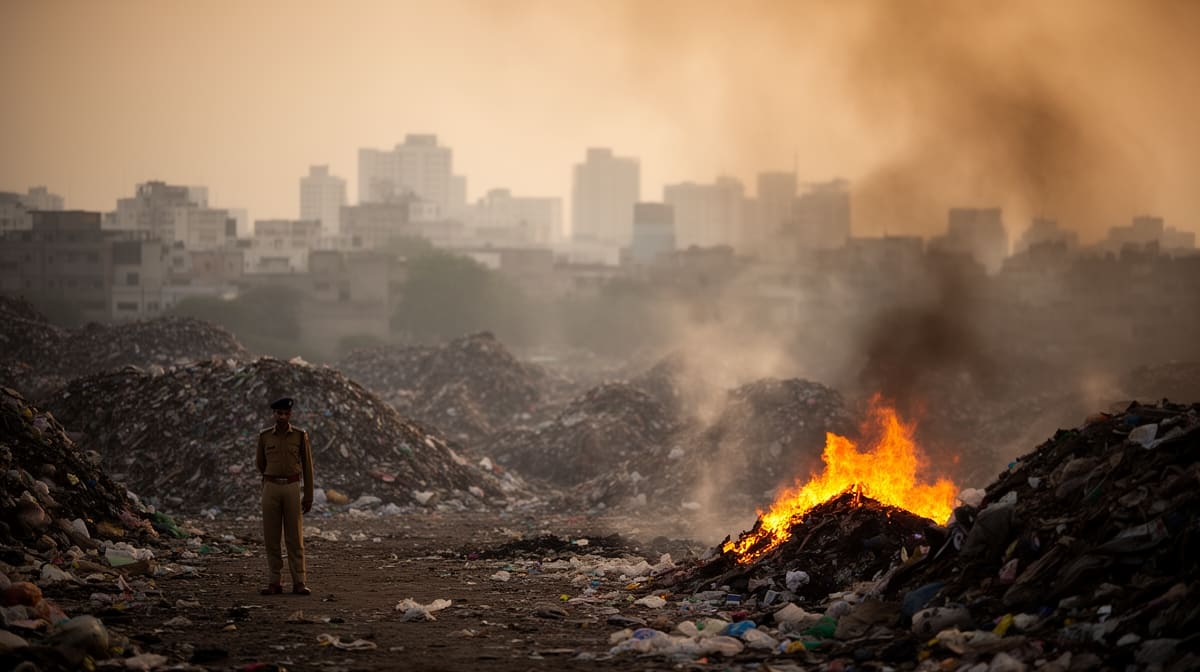
- A fire was observed at the dumping site in Multai, leading to the emission of pollutants.
- The Nagar Palika Parishad, Multai, had not obtained Consent under the Water (Prevention and Control of Pollution) Act, 1974 and the Air (Prevention and Control of Pollution) Act, 1981.
- The Solid Waste Management Rules, 2026, were not being complied with, including the failure to identify a suitable landfill for scientific waste processing.
- The Madhya Pradesh Pollution Control Board (MPPCB) had filed a case for environmental compensation before the Adjudicating Officer and initiated proceedings under the Air Act and Water Act.
- The applicant contended that the calculation of environmental damage was inadequate.
Procedural History
- OA No. 108/2025(CZ) was filed before the NGT, Central Zone Bench, Bhopal.
- Date of Hearing: 06.07.2026.
- The matter was listed for further action on 21.08.2026, with directions for the filing of an action-taken report within three weeks.
Relief Sought
The applicant sought:
- Strict enforcement of the Solid Waste Management Rules, 2026.
- Proper calculation and realization of environmental compensation for damage caused by non-compliance.
- Directions to the Nagar Palika Parishad, Multai, to cease burning of solid waste and ensure scientific disposal.
- Implementation of the Supreme Court’s directions in Bhopal Municipal Corporation v. Dr. Subhash Chandra Pandey & Ors. (Civil Appeal No. 6174 of 2023).
The Legal Issue
The central legal questions before the NGT were:
- Whether the Solid Waste Management Rules, 2026, impose a mandatory obligation on local bodies to scientifically process and dispose of waste, and if non-compliance attracts penal consequences.
- Whether the District Collector has the authority to enforce compliance under Section 5 of the Environment (Protection) Act, 1986, including the power to penalize bulk waste generators.
- Whether CSR funds can be utilized for environmental amelioration under the Polluter Pays Principle.
Arguments Presented
For the Applicant
- The applicant argued that the Nagar Palika Parishad, Multai had failed to comply with the Solid Waste Management Rules, 2026, leading to environmental degradation.
- The calculation of environmental compensation was inadequate and required judicial intervention.
- Reliance was placed on the Supreme Court’s directions in Bhopal Municipal Corporation v. Dr. Subhash Chandra Pandey & Ors., which emphasized strict compliance with waste management norms.
For the Respondents
-
State of Madhya Pradesh (R-1): Ms. Parul Bhadoria, counsel for the Madhya Pradesh Pollution Control Board, submitted that:
- A case for environmental compensation had been filed before the Adjudicating Officer.
- Proceedings under the Air Act and Water Act had been initiated.
- The State Board was monitoring compliance and taking necessary actions.
-
Nagar Palika Parishad, Multai (R-4): Mr. Om Shankar Shrivastava, counsel for the local body, submitted that:
- Major compliances had been undertaken, and actions were being taken as per the rules.
- The Chief Municipal Officer raised concerns about inadequate funds and manpower, which were departmental issues.
The Court's Analysis
The NGT’s analysis focused on the statutory obligations under the Solid Waste Management Rules, 2026, and the Environment (Protection) Act, 1986, while reinforcing the Supreme Court’s directives in Bhopal Municipal Corporation v. Dr. Subhash Chandra Pandey & Ors.
"This Earth and this Nation are what we all have in common. We are confident that a group of committed civil servants, officers, people's representatives, and foot soldiers vested with the power to administer the SWM Rules, 2026, can spread the light of preserving this planet and this Nation from man-made destruction. The statutory framework introduced under the Environment (Protection) Act, 1986, will be the change for the progress and well-being of the Indian citizens."
The Tribunal emphasized the following key principles:
-
District Collector’s Role: The NGT directed District Collectors to constitute a ‘Special Cell’ to oversee implementation of the SWM Rules, 2026. This cell would:
- Issue directions for the stoppage of water/electricity to bulk waste generators violating the rules.
- Conduct virtual spot inspections of dumping sites and submit fortnightly reports to State Secretaries.
- Include Regional Officers of Pollution Control Boards in the Special Cell to conduct field inspections and forward photographs for compliance.
-
Polluter Pays Principle and CSR Funds: The NGT directed the Secretaries of key ministries (MoEFCC, Jal Shakti, MoHUA, Panchayati Raj, and Rural Development) to explore the inclusion of CSR contributions for establishing Compressed Biogas plants or other waste-to-energy technologies. While not strictly enforcing the Polluter Pays Principle, the Tribunal mandated that CSR funds be utilized exclusively for environmental amelioration within the jurisdictions of contributing industries.
-
Monitoring and Reporting: The Tribunal outlined a multi-tiered monitoring mechanism involving:
- District Collectors communicating Supreme Court orders to local bodies.
- State Governments incentivizing compliant local bodies with grants while penalizing defaulters.
- Secretaries of Union Ministries receiving monthly progress reports from District Collectors.
- Chief Secretaries collating data on compliance and submitting reports to Union Secretaries.
-
Specific Compliance Directions: The NGT issued detailed directives for local bodies, including:
- Source segregation of waste, with a focus on Bulk Waste Generators (BWGs).
- Use of closed vehicles for waste transportation.
- Technology-driven mapping of Garbage Vulnerable Points (GVPs) to prevent recurrence.
- Special Purpose Vehicles (SPVs) for waste processing, with 30% of ULB funds allocated to waste management.
- Ward cleanliness rankings as criteria for incentives.
- Neighborhood RRR (Reduce-Reuse-Recycle) Centers for citizen engagement.
- Tie-ups with industries for Extended Producer Responsibility (EPR) certification.
-
Rural and Urban Convergence: The Tribunal emphasized convergence of funding sources for sanitation and waste management projects, particularly in rural areas. States were directed to:
- Fill vacancies in local bodies in a time-bound manner.
- Create a dedicated cadre for SWM and sanitation in rural local bodies.
- Categorize Gram Panchayats by population size to assign appropriate staff.
The Verdict
The NGT issued the following operative directions:
-
Compliance with SWM Rules, 2026: The Nagar Palika Parishad, Multai was directed to ensure no burning of solid waste and to comply with the Solid Waste Management Rules, 2026 for collection, processing, and disposal.
-
District Collector Oversight: The District Collector was directed to:
- Monitor compliance with the SWM Rules, 2026.
- Hold monthly meetings to review progress.
- File an action-taken report within three weeks.
-
Implementation of Supreme Court Directions: The Tribunal reiterated the Supreme Court’s directions in Bhopal Municipal Corporation v. Dr. Subhash Chandra Pandey & Ors., including:
- Constitution of Special Cells by District Collectors.
- Fortnightly reporting to State Secretaries.
- Penal consequences for non-compliance, including stoppage of water/electricity to defaulters.
- Utilization of CSR funds for waste-to-energy projects.
-
Short, Medium, and Long-Term Objectives: Local bodies were directed to set out time-bound objectives for compliance.
The matter was listed for 21.08.2026 for further monitoring.
What This Means For Similar Cases
District Collectors as Enforcers of Environmental Norms
- The judgment elevates the role of District Collectors as primary enforcers of environmental laws, granting them quasi-judicial powers to penalize non-compliance.
- Practitioners should note that:
- District Collectors can issue directions under Section 5 of the Environment (Protection) Act, 1986, including stoppage of utilities to bulk waste generators.
- Virtual inspections and fortnightly reporting are now mandatory, creating a paper trail for future litigation.
- Pollution Control Board officers must be included in the Special Cell, ensuring coordinated enforcement.
CSR Funds for Environmental Amelioration
- The NGT’s direction to utilize CSR funds for waste-to-energy projects marks a paradigm shift in environmental financing.
- Key takeaways:
- CSR contributions can now be prioritized for environmental projects under Union schemes.
- While the Polluter Pays Principle is not strictly enforced, CSR funds serve as a compensatory mechanism for local bodies.
- Industries contributing CSR funds must ensure their projects align with SWM Rules, 2026, to avoid future liability.
Local Bodies’ Obligations and Penalties
- The judgment crystallizes the obligations of local bodies under the SWM Rules, 2026, with clear penalties for non-compliance.
- Practitioners should advise local bodies to:
- Allocate 30% of funds to waste management.
- Upgrade waste transportation to closed vehicles.
- Establish RRR Centers and tie up with industries for EPR certification.
- Avoid legacy dumpsites and ensure scientific landfills for rejects only.
- Non-compliance can now attract:
- Penal grants from State Governments.
- Directions from District Collectors for utility stoppage.
- Monitoring by Union Secretaries, with monthly progress reports.
Convergence of Rural and Urban Waste Management
- The NGT’s emphasis on convergence of funding sources highlights the need for integrated waste management strategies.
- Key implications:
- Gram Panchayats must be staffed based on population size, with technical support for SWM.
- States must provide matching funds under SBM-U (Swachh Bharat Mission-Urban) for capacity building.
- Short, medium, and long-term objectives must be set by local bodies, with time-bound compliance.