The National Green Tribunal Southern Zone has issued a landmark directive addressing the long-standing environmental degradation caused by the unscientific dumping of municipal solid waste in an abandoned laterite quarry in Kerala. The Tribunal’s suo motu intervention underscores the state’s statutory duty to manage waste scientifically and the imperative to remediate legacy pollution with urgency and accountability.
Background & Facts
The Dispute
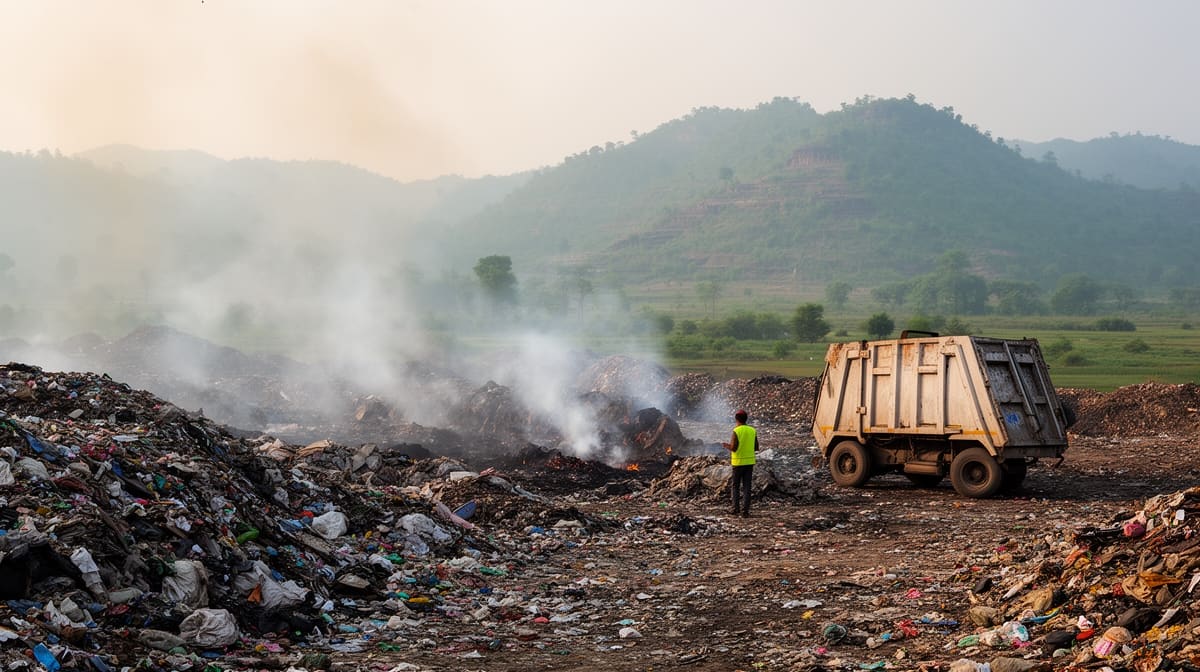
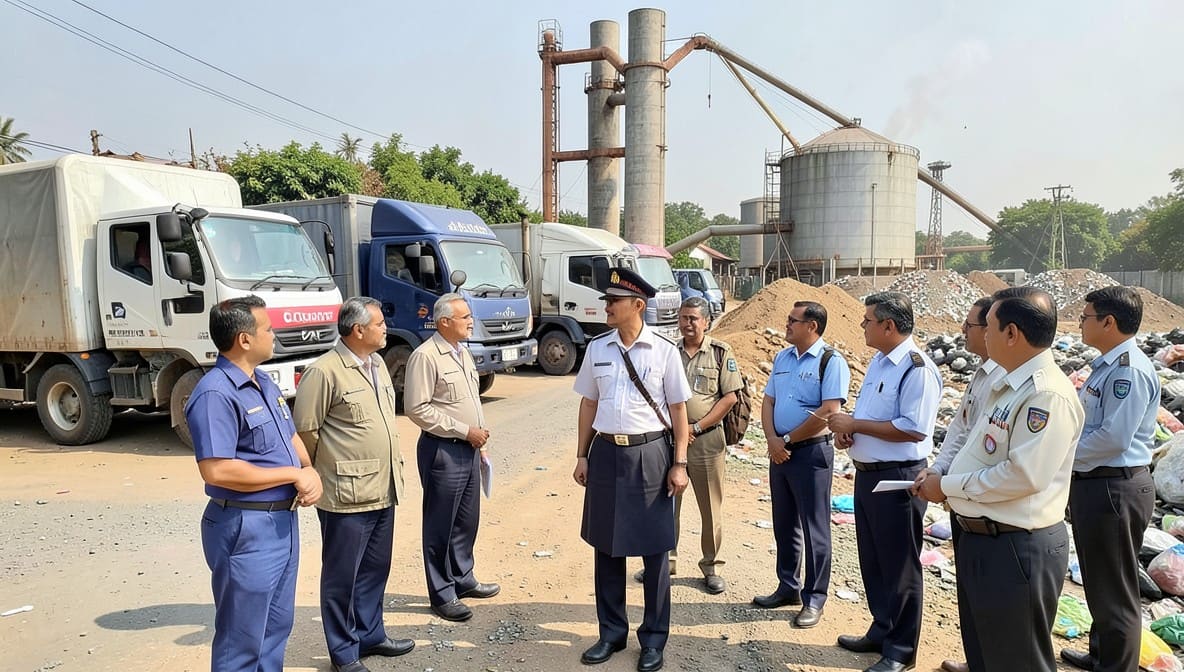
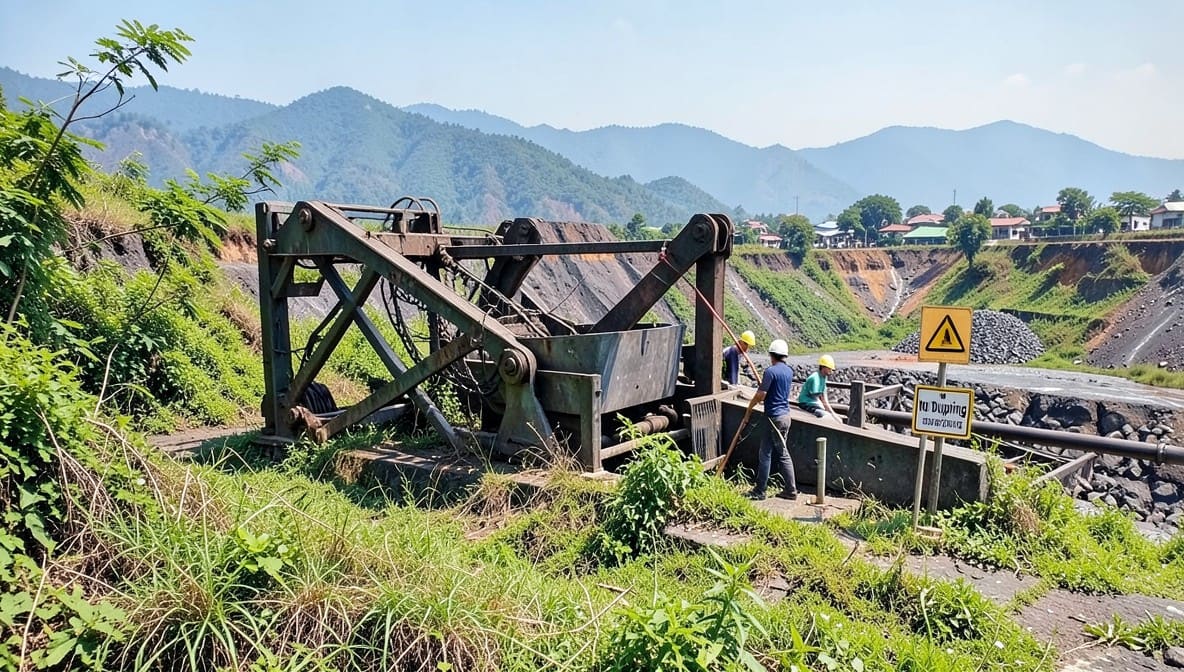
The present matter was initiated by the National Green Tribunal (NGT) suo motu based on a report dated 26.06.2023 submitted by Hon’ble Justice A.V. Ramakrishna Pillai, Former Judge of the Kerala High Court and Chairman of the State Level Monitoring Committee (SLMC), Kerala. The report detailed the illegal and unscientific dumping of municipal solid waste at an abandoned laterite stone quarry located at Kubanoor in Mangalpady Grama Panchayat, Kasargod District, Kerala. The site, spanning approximately 2.5 acres, had been used as a waste disposal ground for nearly 18 years without any segregation, treatment, or environmental safeguards.
Key Facts
- The abandoned quarry, originally a laterite mine, now holds an estimated 15,697.32 cubic meters of legacy waste, with nearly 90% of the waste buried below ground level.
- Approximately 15-20 tonnes of unsegregated municipal solid waste were dumped daily at the site.
- Mangalpady Grama Panchayat, serving a population exceeding one lakh, transported all municipal waste to this location without compliance with the Solid Waste Management Rules, 2016.
- During monsoon, leachate from the dump flows into nearby residential areas, causing soil and water contamination and posing serious public health risks.
- The Kerala State Pollution Control Board (KSPCB) had issued multiple directions for compliance, but the Panchayat failed to act.
- A fire incident occurred at the site on 14.02.2024, exposing critical gaps in fire safety and waste management infrastructure.
- As of 09.03.2026, approximately 7,063.821 cubic meters (45%) of waste had been bio-mined and removed.
- The Panchayat had initiated a bio-mining project funded by Rs.1.50 Crore under the Centrally Sponsored Scheme and Rs.50 Lakhs from its own Development Fund.
- M/s. MCK Kutty Engineering Pvt. Ltd. was awarded the contract after technical evaluation and obtained Consent to Operate from KSPCB.
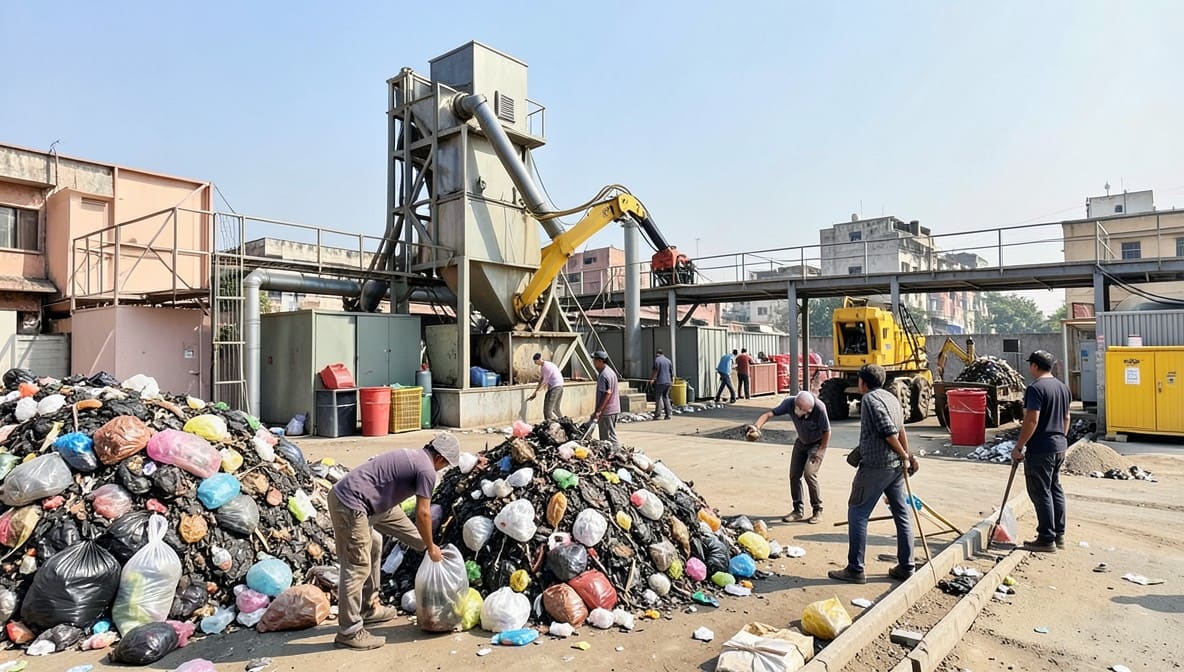
- Machinery installed includes a 400-tonne/day trommel unit, seven conveyor belts, two air density separators, one JCB, and one diesel generator.
- Despite these measures, fire safety systems were absent, and Refuse Derived Fuel (RDF) was improperly stored.
- An additional 128 tonnes of legacy waste were removed through a contract with Clean Kerala Company Limited.
- Decentralized measures such as bio-bins and ring composting have been introduced, and waste management was included in the Annual Plan 2023-24.
Procedural History
- 26.06.2023: Report submitted by Hon’ble Justice A.V. Ramakrishna Pillai triggering NGT’s suo motu jurisdiction.
- 14.02.2024: Fire incident at the dump site.
- 14.03.2025: KSPCB inspection revealed continued non-segregation and lack of safety infrastructure.
- 30.06.2025: KSPCB issued final order under Section 5 of the Environment (Protection) Act, 1986, imposing environmental compensation of Rs.60,00,000/- on Mangalpady Grama Panchayat.
- 12.03.2026: Status report submitted by Additional Secretary, Local Self Government Department, indicating 45% bio-mining completion.
- 13.03.2026: Judgment reserved by the NGT.
- 24.03.2026: Judgment delivered.
The Parties' Positions
The respondents, including the Government of Kerala, KSPCB, District Collector, and Mangalpady Grama Panchayat, acknowledged the historical failure in waste management but highlighted ongoing remedial efforts, including bio-mining, decentralized waste management, and financial allocation. They contended that remediation was underway and requested time for completion.
Relief Sought
The NGT, acting suo motu, sought to enforce statutory compliance, ensure environmental restoration, and impose accountability for past violations. No formal petition was filed; relief was sought by the Tribunal itself to prevent ongoing harm.
The Legal Issue
The central question was whether the prolonged, unscientific dumping of municipal solid waste in an abandoned quarry constitutes a violation of the Solid Waste Management Rules, 2016, and whether environmental compensation levied under the Environment (Protection) Act, 1986 must be utilized exclusively for site restoration when no remediation plan exists.
Arguments Presented
For the Petitioner (Suo Motu)
The Tribunal, acting on its own motion, argued that the failure to segregate waste, lack of scientific disposal, absence of fire safety, and continued dumping despite repeated directions by KSPCB amounted to a clear breach of Rule 13 of the Solid Waste Management Rules, 2016, which mandates duties of Village Panchayats. The Tribunal emphasized that statutory obligations are non-negotiable and that delay in remediation, even with ongoing efforts, does not absolve past violations or justify continued environmental risk.
For the Respondent
The respondents acknowledged the lapse but submitted that remedial measures were now in place, including bio-mining funded by central and state funds, installation of machinery, and adoption of decentralized systems. They argued that imposing additional penalties or directives would be redundant and that the Rs.60 lakh compensation should be allowed to fund the existing project.
The Court's Analysis
The Tribunal conducted a rigorous analysis of statutory obligations under the Solid Waste Management Rules, 2016, particularly Section 13, which places the duty of scientific waste management squarely on Village Panchayats. It held that the 18-year period of unregulated dumping, coupled with the absence of any prior remediation plan, constituted a persistent violation of environmental due diligence.
"The continued failure to ensure scientific handling, segregation, and disposal of waste demonstrates non-compliance with these statutory provisions."
The Tribunal rejected the notion that ongoing bio-mining absolves past negligence. It noted that while the project was commendable, its delayed initiation - nearly 18 years after the dumping began - was itself a failure of governance. The absence of fire safety infrastructure, even during active bio-mining, was deemed a grave risk requiring immediate correction.
The Tribunal further emphasized that environmental compensation under the Environment (Protection) Act, 1986 is not merely punitive but restorative in nature. Since no concrete plan for ecological restoration had been submitted by any respondent, the Tribunal directed that the Rs.60 lakh compensation must be exclusively utilized for the rehabilitation of the site under the supervision of KSPCB.
"In stark contrast, the respondents here have converted the abandoned quarry in the State of Kerala - 'God's Own Country' - into a dumping yard for municipal solid waste. Such conduct is highly deplorable and warrants immediate remedial measures."
The Tribunal also drew upon global best practices, citing the rehabilitation of abandoned quarries into eco-parks and tourism zones, to underscore the missed opportunity for sustainable land use.
The Verdict
The NGT Southern Zone directed that the bio-mining work at the Kubanoor site be completed as expeditiously as possible. Adequate fire safety infrastructure, including firefighting equipment and water storage, must be installed immediately. Strict compliance with the Solid Waste Management Rules, 2016 is mandated from 01.04.2026. Surveillance via CCTV and warning boards must be implemented to prevent future dumping. The Rs.60,00,000 environmental compensation imposed by KSPCB shall be utilized solely for site restoration under the supervision of the Kerala State Pollution Control Board. A compliance report, detailing completion of bio-mining and restoration, must be filed before the Tribunal within three months from the date of this order.
What This Means For Similar Cases
Environmental Compensation Must Be Restorative, Not Punitive
- Practitioners must argue that environmental compensation under the Environment (Protection) Act, 1986 is not merely a penalty but a fund for ecological repair.
- Where no restoration plan exists, courts may direct that compensation be ring-fenced for site-specific remediation.
- Local bodies cannot treat compensation as a cost of doing business; it must be tied to measurable environmental outcomes.
Statutory Duties of Panchayats Are Non-Delegable
- Rule 13 of the Solid Waste Management Rules, 2016 imposes direct, non-negotiable duties on Village Panchayats.
- Contracting out waste management does not absolve the Panchayat of its statutory responsibility for oversight and compliance.
- Failure to monitor contractors or ensure segregation at source remains a violation, regardless of third-party involvement.
Delayed Remediation Does Not Erase Past Violations
- Even if remediation is underway, prolonged non-compliance (18 years in this case) triggers independent liability.
- Courts will not accept "we are fixing it now" as a defense to systemic, long-term environmental neglect.
- Sua sponte intervention by environmental tribunals is a viable tool where administrative inaction is systemic and public health is at risk.