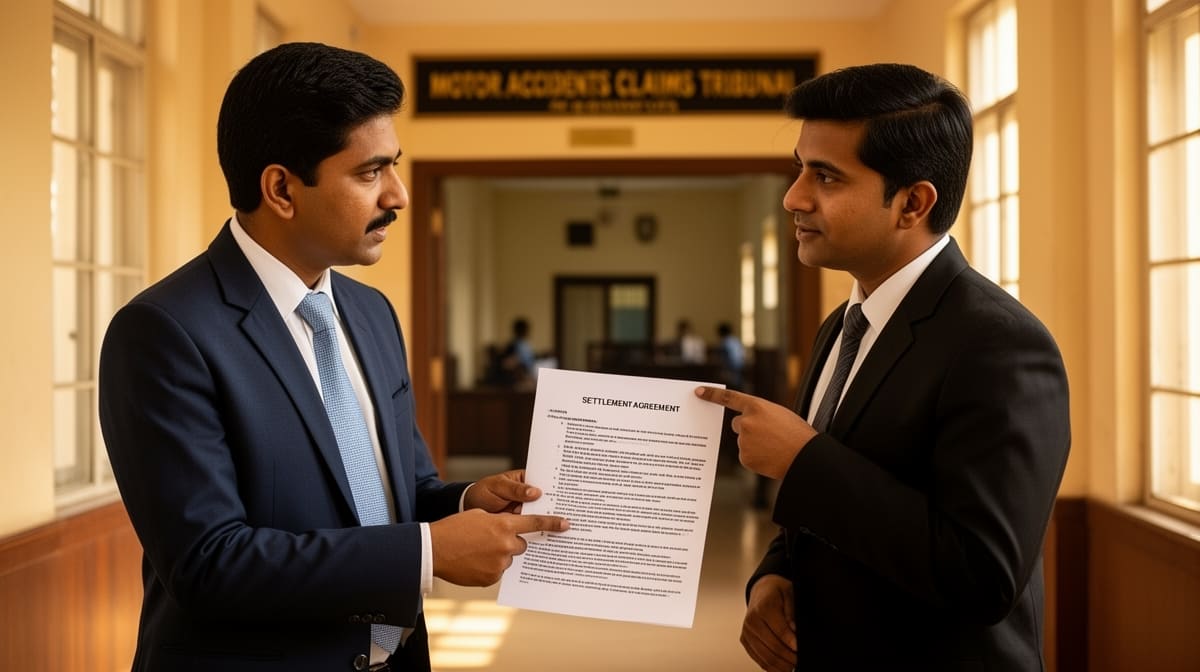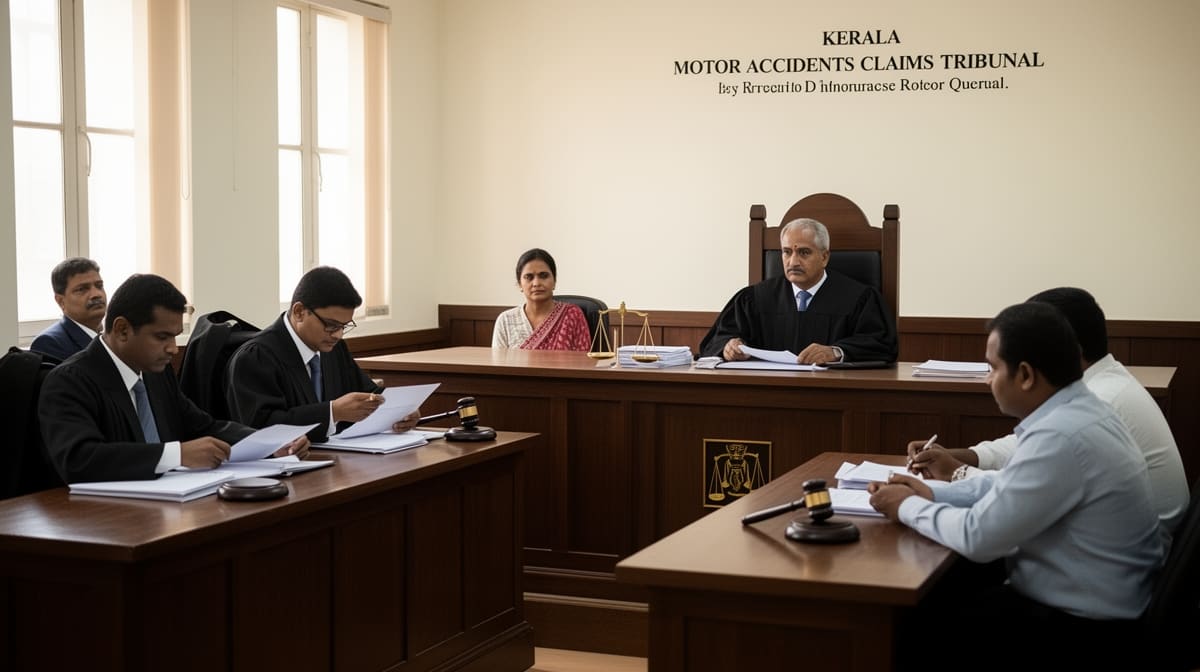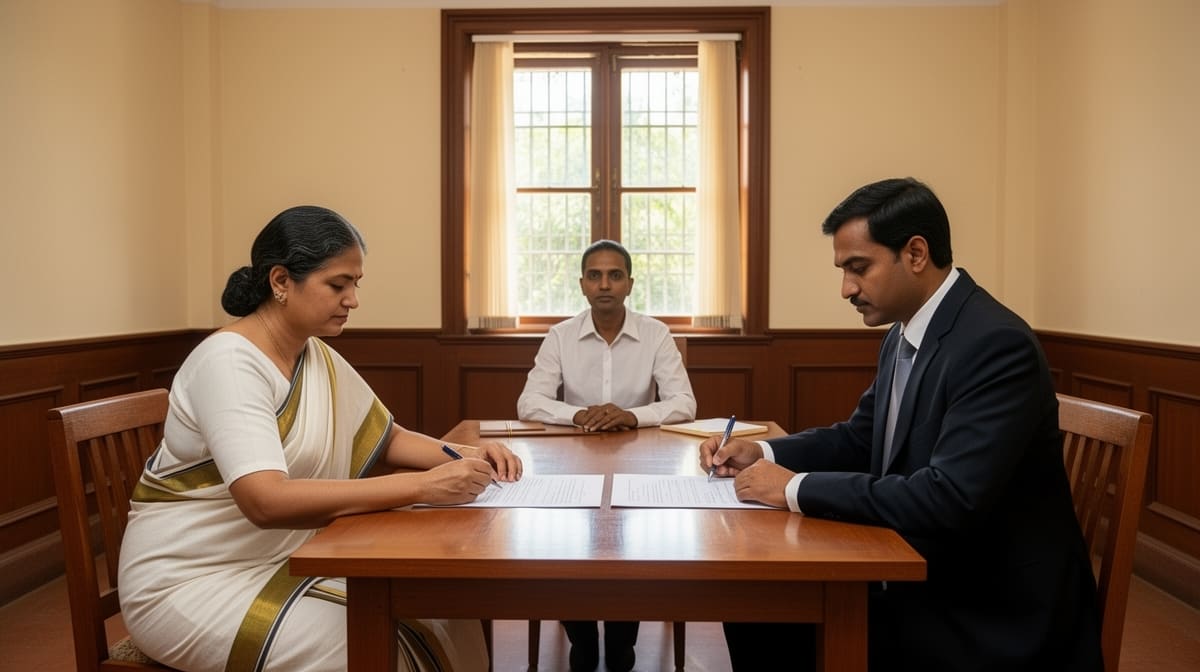
The Kerala High Court has affirmed that settlements reached through court-annexed mediation in motor accident claims are binding and enforceable, providing a definitive resolution mechanism that supersedes tribunal awards. This judgment reinforces the statutory framework under the Legal Services Authorities Act and underscores the judiciary’s commitment to alternative dispute resolution in civil compensation matters.
Background & Facts
The Dispute
The appellant, Kuttappan, aged 63, filed a claim petition before the Motor Accidents Claims Tribunal, Pathanamthitta, seeking compensation for injuries sustained in a motor accident on 22 March 2008. He initially claimed ₹92,000, later limiting his demand to ₹60,000. The Tribunal awarded him ₹29,500, inclusive of interest at 9% per annum from the date of petition, which the appellant challenged as inadequate.
Procedural History
- 2009: Claim petition filed before Motor Accidents Claims Tribunal
- 2018: Tribunal awarded ₹29,500; appellant filed appeal
- 2025: Parties voluntarily participated in mediation at Kerala High Court Mediation Centre
- 20 November 2025: Settlement reached with insurer agreeing to pay ₹1,30,000 as full and final settlement
- 10 February 2026: Settlement report submitted to High Court; appeal heard and disposed of
Relief Sought
The appellant sought enhancement of compensation to reflect the true extent of his injuries and loss of earnings. The insurer, while not contesting liability, sought to resolve the matter amicably through mediation.
The Legal Issue
The central question was whether a settlement agreement reached before a court-annexed mediator in a motor accident claim can legally modify and supersede the Tribunal’s award, and whether such a settlement is binding without requiring fresh adjudication.
Arguments Presented
For the Appellant
The appellant’s counsel submitted that the settlement, reached voluntarily before the High Court Mediation Centre, was a legitimate and binding resolution under Section 89 of the Code of Civil Procedure and Section 20 of the Legal Services Authorities Act, 1987. They emphasized that the amount offered - ₹1,30,000 - was fair, comprehensive, and included interest and costs, thereby eliminating prolonged litigation.
For the Respondent
The insurer’s counsel confirmed the settlement terms and undertook to deposit the amount within two months. They did not oppose the modification of the Tribunal’s award, acknowledging the binding nature of the mediated agreement and the public policy favoring amicable resolution in personal injury claims.
The Court's Analysis
The Court examined the statutory framework governing court-annexed mediation and held that such settlements are not mere private agreements but judicially recognized resolutions. The Court relied on Salem Advocate Bar Association v. Union of India to affirm that mediation under Section 89 CPC is an integral part of the adjudicatory process when conducted under court supervision.
"The settlement reached before the Mediator, being duly reported and accepted by this Court, assumes the character of a judicial order and is binding on the parties."
The Court noted that the appellant, a senior citizen, had endured nearly 18 years of litigation. The additional ₹1,00,500 offered by the insurer (over the Tribunal’s award) was deemed sufficient to account for inflation, medical expenses, and loss of income. The Court emphasized that finality in compensation claims is a core objective of the Motor Vehicles Act, and mediation achieves this without compromising justice.
The Court further held that the settlement agreement, once accepted by the Court, becomes part of the judgment and is enforceable as such. No further adjudication was required, as both parties had voluntarily consented with full knowledge of their rights.
The Verdict
The appellant prevailed. The Court held that a settlement reached before a court-annexed mediator in a motor accident claim is binding and may modify the Tribunal’s award. The compensation was enhanced to ₹1,30,000 as full and final settlement, with interest at 7% per annum on default.
What This Means For Similar Cases
Settlements Override Tribunal Awards
- Practitioners may now file settlement agreements under Section 89 CPC to directly modify Motor Accidents Claims Tribunal awards without filing fresh appeals
- Courts will treat such agreements as judicial orders, enforceable under Section 36 of the Arbitration and Conciliation Act, 1996 by analogy
Mediation Is a Viable Alternative to Prolonged Litigation
- In cases involving elderly claimants or minor injuries, mediation offers a faster, cost-effective resolution
- Insurers should proactively engage in mediation to avoid cumulative interest and litigation costs
- Claimants must be advised that settlement amounts must be clearly documented as "full and final" to preclude future claims
Enforcement Mechanism Is Clear
- Failure to pay within stipulated time triggers 7% interest from default date
- The settlement agreement forms part of the judgment and may be executed like any decree
- No need to return to Tribunal for implementation - High Court’s order suffices