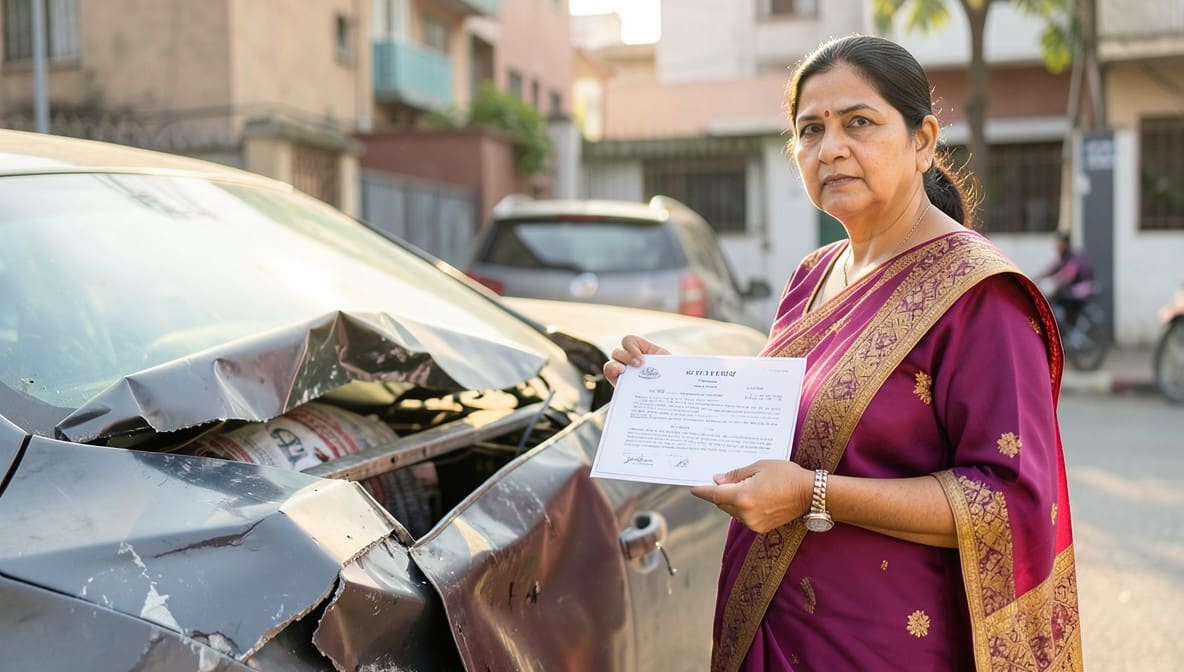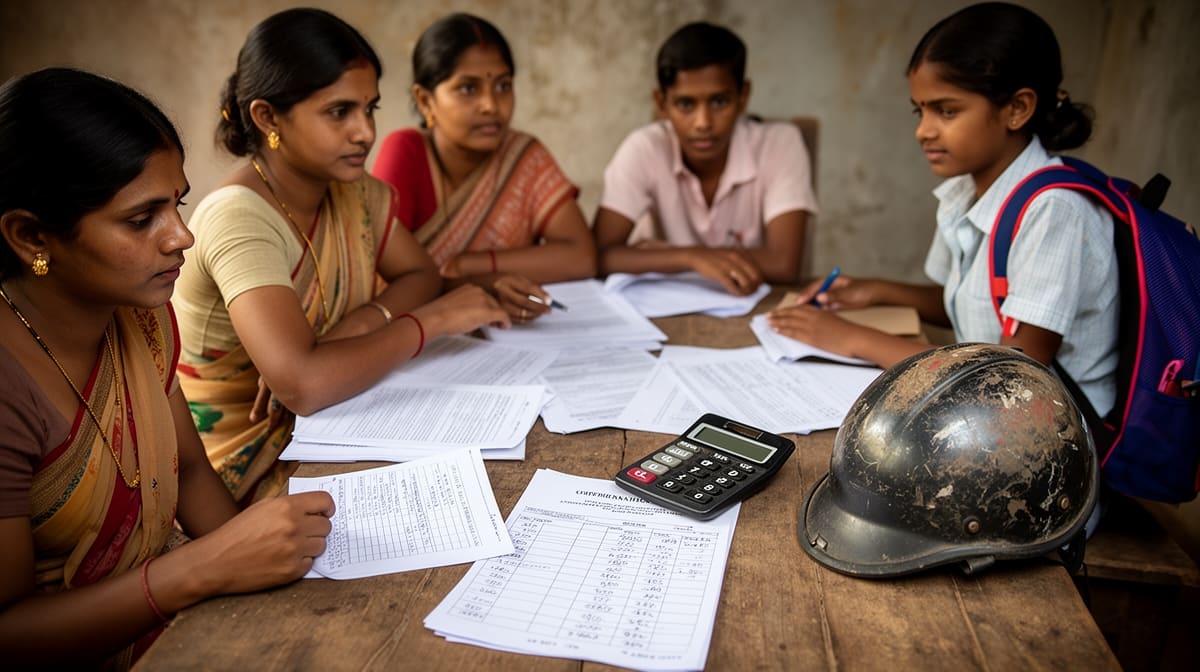
The Karnataka High Court recently addressed a critical aspect of motor accident compensation calculations in Smt. Sakamma v. Rakshith R. The judgment underscores that when determining loss of dependency, the deduction for the deceased's personal expenses must reflect the actual number of dependants. The Court enhanced the compensation by recalculating the deduction from 50% to 1/3, setting a precedent for accurate dependency assessments in future claims.
Background & Facts
The Dispute
The appellant, Smt. Sakamma, is the 96-year-old mother of the deceased, V.C. Puttaiah, who died in a road traffic accident on 31.03.2017. The deceased was survived by three dependants: his two sons (respondent Nos. 1 and 2) and his mother (the appellant). Respondent Nos. 1 and 2 filed a claim petition before the Motor Accident Claims Tribunal (MACT), Mysuru, seeking compensation for their father's death. The Tribunal awarded compensation under various heads but deducted 50% of the deceased's income towards personal expenses, effectively excluding the appellant as a dependant in the calculation.
Key Facts
- The deceased, V.P. Raju, died in a road traffic accident on 31.03.2017
- The deceased had three dependants: two sons (respondent Nos. 1 and 2) and his mother (appellant)
- The Tribunal awarded compensation in MVC No. 1070/2018 on 17.11.2022 as follows:
- Loss of dependency: Rs. 24,84,000
- Filial consortium: Rs. 1,20,000
- Funeral expenses: Rs. 15,000
- Loss of estate: Rs. 15,000
- Total: Rs. 26,34,000
- The Tribunal deducted 50% of the deceased's income towards personal expenses, ignoring the appellant's dependency
Procedural History
- 31.03.2017: Accident resulting in the death of V.P. Raju
- MVC No. 1070/2018: Claim petition filed by respondent Nos. 1 and 2 before the MACT, Mysuru
- 17.11.2022: Tribunal passed judgment awarding Rs. 26,34,000 as compensation
- MFA No. 2709 of 2023: Appellant filed appeal before the Karnataka High Court seeking enhancement of compensation
- 08.06.2026: High Court delivered judgment allowing the appeal in part
Relief Sought
The appellant sought enhancement of the compensation awarded by the Tribunal, specifically challenging the 50% deduction towards personal expenses. The appellant contended that since the deceased had three dependants, the deduction should have been 1/3 of the income instead of 50%.
The Legal Issue
The central question before the Court was whether the deduction for the deceased's personal expenses in calculating loss of dependency should be 50% of the income (as applied by the Tribunal) or 1/3 of the income when the deceased has three dependants.
Arguments Presented
For the Appellant
The appellant's counsel argued that the Tribunal erred in deducting 50% of the deceased's income towards personal expenses, as this ignored the appellant's dependency. The deceased had three dependants (two sons and the appellant), and thus, the deduction should have been 1/3 of the income to accurately reflect the loss of dependency.
For the Respondent (Insurer)
The counsel for respondent No. 4 (the insurer) did not dispute the appellant's dependency on the deceased. However, no specific counter-argument was presented regarding the quantum of deduction.
The Court's Analysis
The Court examined the principles of compensation under the Motor Vehicles Act, 1988, particularly the calculation of loss of dependency. The Court noted that the Tribunal had awarded compensation based on a 50% deduction for personal expenses, which was incorrect given the number of dependants.
The Court relied on the well-established principle that deduction for personal expenses should be calculated based on the number of dependants. When the deceased has three dependants, the deduction should be 1/3 of the income, not 50%. The Court observed:
"Considering the fact that respondent No.3 one of the dependant along with claimant Nos.1 and 2 who are respondent Nos.1 and 2 herein the Tribunal ought to have taken deductions of the deceased towards his personal expenses at 1/3 of his income instead of 50%."
The Court recalculated the loss of dependency as follows:
- Monthly income of the deceased: Rs. 46,000
- Deduction for personal expenses (1/3): Rs. 15,333
- Net monthly dependency: Rs. 30,667
- Multiplier (12 months x 9 years): Rs. 30,667 x 12 x 9 = Rs. 33,12,036
The Court thus enhanced the compensation by Rs. 8,28,036 (Rs. 33,12,036 - Rs. 24,84,000).
The Verdict
The Court allowed the appeal in part and directed the following:
- The appellant and respondent Nos. 1 and 2 are entitled to enhanced compensation of Rs. 8,28,036 with interest at 6% per annum from the date of the petition till realization
- Respondent No. 4 (the insurer) must deposit the enhanced compensation within six weeks, failing which it will be liable to pay interest at 9% per annum from the date of the judgment till payment
- The apportionment of compensation among the appellant and respondent Nos. 1 and 2, as ordered by the Tribunal, remains unaltered
- The appellant and respondent Nos. 1 and 2 are entitled to the release of the entire enhanced compensation
What This Means For Similar Cases
Deduction for Personal Expenses Must Reflect All Dependants
This judgment reinforces the principle that deduction for personal expenses in motor accident compensation cases must accurately reflect the number of dependants. Practitioners should ensure:
- For two dependants: Deduction of 1/2 of the income
- For three dependants: Deduction of 1/3 of the income
- For four or more dependants: Deduction of 1/4 of the income
Failure to apply the correct deduction can result in undercompensation, as seen in this case.
Insurers Must Be Prepared for Enhanced Liability
Insurers should note that enhanced compensation may be awarded if the initial deduction for personal expenses is incorrect. The Court's direction to deposit the enhanced amount within six weeks with a higher interest rate for delays underscores the urgency of compliance. Insurers must:
- Review dependency calculations in pending claims
- Adjust reserves to account for potential enhancements
- Comply with timelines to avoid higher interest liabilities
Tribunal Awards Are Subject to Appellate Scrutiny
This case highlights that Tribunal awards are not final and can be challenged on grounds of incorrect legal principles. Claimants and insurers alike should:
- Scrutinize dependency calculations in Tribunal awards
- File appeals where deductions are incorrectly applied
- Seek legal recourse to ensure fair compensation