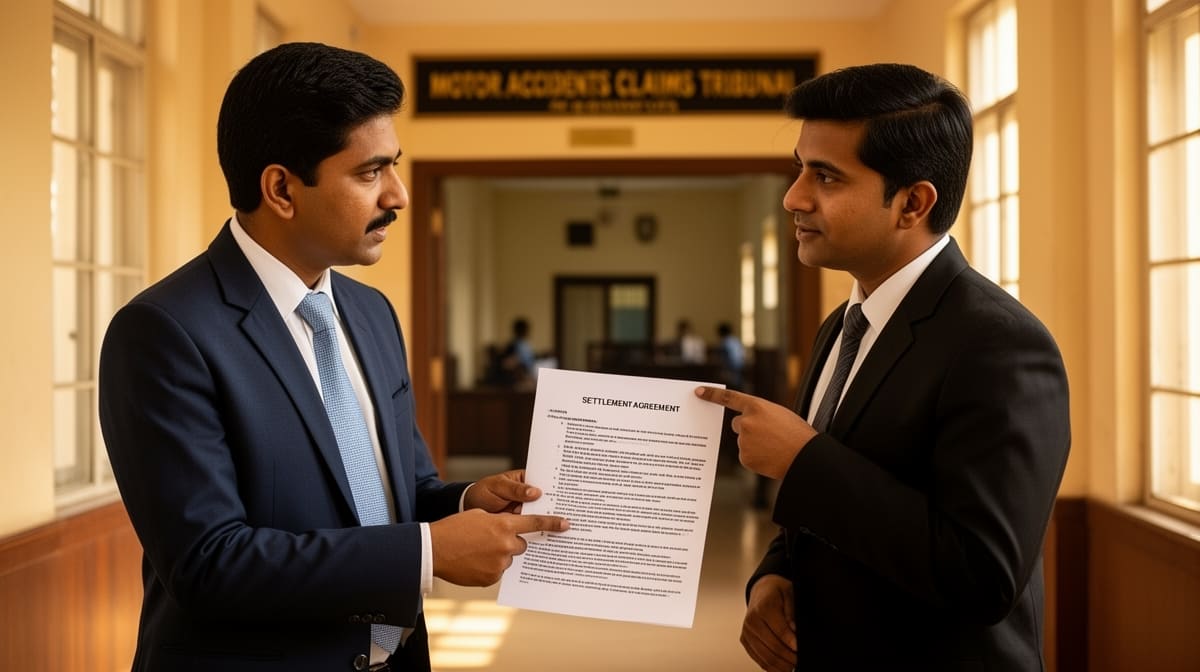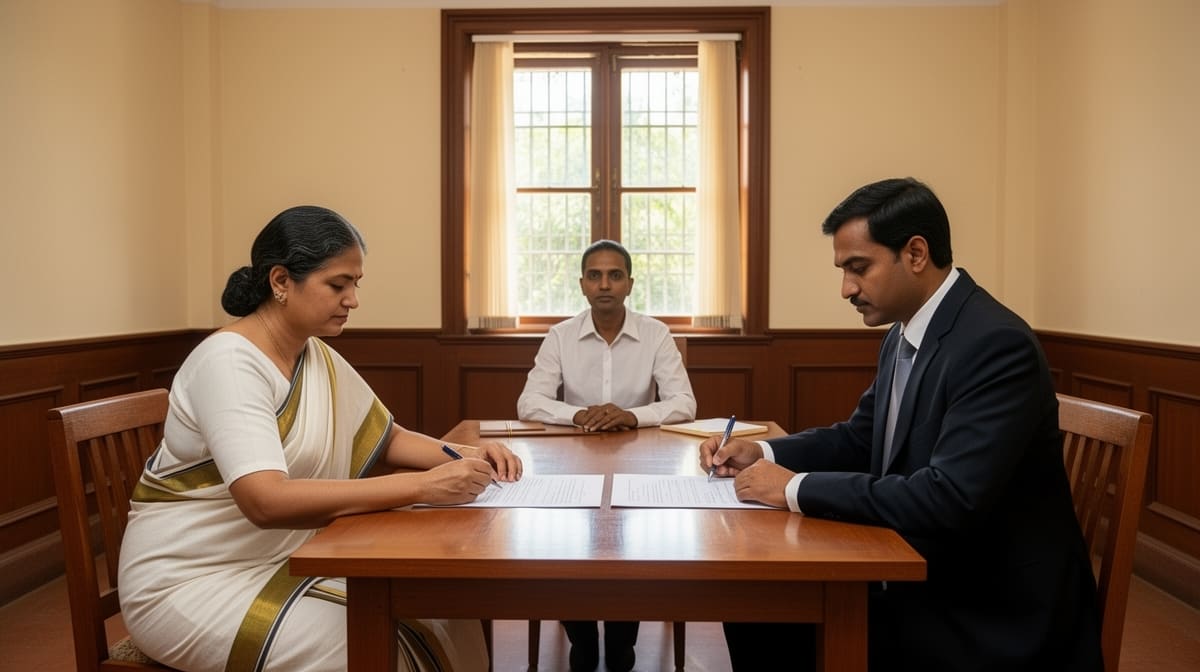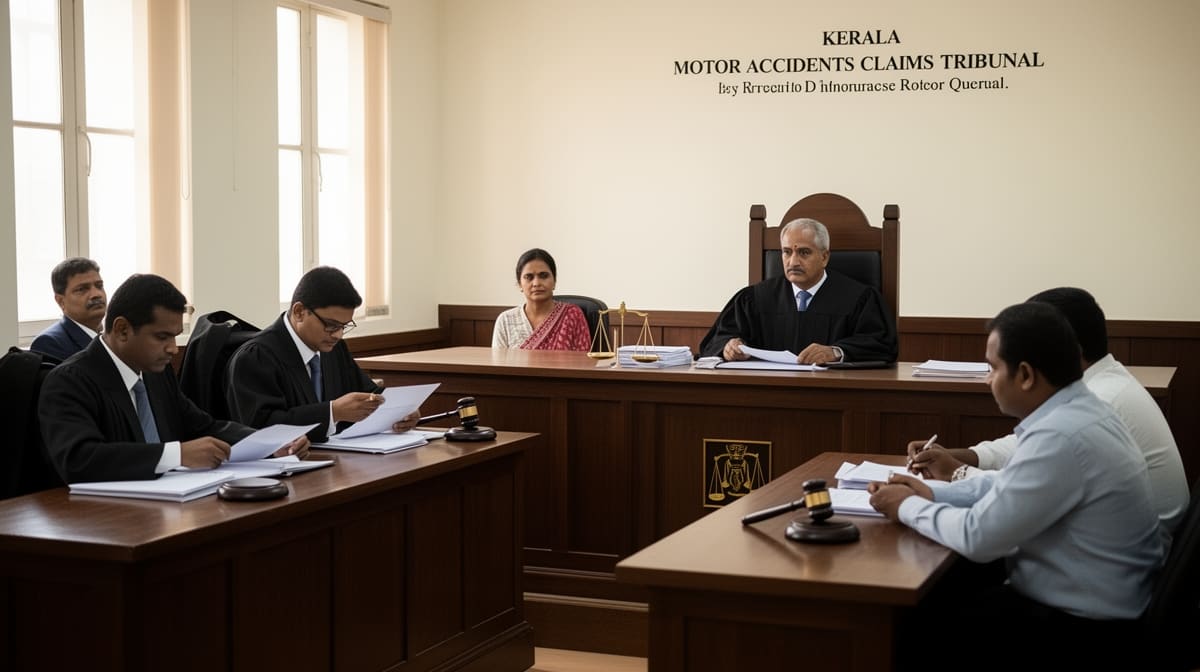
The Kerala High Court has clarified that parties in motor accident compensation disputes retain autonomy to settle claims through joint statements, even after a tribunal has passed an award. This judgment underscores the binding nature of negotiated settlements in motor accident claims, provided they are voluntarily entered into without coercion. Practitioners should note the court's willingness to modify awards based on mutual agreements, while ensuring procedural safeguards for payment compliance remain intact.
Background & Facts
The Dispute
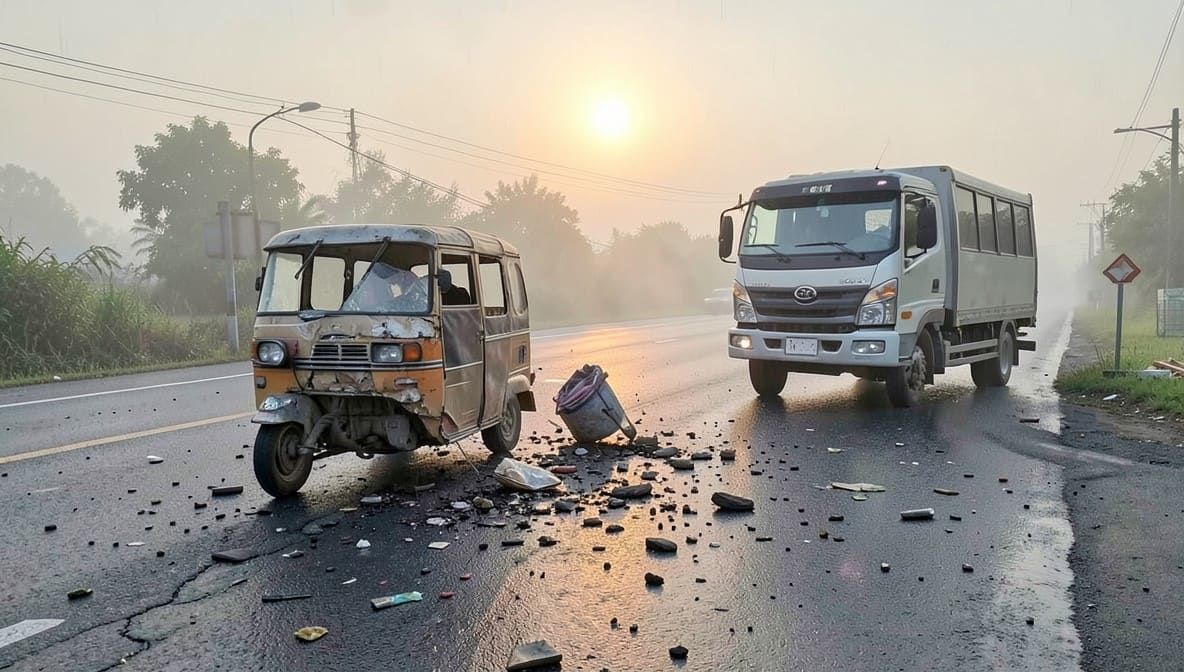
The appellant, Prakashan Nair, sustained serious injuries on 24 July 2017 while riding pillion on a motorcycle that collided with a car. He filed a claim petition before the Motor Accidents Claims Tribunal, North Paravur, seeking ₹43,20,000 as compensation. The tribunal awarded ₹11,78,900 with 9% interest per annum from the date of filing, which the appellant challenged in appeal.
Procedural History
The case progressed through the following stages:
- 24 July 2017: Accident occurred
- 2017: Claim petition filed before the Motor Accidents Claims Tribunal
- 28 December 2018: Tribunal awarded ₹11,78,900 with interest
- 2019: Appeal filed before the Kerala High Court
- 6 January 2026: Parties filed a joint statement agreeing to an additional settlement
Relief Sought
The appellant sought enhancement of the compensation awarded by the tribunal, while the respondent insurance company, Reliance General Insurance Company Ltd, admitted liability under the policy covering the offending vehicle.
The Legal Issue
The central question was whether the Motor Accidents Claims Tribunal's award could be modified based on a joint settlement between the parties, and if so, what procedural safeguards would govern such modification.
The Court's Analysis
The High Court examined the joint statement filed by the parties, which reflected a voluntary settlement without coercion. The court noted the following key principles:
-
Party Autonomy in Settlements: The court recognized that parties in motor accident claims retain the right to negotiate and settle disputes, even after a tribunal has passed an award. This aligns with the broader principle of contractual freedom in civil disputes.
-
Binding Nature of Joint Statements: The court held that a joint statement filed before it, reflecting a mutual agreement, is binding on the parties. The judgment explicitly stated that the joint statement "will form part of the judgment," thereby integrating the settlement terms into the court's order.
-
Procedural Safeguards: While upholding the settlement, the court imposed procedural safeguards to ensure compliance:
- The respondent insurer was directed to deposit the additional settlement amount of ₹3,00,000 within two months of receiving a copy of the judgment.
- Failure to deposit would attract 8% interest per annum from the date of default.
- The appellant was required to furnish PAN Card, AADHAAR Card, and bank details within 15 days to facilitate the deposit.
"In the light of the joint statement filed by the parties, the impugned award is modified by directing the respondent insurer to deposit an additional amount of ₹3,00,000/- (Rupees Three lakhs only) inclusive of all interest and cost to the appellants by way of full and final settlement of all the claims of the appellants against the 3rd respondent."
The court's approach reflects a balance between party autonomy and judicial oversight, ensuring that settlements are both voluntary and enforceable.
The Verdict
The appeal was disposed of in terms of the joint statement. The court modified the tribunal's award by directing the respondent insurer to deposit an additional ₹3,00,000 as full and final settlement, inclusive of interest and costs. The settlement terms were incorporated into the judgment, making them legally binding.
What This Means For Similar Cases
Settlements Can Modify Tribunal Awards
Practitioners should note that Motor Accidents Claims Tribunal awards are not immutable. Parties can negotiate settlements even after an award is passed, provided:
- The settlement is voluntary and free from coercion
- The terms are reduced to writing and filed as a joint statement
- The court is satisfied with the bona fides of the agreement
Procedural Compliance Remains Critical
The judgment underscores the importance of adhering to procedural requirements in settlements:
- Documentation: Parties must furnish necessary documents (e.g., PAN, AADHAAR, bank details) to facilitate payment.
- Timelines: Strict adherence to deposit timelines is mandatory, with default interest as a deterrent.
- Judicial Oversight: Courts retain the power to scrutinize settlements to prevent abuse or coercion.
Insurance Companies Must Act Expeditiously
Insurers should take note of the following:
- Settlement negotiations can be initiated at any stage, including post-award.
- Default in payment attracts penal interest, emphasizing the need for timely compliance.
- Full and final settlements preclude future claims, making it imperative to assess liability accurately before agreeing to terms.