A landmark ruling from the High Court of Kerala affirms that parties who voluntarily settle their disputes through court-referred mediation bind themselves to the terms of their agreement, rendering pending litigation redundant. This judgment reinforces the statutory framework for alternative dispute resolution and underscores judicial deference to consensual outcomes.
Background & Facts
The Dispute
The dispute arose from a contentious sale transaction involving immovable property between the appellants, Rasalan and Balakrishnan, and the respondent, Deepa. The respondent alleged that she had paid substantial advance consideration for the purchase of land, but the appellants failed to execute the sale deed despite repeated demands. She filed Original Suit No. 73 of 2024 before the Sub-Court II, Ernakulam, seeking specific performance and recovery of amounts paid.
Procedural History
The case progressed through multiple stages:
- 14 August 2024: Sub-Court II passed a decree in favor of the respondent, ordering repayment of Rs. 92.70 lakh plus costs and interest.
- 14 September 2024: A formal decree was issued based on the judgment.
- 2025: Both parties filed multiple appeals and review petitions before the Sub-Court, including T.A. No. 8/2024 and R.P. (2.A.) No. 20/2025.
- 8 December 2025: The Sub-Court dismissed the revision petitions, upholding the decree.
- February 2026: The High Court referred the matter to its Mediation Centre under Section 89 of the Code of Civil Procedure.
Relief Sought
The appellants sought to set aside the decree and avoid enforcement, while the respondent sought strict execution of the decree. However, during mediation, both parties moved beyond litigation to negotiate a final resolution.
The Legal Issue
The central question was whether a settlement reached through court-referred mediation under Section 89 CPC can override a previously rendered decree, and whether such an agreement is enforceable as a binding judicial order.
Arguments Presented
For the Appellant/Petitioner
The appellants contended that the original decree was erroneous and that the mediated settlement was a fresh, voluntary compromise that extinguished all prior claims. They relied on Salem Advocate Bar Association v. Union of India to argue that mediation under Section 89 CPC is a statutory mechanism designed to reduce litigation burden and that settlements reached therein carry the force of a decree.
For the Respondent/State
The respondent acknowledged the mediation outcome but emphasized that the settlement was not coerced and was reached after full disclosure of all financial obligations. She cited Afcons Infrastructure Ltd. v. Cherian Varkey Construction Co. to affirm that parties are estopped from reneging on mediated agreements once voluntarily entered into.
The Court's Analysis
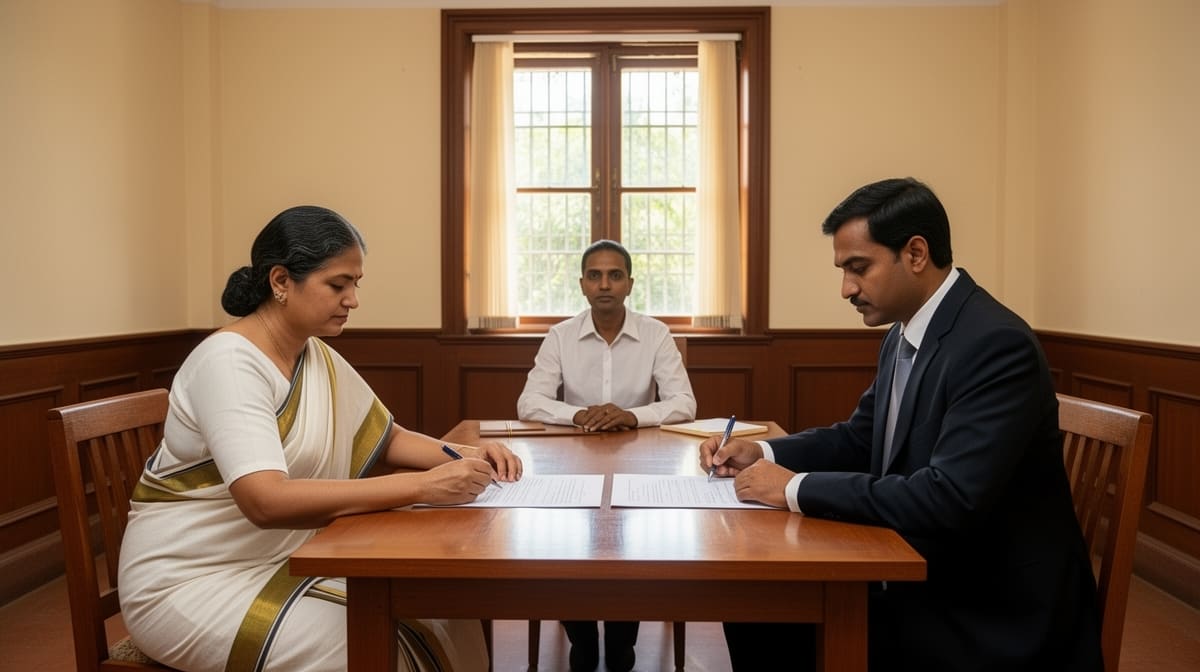
The Court examined the procedural posture and the nature of the settlement. It noted that the matter had been formally referred to mediation under Section 89 CPC read with Rules 24 and 25 of the Civil Procedure (Alternative Dispute Resolution) Rules, 2002. The mediator submitted a report confirming the settlement, and both parties signed a detailed Memorandum of Agreement.
"The parties have voluntarily entered into a comprehensive settlement, incorporating all outstanding financial obligations, and have agreed to treat the same as full and final. This Court is bound to give effect to such consensual arrangements under the statutory mandate of Section 89 CPC."
The Court held that once a settlement is recorded under Section 89 CPC, it is not merely a private contract but acquires the status of a judicial decree. The earlier decree dated 14 August 2024, which was the subject of appeal, was therefore rendered otiose. The Court emphasized that judicial economy and party autonomy are core values under the ADR framework, and courts must not permit technical litigation to undermine voluntary resolutions.
The Court further clarified that the settlement terms were clear, unambiguous, and mutually agreed upon, with no allegation of fraud, undue influence, or unconscionability. The inclusion of a default clause - allowing execution of the original decree if payment was not made - demonstrated the parties’ intent to create an enforceable mechanism.
The Verdict
The appellants prevailed. The Court set aside the impugned decree and judgment of the Sub-Court, and substituted them with a modified decree in terms of the mediated settlement. The appellants are directed to pay Rs. 1.45 crore by 4 May 2026, failing which the original decree shall be executable.
What This Means For Similar Cases
Settlement Agreements Under Section 89 CPC Are Judicial Decrees
- Practitioners must treat mediated settlements under Section 89 CPC as binding judicial orders, not mere contracts.
- Any attempt to challenge such settlements on grounds of error in the original suit is barred once the settlement is recorded.
- Courts will not entertain appeals or reviews that seek to re-litigate matters already resolved through mediation.
Default Triggers Original Decree Execution
- Parties drafting mediated agreements must clearly specify consequences of non-compliance.
- This judgment confirms that incorporating a fallback to the original decree is legally valid and enforceable.
- Lawyers should advise clients that signing a settlement does not erase prior liabilities - it merely suspends enforcement pending performance.
Mediation Is Not a Delay Tactic
- Courts will not permit parties to use mediation as a stalling tactic.
- If a settlement is reached, the litigation must be formally closed, and the decree modified accordingly.
- Failure to file the settlement with the court may result in loss of its judicial character.