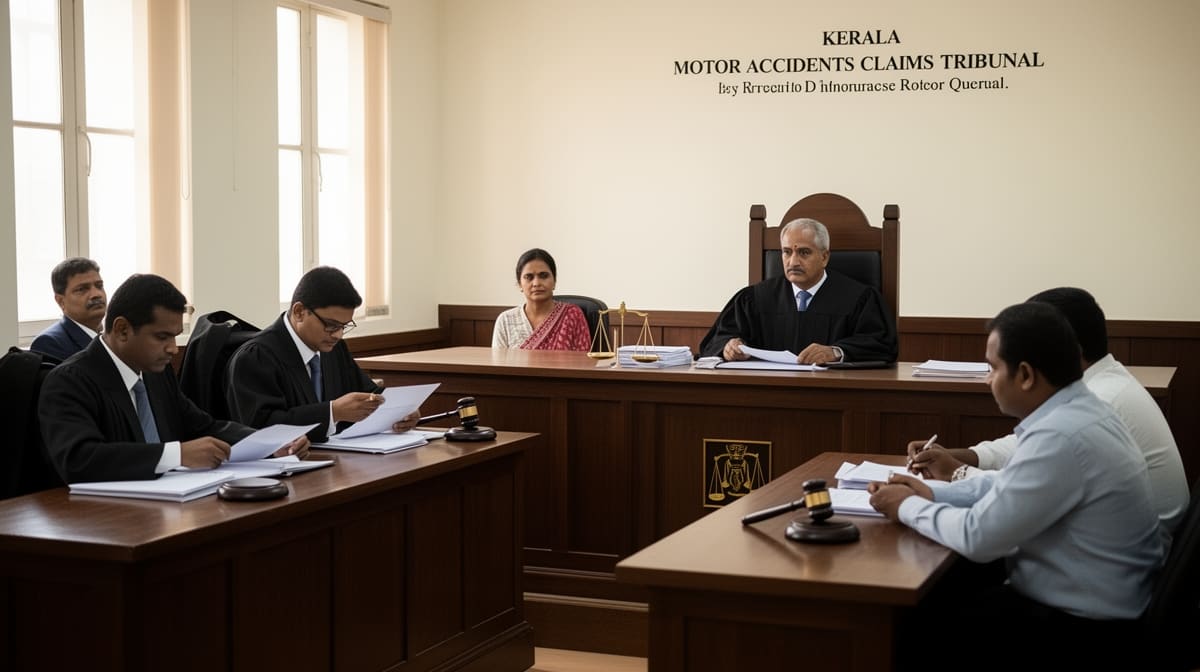
The Kerala High Court has reaffirmed that parties in motor accident compensation cases may settle claims through joint statements, even when the agreed amount differs from the tribunal's award. This judgment clarifies that negotiated settlements between claimants and insurers take precedence over adjudicated compensation amounts, provided the terms are voluntarily agreed upon and properly recorded before the court.
Background & Facts
The Dispute
The case arose from a fatal road accident on 3 January 2013, when Jose was struck by a car while walking along National Highway 47. His widow and children filed a claim petition before the Motor Accidents Claims Tribunal, Irinjalakuda, seeking ₹21,72,000 as compensation. The tribunal awarded ₹9,50,400 with 9% interest from the filing date, which the claimants challenged as inadequate.
Procedural History
The matter progressed through the following stages:
- 2013: Original claim petition filed before Motor Accidents Claims Tribunal, Irinjalakuda
- 30 September 2016: Tribunal awarded ₹9,50,400 with 9% interest
- 2017: Claimants filed appeal before Kerala High Court
- 15 January 2026: Parties filed joint statement agreeing to additional settlement
Relief Sought
The appellants sought enhancement of the compensation amount, while the insurance company contested the quantum awarded by the tribunal.
The Legal Issue
The central question was whether the High Court could modify a tribunal's compensation award based on a joint settlement between the parties, and what procedural safeguards apply to such settlements.
The Court's Analysis
The Court examined the voluntariness and finality of the joint statement filed by the parties. While the judgment does not contain extensive legal reasoning, the following principles emerge:
-
Settlement Autonomy: The Court recognized that parties may negotiate compensation amounts different from the tribunal's award. The joint statement indicated that the settlement was "inclusive of all interest and cost" and constituted a "full and final settlement of all the claims."
-
Procedural Safeguards: The Court imposed specific conditions to ensure fairness:
- The insurance company must deposit the agreed amount within two months
- Failure to deposit would attract 8% interest from the default date
- Claimants must furnish PAN, Aadhaar, and bank details within 15 days
- Non-compliance with documentation requirements allows deposit before the tribunal
-
Judicial Oversight: The Court incorporated the joint statement as part of its judgment, demonstrating that settlements in motor accident cases require judicial approval to be enforceable.
"The impugned award is modified by directing the respondent insurer to deposit an additional amount of ₹4,05,000/- (Rupees Four lakhs five thousand only) inclusive of all interest and cost to the appellants by way of full and final settlement of all the claims of the appellants against the respondent."
The Verdict
The appeal was disposed of in terms of the joint statement. The Court modified the tribunal's award by directing the insurance company to pay an additional ₹4,05,000 as full and final settlement, with specified conditions regarding deposit timelines and documentation.
What This Means For Similar Cases
Settlement Terms Prevail Over Tribunal Awards
The judgment establishes that:
- Parties may agree to compensation amounts different from the tribunal's determination
- Such agreements are binding when recorded as joint statements before the appellate court
- The court retains supervisory jurisdiction to ensure fairness and compliance
Procedural Compliance Is Mandatory
Practitioners should note the following requirements:
- Documentation: Claimants must furnish PAN, Aadhaar, and bank details within 15 days of judgment
- Deposit Timeline: Insurers must deposit agreed amounts within two months of judgment receipt
- Interest Consequences: Default in deposit triggers 8% interest from the default date
- Tribunal Deposit Option: Insurers may deposit before the tribunal if claimants fail to provide documentation
Voluntariness Remains Critical
While the judgment does not elaborate on this aspect, the joint statement's inclusion of a clause stating "there is no threat coercion or undue influence" suggests that courts will scrutinize settlements for voluntariness. Practitioners should:
- Ensure settlements are negotiated without pressure
- Document the absence of coercion in joint statements
- Be prepared to demonstrate voluntariness if challenged