The Customs, Excise and Service Tax Appellate Tribunal (CESTAT), Chennai, has delivered a significant ruling on the applicability of service tax to non-air-conditioned restaurant services located within the same establishment as an air-conditioned restaurant. The Tribunal held that if the non-air-conditioned restaurant is clearly demarcated, separately billed, and sources food from a common kitchen, it qualifies for exemption under Notification No. 25/2012-ST, despite the presence of air-conditioning in another part of the establishment. This judgment clarifies the scope of service tax liability for restaurants with mixed facilities and underscores the importance of operational segregation in determining tax obligations.
Background & Facts
The Dispute
The appellant, M/s. Sree Annapoorna Sree Gowrishankar Hotels (P) Ltd., operates a chain of restaurants in Coimbatore, including both air-conditioned (AC) and non-air-conditioned (non-AC) halls. The Department of Central Excise and Service Tax alleged that the appellant failed to pay service tax on food and beverages served in the non-AC halls, despite the presence of AC facilities in the same establishment. The dispute centered on whether the non-AC halls were liable for service tax under Section 65(105)(zzzzv) of the Finance Act, 1994, read with Notification No. 25/2012-ST (as amended by Notification No. 03/2013-ST).
Key Facts
- The appellant operates 16 restaurant branches, with 6 branches having both AC and non-AC halls.
- Food and beverages are sourced from a common kitchen for both AC and non-AC halls.
- The appellant paid service tax only on services rendered in AC halls, relying on the exemption under Sl.No. 19 of Notification No. 25/2012-ST, which exempts restaurants without AC facilities.
- The Department issued a show cause notice (SCN) dated 08.04.2015 for the period 01.04.2013 to 30.09.2013 and a Statement of Demand (SOD) dated 09.10.2015 for the period 01.10.2013 to 31.03.2015, demanding service tax of Rs. 2,32,03,466, interest, and penalty under Section 76 of the Finance Act, 1994.
- The appellant contested the demand, arguing that the non-AC halls were exempt from service tax as they constituted outright sales of food and beverages, attracting only VAT.
Procedural History
- 08.04.2015: Show Cause Notice (SCN) issued for the period 01.04.2013 to 30.09.2013.
- 09.10.2015: Statement of Demand (SOD) issued for the period 01.10.2013 to 31.03.2015.
- 27.04.2015: Appellant filed objections to the SCN.
- 14.06.2016: Appellant filed further objections to the SOD, relying on Notification No. 25/2012-ST and judgments of the Supreme Court in Northern India Caterers (India) Limited v. Lt. Governor of Delhi (42 STC 386 and 45 STC 212).
- 28.02.2017: Adjudicating Authority passed Order-in-Original confirming the demand, interest, and penalty.
- 2017: Appellant filed Service Tax Appeal Nos. 41368 and 41369 of 2017 before CESTAT, Chennai.
The Parties' Positions
For the Appellant
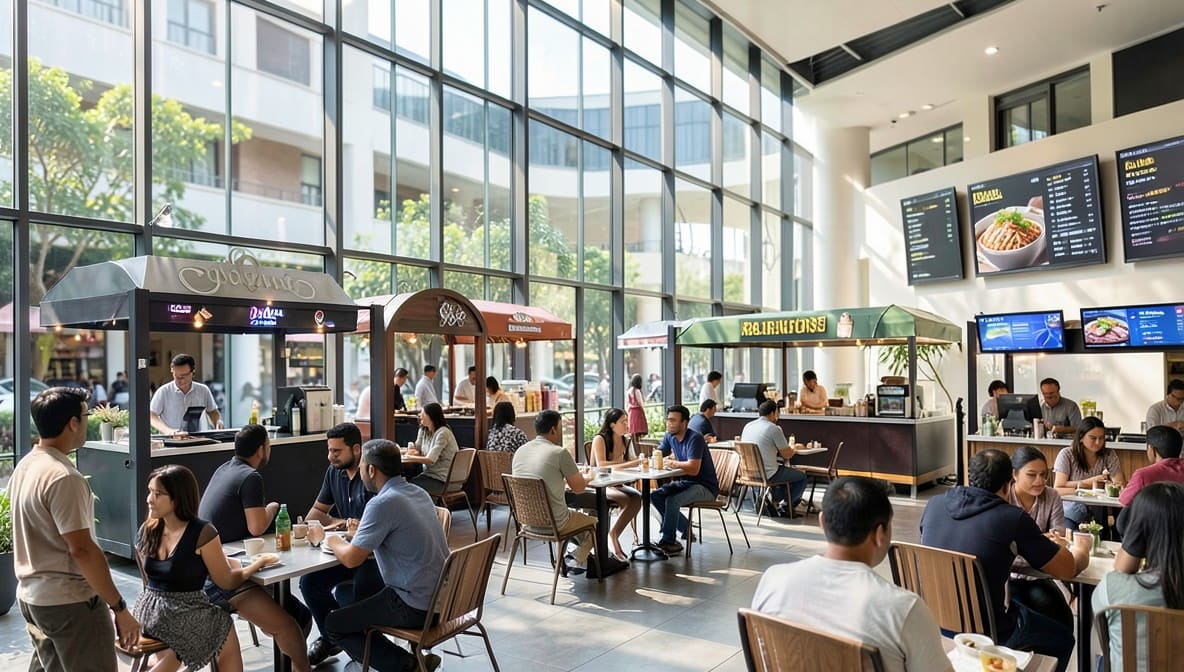
- The non-AC halls were physically demarcated, with separate billing, pricing, and staff.
- The appellant relied on Circular No. 173/8/2013-ST dated 07.10.2013, which clarified that only AC restaurants are liable for service tax if clearly demarcated and separately named.
- The appellant argued that the transactions in non-AC halls were outright sales, attracting only VAT, as customers had the right to take away unconsumed food.
- The appellant contended that the Department's interpretation defeated the object of the exemption notification, which was to benefit consumers of non-AC restaurants.
For the Respondent
- The Department argued that the exemption under Sl.No. 19 of Notification No. 25/2012-ST applies only if the non-AC restaurant is a separate entity with a distinct name.
- It contended that the presence of AC facilities in any part of the establishment rendered the entire restaurant liable for service tax, regardless of demarcation.
- The Department relied on the plain reading of the notification and the TRU Circular to support its stance.
Relief Sought
The appellant sought:
- Setting aside of the impugned Order-in-Original dated 28.02.2017.
- Exemption from service tax liability for the non-AC halls.
- Refund of any amounts paid under protest, along with interest and costs.
The Legal Issue
The central question was whether the appellant was liable to pay service tax on food and beverages served in the non-AC portion of a restaurant located in the same establishment as an AC restaurant, during the period April 2013 to March 2015, under Notification No. 25/2012-ST (as amended by Notification No. 03/2013-ST).
Arguments Presented
For the Appellant
- The appellant contended that the non-AC halls were exempt from service tax as they did not satisfy the conditions of Sl.No. 19 of Notification No. 25/2012-ST, which excluded restaurants with AC facilities.
- It argued that the transactions in non-AC halls were outright sales, not services, relying on the Supreme Court judgments in Northern India Caterers (India) Limited v. Lt. Governor of Delhi.
- The appellant emphasized that the non-AC halls were physically demarcated, with separate billing, pricing, and staff, and sourced food from a common kitchen.
- It relied on Circular No. 173/8/2013-ST, which clarified that only AC restaurants are liable for service tax if clearly demarcated and separately named.
- The appellant argued that the Department's interpretation was arbitrary and defeated the object of the exemption notification.
For the Respondent
- The Department contended that the exemption applied only if the non-AC restaurant was a separate entity with a distinct name.
- It argued that the presence of AC facilities in any part of the establishment rendered the entire restaurant liable for service tax.
- The Department relied on the plain reading of Sl.No. 19 of Notification No. 25/2012-ST and the TRU Circular to support its stance.
The Court's Analysis
The Tribunal examined the genesis of the levy of service tax on restaurant services, tracing its evolution from the Union Budget 2011-12, where the Finance Minister proposed to levy service tax on services provided by AC restaurants with a 70% abatement. The Finance Act, 2011 introduced Section 65(105)(zzzzv), which subjected services provided by AC restaurants with a liquor license to service tax. This provision was brought into force with effect from 01.05.2011.
The Tribunal noted that Notification No. 25/2012-ST initially granted exemption to restaurants without AC facilities or a liquor license. However, Notification No. 03/2013-ST amended this exemption, restricting it to restaurants without AC facilities in any part of the establishment. The Tribunal observed that the levy was intended to tax services provided by high-end AC restaurants, as clarified by the CBEC Circular dated 28.02.2011.
The Tribunal analyzed the appellant's contention that the non-AC halls were exempt from service tax, as they were clearly demarcated, separately billed, and sourced food from a common kitchen. It relied on Circular No. 173/8/2013-ST, which clarified that in complexes with both AC and non-AC restaurants, only the AC restaurant is liable for service tax if clearly demarcated and separately named.
The Tribunal also considered the jurisdictional High Court's decision in Anjappar Chettinad A/C Restaurant v. Jt. Commr., which held that the provision of food parcels (take-away) does not attract service tax, as it constitutes a sale rather than a service. The Tribunal observed that the levy of service tax on non-AC halls, merely because AC facilities exist elsewhere in the establishment, would render the provision arbitrary and excessively broad.
"What we observe is that the sole condition for the levy of service tax to be attracted that has remained constant right from the inception of the levy, is that the restaurant, eating joint or mess, should have the facility of air-conditioning in any part of the establishment, at any time during the year... However, when it came to effectuating the levy; be it by the definition of taxable service stipulated in the erstwhile Section 65(105) (zzzzv) , or by the exception carved out in Sl.No.19 of the Exemption Notification 25/2012-ST ibid as amended; the 'specified restaurant' whose services provided in relation to serving of food or beverages attracted the levy, was effectively characterised as that having 'the facility of air-conditioning in any part of the establishment, at any time during the year' making it the defacto definition of 'air-conditioned restaurant' for all practical purposes."
The Tribunal concluded that the appellant's non-AC halls were exempt from service tax, as they were clearly demarcated, separately billed, and sourced food from a common kitchen, in line with Circular No. 173/8/2013-ST.
The Verdict
The Tribunal allowed the appeals and set aside the impugned Order-in-Original dated 28.02.2017. It held that the appellant was not liable to pay service tax on food and beverages served in the non-AC halls of the restaurant during the period April 2013 to March 2015. The Tribunal directed consequential reliefs in law, including the refund of any amounts paid under protest, along with applicable interest.
What This Means For Similar Cases
Exemption Applies If Demarcated and Sourced from Common Kitchen
- Practitioners must argue that non-AC restaurants located in the same establishment as AC restaurants are exempt from service tax if they are clearly demarcated, separately billed, and sourced from a common kitchen.
- Reliance on Circular No. 173/8/2013-ST is crucial, as it clarifies that only AC restaurants are liable for service tax in such scenarios.
Operational Segregation Is Key
- Physical demarcation, separate billing, pricing, and staff are essential to establish that the non-AC restaurant is a distinct entity.
- Common kitchen sourcing does not negate the exemption if the non-AC restaurant is operationally segregated.
Arbitrary Interpretation Defeats Legislative Intent
-
Courts will scrutinize interpretations that render statutory provisions arbitrary or excessively broad.
-
Purposive interpretation of tax laws is necessary to align with legislative intent, as held in CIT Bombay v. Gwalior Rayon Silk Manufacturing Co. Ltd.
-
Assess tax liability based on operational realities, not merely the presence of AC facilities in the establishment.
-
Review past demands for service tax on non-AC restaurants in mixed establishments to determine eligibility for refunds.
-
Ensure compliance with Circular No. 173/8/2013-ST to avoid unnecessary tax burdens on non-AC restaurants.