The Supreme Court has reaffirmed that land granted as service inam for religious purposes vests in a public religious trust and cannot be alienated by private parties. This judgment clarifies the legal character of such properties under Muslim personal law and the Wakf Act, 1995, with decisive implications for title disputes involving religious endowments.
Background & Facts
The Dispute
The dispute centers on a 3-acre plot in Survey No. 914/B, Kallur Village, Kurnool District, Andhra Pradesh. The respondents, Janaki Busappa and others, claimed ownership through a series of registered sale deeds executed in 1985 and 1996, tracing their title to a partition deed dated 01.06.1945. The appellant, Andhra Pradesh State Wakf Board, contended that the land was service inam granted for the benefit of Budda Buddi Mosque and Asthabal Masjid, and therefore constituted Wakf property under Muslim law, incapable of private transfer.
Key Facts
- The suit property was described in the partition deed dated 01.06.1945 as "service inam" land assigned for rendering services to Budda Buddi Mosque and Asthabal Masjid.
- The respondents purchased the land in 1985 and 1996 under registered sale deeds, asserting it was "personal inam" land.
- The Wakf Board issued an order on 21.08.1999 allotting the land to Jamat Ahle Hadees for construction of an Edgah.
- The respondents filed O.S. No. 68 of 2000 before the Andhra Pradesh Wakf Tribunal seeking declaration that the 1999 allotment was void and permanent injunction against interference.
- The respondents admitted through PW-1 (plaintiff no. 11) that the land was assigned to their ancestors for religious services and that no document existed to prove it was "personal inam".
- The Wakf Board relied on Gazette Notification dated 02.05.1963 issued under Section 5(2) of the Wakf Act, 1995, which recorded the land as Wakf property attached to Budda Buddi Mosque.
- Title Deed No. 3826, referenced in the notification, was not produced in court, but its existence was corroborated by a 21.01.2003 endorsement from the Collector, Kurnool, citing brittle condition as reason for non-production.
- A Survey Commissioner’s Report dated 30.04.1956 also indicated the land’s religious character.
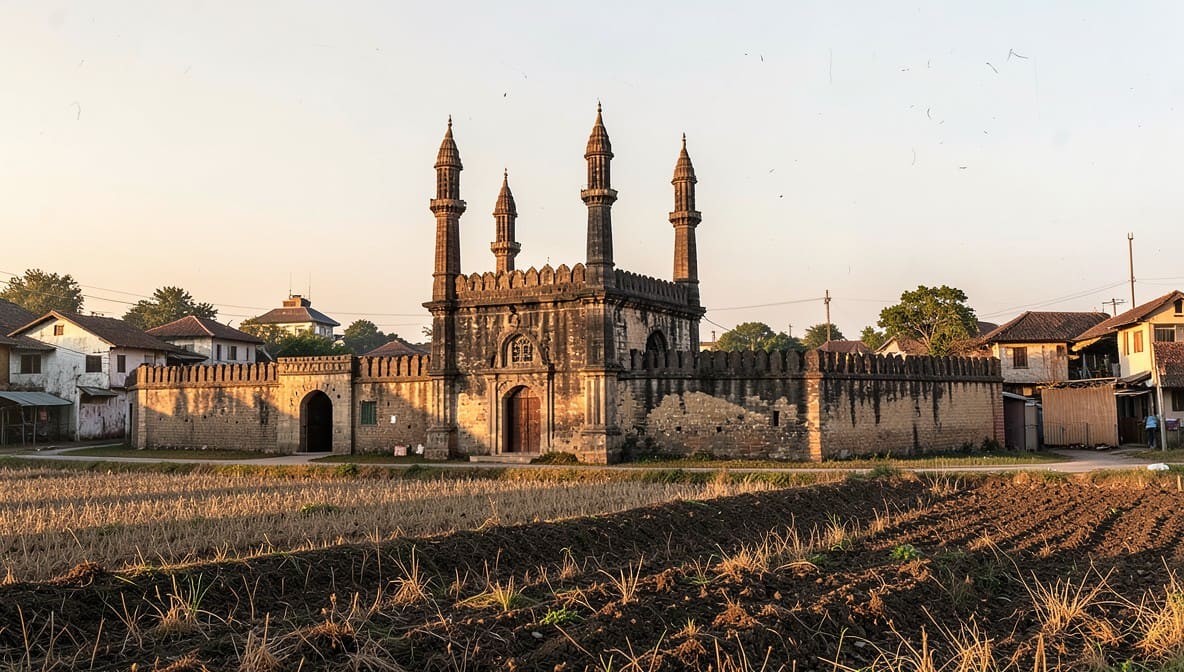
- A report by the Principal District Judge, Kurnool, dated 06.10.2007, confirmed the presence of minarets and compound walls indicative of an Edgah.
Procedural History
- 01.06.1945: Partition deed executed, describing land as service inam for mosques.
- 1985 and 1996: Registered sale deeds executed by respondents.
- 21.08.1999: Wakf Board issued order allotting land to Jamat Ahle Hadees for Edgah construction.
- 2000: O.S. No. 68 of 2000 filed by respondents before Wakf Tribunal.
- 04.08.2009: Wakf Tribunal dismissed the suit, holding land as Wakf property and respondents’ title invalid.
- 18.01.2011: High Court allowed Civil Revision Petition No. 3786 of 2009, reversing the Tribunal’s order and decreeing the suit.
- 1946 of 2013: Civil Appeal filed by Wakf Board before Supreme Court.
- 24.04.2026: Supreme Court delivered judgment.
The Parties' Positions
Appellant (Wakf Board): Argued that service inam land, by its nature, is impressed with a religious trust under Muslim law and cannot be alienated. Relied on partition deed recitals, PW-1’s admissions, Gazette Notification, and prior survey reports to establish Wakf character.
Respondents (Janaki Busappa et al.): Claimed title through registered sale deeds and asserted the land was personal inam. Contended that the Wakf Board failed to produce Title Deed No. 3826 and that the Gazette Notification did not specifically mention Survey No. 914/B. Relied on possession through cultivation and standing crops.
Relief Sought
The respondents sought a declaration that the Wakf Board’s 1999 allotment was void and a permanent injunction restraining interference with their possession. The Wakf Board sought reversal of the High Court’s order and restoration of the Tribunal’s dismissal of the suit.
The Legal Issue
The central question was whether land described as "service inam" in a partition deed, granted for religious services to a mosque, partakes the character of Wakf property under Muslim law and the Wakf Act, 1995, and whether such property can be validly transferred through private sale deeds.
Arguments Presented
For the Appellant
The appellant argued that service inam land, by its very nature, is endowed for religious purposes and becomes Wakf property under Muslim law, as held in Sayyed Ali v. A.P. Wakf Board. The partition deed’s explicit recital of "service inam" was binding and conclusive. PW-1’s admission that the land was assigned for mosque services corroborated this. The Gazette Notification dated 02.05.1963, though lacking specific survey details, was part of a cumulative evidentiary record. The High Court erred in shifting the burden of proof to the defendant and ignoring the principle that title must be established by the plaintiff on its own strength, as per P. Kishore Kumar v. Vittal K. Patkar and Section 101 of the Indian Evidence Act.
For the Respondent
The respondents contended that the Wakf Board failed to produce Title Deed No. 3826, rendering its claim speculative. They argued that the partition deed was loosely drafted and its recitals were not binding on third parties, citing Nagindas Ramdas v. Dalpatram Ichharam. They emphasized their long-standing possession through cultivation and standing crops, and claimed the Wakf Board’s inaction for decades amounted to acquiescence. Reliance was placed on Wakf Board of A.P. v. Biradavolu Ramana Reddy to argue that rights, once extinguished, cannot be revived.
The Court's Analysis
The Supreme Court conducted a meticulous review of the partition deed dated 01.06.1945, which unambiguously described the suit property as "service inam" land assigned for religious services to two mosques. The Court held that such grants, under Muslim law, are not personal property but are impressed with a public religious trust, thereby restricting alienability. The Court relied on Sayyed Ali v. A.P. Wakf Board to affirm that service inam for religious purposes automatically cloths the land with Wakf character.
"Once such a recital is borne out from the very document on which the Respondents predicate their title, the plea that the property constitutes 'personal inam' stands clearly belied."
The Court rejected the respondents’ argument that the partition deed was "loosely drafted" and non-binding. It emphasized that the recitals were clear and unambiguous, and were corroborated by the admissions of PW-1, who acknowledged the land’s religious purpose and the absence of any document proving personal inam status. The Court held that such admissions, when consistent with documentary evidence, cannot be disregarded merely because the witness was not contemporaneous to the deed’s execution.
The Court also dismissed the respondents’ reliance on Nagindas Ramdas, noting that while private admissions may not bind third parties absolutely, they are substantive evidence when corroborated by other material. The Court further rejected the argument that the Gazette Notification was defective for not specifying Survey No. 914/B, holding that the cumulative evidence - including the 1956 Survey Report, the Collector’s endorsement, and the 2007 District Judge’s report confirming religious structures - established the Wakf character beyond doubt.
The Court strongly criticized the High Court for shifting the burden of proof to the Wakf Board, stating:
"The Respondents, having approached the Tribunal seeking declaration and injunction, were required to establish a clear and lawful title to the suit property. However, as noticed hereinabove, the very document relied upon by them militates against their claim."
The Court reiterated the settled principle under Section 101 of the Indian Evidence Act and Rangammal v. Kuppuswami that the burden lies on the party asserting a fact. The respondents failed to discharge this burden. The Court also distinguished Wakf Board of A.P. v. Biradavolu Ramana Reddy, noting it dealt with limitation and recovery from alienation by a mutawalli - issues not present here.
The Verdict
The Supreme Court allowed the appeal and set aside the High Court’s judgment dated 18.01.2011. The Tribunal’s judgment and decree dated 04.08.2009, dismissing the respondents’ suit, was restored. The respondents’ claim to title and possession was held invalid. There shall be no order as to costs. The Wakf Board’s 1999 allotment order remains unchallenged in effect, and the respondents are permanently restrained from asserting any claim over the suit property.
What This Means For Similar Cases
Service Inam Automatically Becomes Wakf Property
- Practitioners must treat any land described as "service inam" for religious purposes as presumptively Wakf property under Muslim law, regardless of subsequent sale deeds.
- Title claims based on partition or sale of such land are void ab initio and cannot be sustained.
Burden of Proof Rests on Plaintiff Claiming Title
- In property suits involving Wakf or religious endowments, the plaintiff must prove lawful title independently; failure to do so cannot be remedied by highlighting defendant’s evidentiary gaps.
- Courts must not shift the burden to the defendant to disprove title.
Documentary Recitals Trump Oral Testimony and Possession
- Clear recitals in foundational documents like partition deeds override claims of possession or cultivation.
- Mere physical possession, even if longstanding, does not confer lawful title if the underlying ownership is invalid.
- Courts must evaluate possession in light of legal title - unlawful possession cannot support injunction.
Cumulative Evidence Can Establish Wakf Status
- Even if a single document (e.g., Title Deed) is not produced, cumulative evidence - including Gazette notifications, survey reports, and official endorsements - can establish Wakf character.
- Non-production due to physical deterioration of documents is not fatal if corroborated by other reliable sources.
Judicial Restraint in Revisional Jurisdiction
- High Courts exercising revisional jurisdiction under the Wakf Act must not re-appreciate evidence to substitute their own findings.
- Revisional jurisdiction is not an appellate forum; it is limited to correcting jurisdictional errors or manifest illegality.