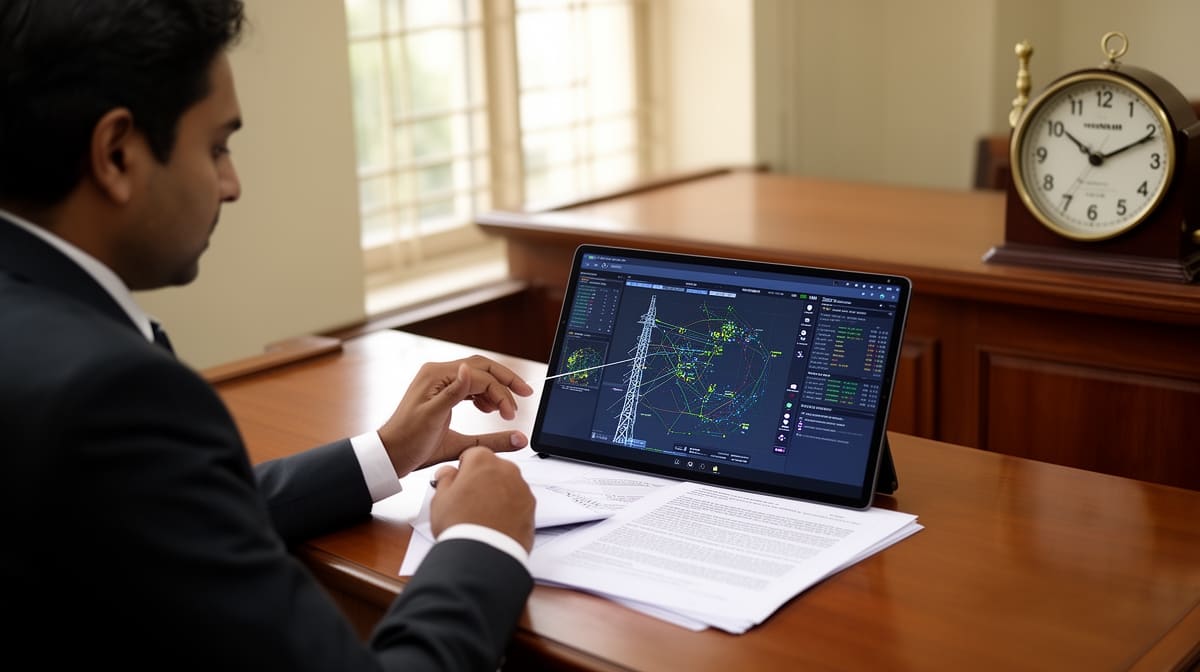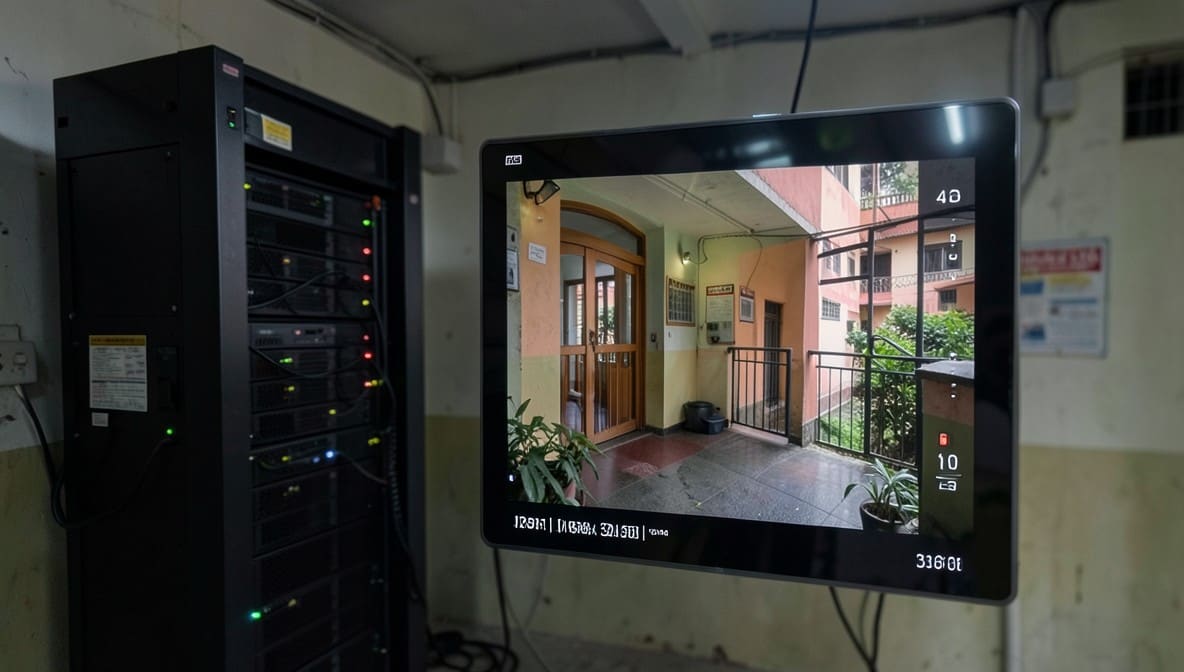
The Madhya Pradesh High Court has affirmed that the right to a fair trial under the Bhartiya Nagarik Suraksha Sanhita, 2023 includes the proactive safeguarding of potentially exculpatory evidence, even at preliminary stages. This ruling clarifies that while courts need not summon defense evidence prematurely, they have a duty to ensure its preservation to prevent irreversible loss.
Background & Facts
The Dispute
The petitioner, Ishwar Songara, is accused in a criminal case arising from an incident on 13.08.2025. He claims he was present at Delhi Public School, Rau, on the date of the alleged offense and seeks to rely on documentary and electronic records to establish his alibi.
Key Facts
- The incident allegedly occurred on 13.08.2025
- The petitioner submitted an application under Section 94 of the Bhartiya Nagarik Suraksha Sanhita, 2023 (equivalent to Section 91 of the CrPC) seeking production of three specific records:
- CCTV footage of Delhi Public School, Rau, for 13.08.2025
- Attendance Register of the school for 13.08.2025
- Bio Matrix record (biometric attendance) of the petitioner for 13.08.2025
- The trial court rejected the application on 08.12.2025, holding that the defense evidence stage had not yet commenced and summoning records at this stage was not tenable
- The petitioner filed a petition under Section 528 of BNSS (equivalent to Section 482 of CrPC) before the High Court on grounds that the evidence was at risk of being deleted or overwritten
- The petitioner’s defense hinges entirely on proving his presence at the school on the date of the incident
Procedural History
- 13.08.2025: Alleged incident occurred
- 08.12.2025: Trial court rejected petitioner’s application under Section 94 BNSS
- 25.06.2026: Petition under Section 528 BNSS heard and decided by the Madhya Pradesh High Court
Relief Sought
The petitioner sought quashing of the trial court’s order dated 08.12.2025 and a direction to preserve the CCTV footage, attendance register, and bio matrix records until the conclusion of trial.
The Legal Issue
The central question was whether a trial court, while declining to summon defense evidence at an early stage, has a duty to direct the preservation of such evidence to prevent its destruction and thereby safeguard the accused’s right to a fair trial under Section 94 of the Bhartiya Nagarik Suraksha Sanhita, 2023.
Arguments Presented
For the Appellant/Petitioner
The petitioner’s counsel argued that the right to defend oneself includes the opportunity to access and present all relevant evidence. He emphasized that digital records like CCTV footage are routinely overwritten after a fixed retention period, and bio-matrix data may be purged after administrative cycles. Delaying preservation until the defense stage would render the evidence irretrievable, violating the accused’s constitutional right under Article 21 and statutory rights under Section 94 BNSS. He cited State of Haryana v. Bhagwan Das to underscore that the right to defense is not contingent on procedural timing.
For the Respondent/State
The State and complainant opposed the petition, contending that the burden of adducing evidence lies with the accused, not the court or investigating agency. They argued that the trial court correctly applied the principle that evidence collection is not the court’s duty at the pre-evidence stage and that allowing such applications prematurely would shift the adversarial balance.
The Court's Analysis
The Court acknowledged the general principle that the prosecution bears the burden of proof and the accused is not entitled to compel the state to collect evidence on his behalf. However, it drew a critical distinction between collecting evidence and preserving it.
"While the accused cannot be permitted to compel the court or investigating agency to collect evidence, the court cannot turn a blind eye to the inevitable destruction of material which may form the cornerstone of his defense."
The Court held that Section 94 BNSS empowers the court to issue orders for the production of documents, but its underlying purpose is to ensure justice - not merely procedural compliance. The court observed that the preservation of evidence is not an act of collection but a protective measure to uphold the integrity of the trial process.
It further noted that the right to a fair trial under Article 21 includes the right to present a complete defense, which is meaningless if the evidence is lost before it can be accessed. The trial court’s failure to issue a preservation order, while correctly declining to summon the records, was therefore legally deficient.
The Court emphasized that this is not a precedent for routine pre-trial discovery but a narrow, context-specific safeguard for perishable evidence critical to an alibi defense.
The Verdict
The petition was allowed. The High Court set aside the trial court’s order dated 08.12.2025 and directed the trial court to ensure the preservation of the CCTV footage, Attendance Register, and Bio Matrix records relating to 13.08.2025 until the conclusion of the trial. The court mandated that the school authorities and relevant custodians of the records be formally notified to retain the data without alteration or deletion. No further directions for production or summoning were issued.
What This Means For Similar Cases
Preservation Is a Procedural Duty, Not a Discovery Right
- Practitioners may now file applications under Section 94 BNSS seeking preservation of perishable digital evidence (CCTV, biometrics, call logs, server logs) even before the defense stage
- Courts are now obligated to grant preservation orders where evidence is time-sensitive and material to the defense
- This does not extend to general discovery requests; the evidence must be specific, identifiable, and at demonstrable risk of destruction
Alibi Defenses Gain Procedural Shield
- Accused relying on location-based alibis (school, workplace, transit systems) now have a clear procedural remedy to prevent loss of electronic records
- Defense counsel should include preservation requests as a standard step in pre-trial strategy for any case involving digital timestamps or surveillance
- Failure to preserve such evidence post-order may now constitute grounds for appeal or even acquittal on grounds of prejudice
Judicial Discretion Must Balance Fairness and Burden
- Courts must weigh the risk of destruction against the speculative nature of the request
- Preservation orders should be narrowly tailored to specific records, dates, and custodians
- The burden remains on the accused to demonstrate the materiality and perishability of the evidence