A landmark ruling by the Andhra Pradesh High Court reinforces the legal sanctity of long-standing registered documents under Section 90 of the Indian Evidence Act, affirming that a 38-year-old sale deed, when produced from proper custody, creates an irrebuttable presumption of title. This judgment clarifies the limits of appellate interference in civil title disputes and sets a critical precedent for property litigation across India.
Background & Facts
The Dispute
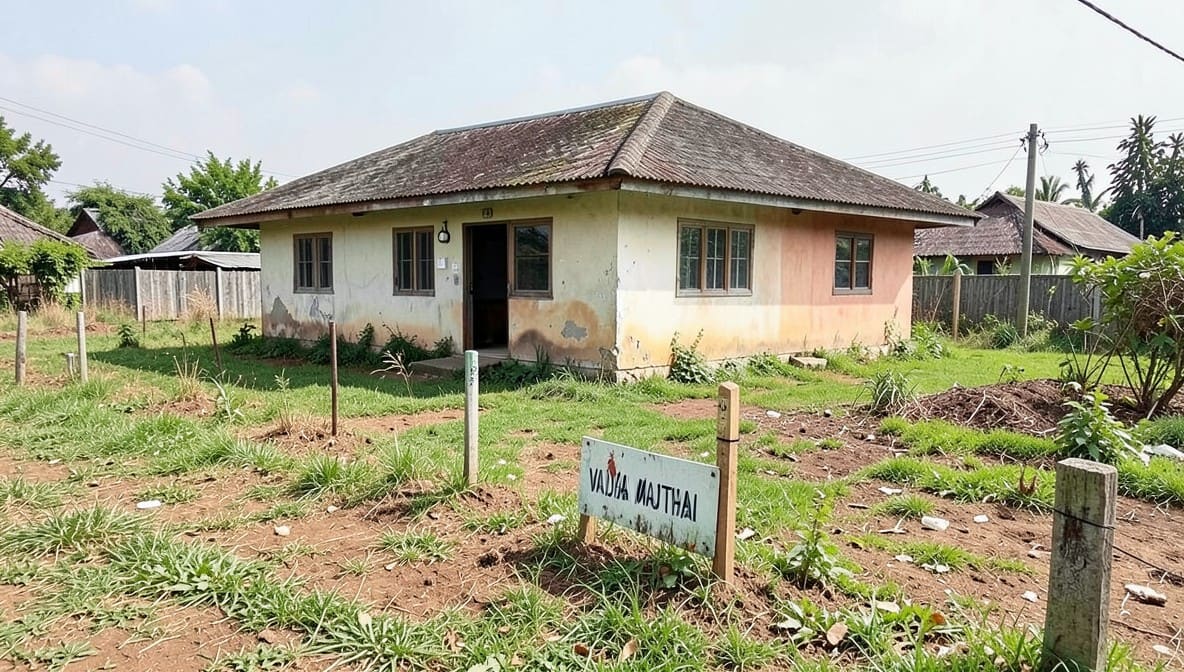
The dispute centers on a vacant plot of land measuring 435 square yards in Korangi Village, East Godavari District, claimed by the plaintiffs as their ancestral property purchased via a registered sale deed dated 06.05.1968. The defendants, who had been in physical possession of the land, contested the plaintiffs’ title, asserting that the property formed part of their ancestral estate. The defendants executed a gift deed on 16.10.2006 in their favor and a sale deed on 15.03.2007 in favor of Defendant No.3, just eight days before the suit was filed. The plaintiffs alleged trespass and sought declaration of title and possession.
Key Facts
- The plaint schedule property is Sy.No.402/1, a vacant site of 435 sq.yds, with no structures.
- The plaintiffs’ vendor, Siddana Sathiraju, executed a registered sale deed (Ex.A-1) dated 06.05.1968, transferring the property to Plaintiff No.1.
- The sale deed was registered and remained in the plaintiffs’ custody for 38 years before the suit was filed on 23.03.2007.
- Defendant No.2 admitted in evidence that he knew Siddana Sathiraju and acknowledged the sale to Plaintiff No.1.
- Defendant No.2 conceded that no registered document supports their claim of ancestral ownership.
- The defendants produced no original gift deed or sale deed; only registration extracts (Ex.A-2 and Ex.A-3) were filed by the plaintiffs.
- Defendant No.1 did not appear as a witness; Defendant No.2 and Defendant No.3 also did not enter the witness box.
- Defendant No.2, aged 42 at the time of trial, was 4 years old when the sale deed was executed in 1968.
- The defendants relied on photographs (Ex.B-1, Ex.B-2) and a 1996 registration extract (Ex.B-3) relating to a boundary holder unrelated to the suit property.
- Coconut trees on the property were planted by a third party, Chodisett Sriramulu, and not by the defendants.
- A wall separates the plaintiffs’ vacant site from the defendants’ house property to the west.
- Plaintiff No.1 died during pendency of the suit; his sons and wife were brought on record as Plaintiffs Nos.4 - 6.
Procedural History
- 06.05.1968: Registered sale deed (Ex.A-1) executed in favor of Plaintiff No.1.
- 16.10.2006: Defendants executed a gift deed (original not produced); registration extract marked as Ex.A-2.
- 15.03.2007: Defendants executed a sale deed in favor of Defendant No.3 (original not produced); registration extract marked as Ex.A-3.
- 23.03.2007: Plaintiffs filed O.S.No.836 of 2007 before the II Additional Junior Civil Judge, Kakinada.
- 25.08.2015: Trial Court decreed the suit in favor of plaintiffs, holding them entitled to title and possession.
- 24.09.2024: First Appellate Court (I Additional Senior Civil Judge, Kakinada) dismissed the appeal, confirming the trial court’s decree.
- 11.03.2026: Second appeal heard and reserved.
- 16.03.2026: Judgment pronounced by the Andhra Pradesh High Court.
The Parties' Positions
Plaintiffs (Respondents): Claimed title through a 38-year-old registered sale deed (Ex.A-1), supported by possession since 1968 and testimony of P.W.2. Argued that the defendants had no documentary proof of ownership and that the sale and gift deeds were fraudulent attempts to alienate property they never owned.
Defendants (Appellants): Claimed ancestral ownership of the property, asserting that the entire plot including the house and vacant site formed one unit. Argued that Ex.A-1 was unproved because attesting witnesses were not examined and that the suit was bad for non-joinder of the daughters of Plaintiff No.1.
Relief Sought
The plaintiffs sought a declaration of title and possession over the 435 sq.yd property. The defendants sought dismissal of the suit on grounds of non-joinder, lack of proof of title, and invalidity of the sale deed.
The Legal Issue
The central question was whether the presumption under Section 90 of the Indian Evidence Act, 1872, applicable to a 38-year-old registered sale deed, is sufficient to establish title in the absence of direct proof by attesting witnesses, and whether the concurrent findings of the two lower courts can be disturbed in a second appeal under Section 100 of the Code of Civil Procedure in the absence of a substantial question of law.
Arguments Presented
For the Appellant
The appellants contended that Ex.A-1, though registered, was not proved because the attesting witnesses were not examined. They argued that the trial and appellate courts erred in applying Section 90, as the presumption is rebuttable and the defendants had adduced sufficient evidence to cast doubt on the document’s authenticity. They further contended that the suit was bad for non-joinder of the daughters of Plaintiff No.1, rendering it non-maintainable. They asserted that the lower courts failed to appreciate the evidence properly, thereby raising a substantial question of law.
For the Respondent
The respondents argued that Section 90 creates a conclusive presumption for documents over 30 years old produced from proper custody, eliminating the need to examine attesting witnesses. They emphasized that the defendants admitted knowledge of the vendor and produced no document to support their claim of ancestral title. They further contended that the non-joinder of daughters was irrelevant as the suit was against third parties, not co-sharers, and that the plaintiffs’ title was independent of family succession.
The Court's Analysis
The Court began by reiterating the narrow scope of second appeals under Section 100 CPC, emphasizing that interference is permissible only when a substantial question of law arises. It held that mere disagreement with factual findings or appreciation of evidence does not qualify as a substantial question of law.
"Where a document purporting to be thirty years old is produced from any custody which the Court considers proper, the Court may presume that it was duly executed and attested by the persons by whom it purports to be executed and attested."
The Court noted that Ex.A-1 was executed in 1968 and produced in 2007 - a period exceeding 38 years. The document was registered and kept in the custody of the plaintiffs, which the Court deemed proper. Under Section 90, this triggered a conclusive presumption of due execution and authenticity. The Court held that the appellants’ argument that attesting witnesses must be examined was legally untenable in light of this statutory presumption.
The Court further observed that the defendants failed to produce any registered document supporting their claim of ancestral ownership. Defendant No.2 admitted he had no paper title and could not recall the survey number. The photographs and 1996 registration extract (Ex.B-3) were irrelevant to the suit property. The gift deed and sale deed executed in 2006 - 2007 were not only unproven but also executed by persons who had no title to transfer, violating the principle of nemo dat quod non habet.
The Court also rejected the non-joinder argument, holding that the suit was for declaration against trespassers, not for partition among heirs. The addition of legal representatives of the deceased plaintiff was sufficient under Order I Rule 10 CPC.
Crucially, the Court emphasized that the defendants’ failure to appear as witnesses triggered the presumption under Vidhyadhar v. Manikrao: "Where a party to the suit does not appear into the witness box and state his own case on oath... a presumption would arise that the case set up by him is not correct."
The Court concluded that the findings of the two lower courts were based on proper appreciation of evidence, free from illegality or irregularity. No substantial question of law was raised, and therefore, the second appeal was not maintainable.
The Verdict
The second appeal was dismissed. The judgment and decree of the trial court and first appellate court were confirmed. The defendants were granted three months to deliver vacant possession of the 435 sq.yd property to the plaintiffs. No costs were awarded. All pending applications were closed.
What This Means For Similar Cases
Presumption Under Section 90 Is Conclusive
- Practitioners must treat registered documents over 30 years old, produced from proper custody, as conclusive proof of execution and title unless rebutted by clear, credible evidence of fraud or forgery.
- The burden shifts entirely to the challenger to prove invalidity - mere non-examination of attesting witnesses is insufficient.
Second Appeals Are Not Fact Re-trials
- Courts will not entertain second appeals based on alleged errors in appreciation of evidence or factual findings.
- To maintain a second appeal, counsel must identify a clear, open question of law - not a dispute over witness credibility or document authenticity.
Title Claims Require Documentary Proof
-
Oral claims of ancestral possession, without registered title, are legally untenable.
-
Registration of a document does not confer title; but failure to produce any registered title in one’s favor renders any subsequent transfer void under nemo dat.
-
Always verify the age of documents in title disputes - if over 30 years, invoke Section 90 immediately.
-
Never rely on photographs or registration extracts alone to prove title - original documents and witness testimony are critical where Section 90 does not apply.
-
In suits against trespassers, joinder of co-heirs is not mandatory unless the claim involves partition or inheritance rights.