The Chhattisgarh High Court has reaffirmed the legal protection afforded to a bona fide purchaser who acquires property through a registered sale deed, complete with possession and revenue mutation, even when a prior transaction is alleged. The judgment underscores that appellate findings on evidence, if reasoned and supported, cannot be disturbed in a second appeal absent a substantial question of law.
Background & Facts
The Dispute
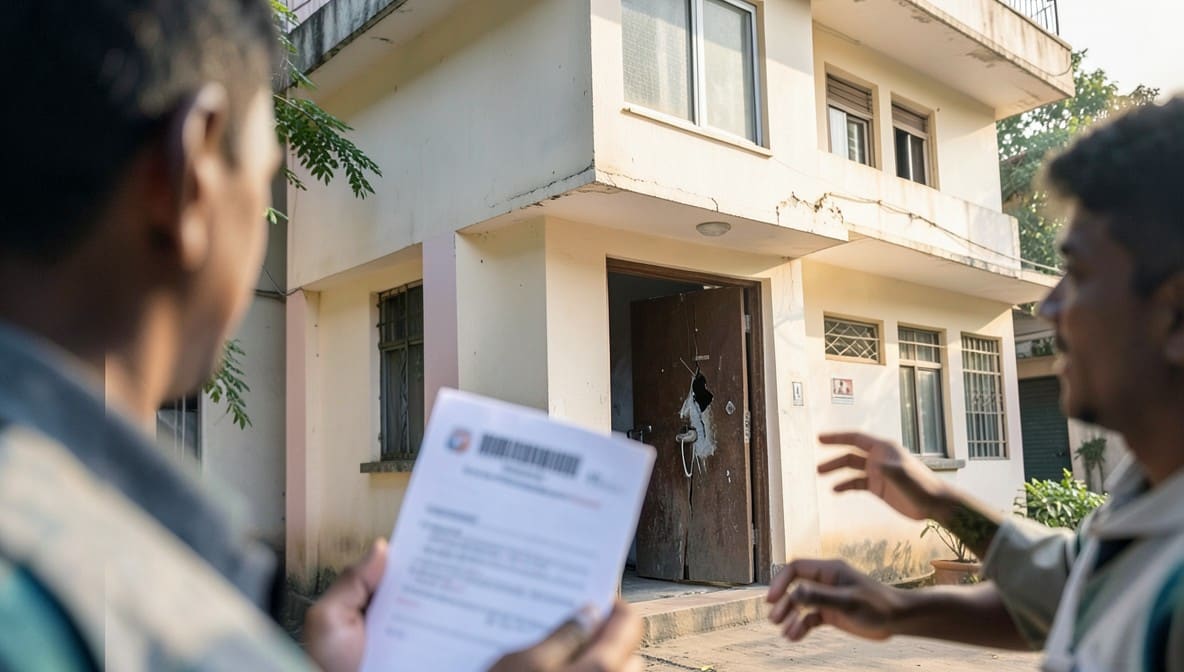
The dispute centers on ownership of Khasra No. 20/4, admeasuring 0.95 acre, in Village Godari, District Rajnandgaon. The plaintiff, Tilok @ Trilok Kumar, claimed title based on a registered sale deed dated 09.06.2003 executed by Defendant No.3, Santram. He alleged that Defendant No.2, Anil Kumar Soni, had no valid title to transfer the land, as the earlier sale deed dated 21.01.2002 between Defendant No.3 and Defendant No.2 was a sham document executed as security for a loan, not an outright sale. The plaintiff further asserted that he had no knowledge of the prior transaction until mutation proceedings were initiated.
Key Facts
- The plaintiff purchased the land on 09.06.2003 via a registered sale deed (Ex. P/1), paid full consideration, and took physical possession.
- The plaintiff’s name was duly mutated in the revenue records following the sale.
- Defendant No.2 claimed title based on a registered sale deed dated 21.01.2002 (Ex. P/9), allegedly executed by Defendant No.3.
- Defendant No.2 was a witness to the plaintiff’s sale deed dated 09.06.2003, yet never challenged its validity or raised the prior transaction during its execution.
- Defendant No.1, Madho Lodhi, purchased the land from Defendant No.2 via a sale deed dated 29.12.2006 and claimed possession.
- A village meeting dated 13.04.2004 was cited by Defendant No.2 to establish public acknowledgment of his title.
- Defendant Nos. 3, 4, and 3A - 3E did not file written statements and remained ex parte.
Procedural History
- 09.06.2003: Plaintiff purchases land via registered sale deed from Defendant No.3.
- 21.01.2002: Alleged sale deed executed between Defendant No.3 and Defendant No.2.
- 13.04.2004: Village meeting held, allegedly acknowledging Defendant No.2’s ownership.
- 29.12.2006: Defendant No.2 sells land to Defendant No.1 via registered sale deed.
- 2009: Plaintiff files Civil Suit No. 12-A/2009 seeking declaration of title and permanent injunction.
- 30.03.2015: Trial Court dismisses plaintiff’s suit, upholding Defendant No.2’s title.
- 21.06.2019: First Appellate Court reverses Trial Court’s order, allows plaintiff’s appeal, declares prior sale deeds void, and upholds plaintiff’s title.
- 19.03.2026: Second Appeal filed by Defendant No.1 dismissed by Chhattisgarh High Court.
The Parties' Positions
Plaintiff (Tilok @ Trilok Kumar)
- Asserted valid title via registered sale deed dated 09.06.2003.
- Claimed continuous possession and revenue mutation.
- Alleged that sale deed dated 21.01.2002 was a mortgage transaction, not a sale.
- Argued Defendant No.2’s role as witness to his sale deed undermined his own claim.
Defendant No.1 (Madho Lodhi)
- Claimed title via purchase from Defendant No.2 on 29.12.2006.
- Asserted lawful possession and mutation.
- Contended that the plaintiff’s transaction was subsequent and invalid.
- Argued that the First Appellate Court erred in treating the 2002 deed as a mortgage without evidence.
Defendant No.2 (Anil Kumar Soni)
- Claimed to be the first purchaser via 21.01.2002 sale deed.
- Asserted that Defendant No.3 had no further right to sell after 2002.
- Relied on village meeting of 13.04.2004 as proof of public recognition of title.
Relief Sought
The plaintiff sought a declaration that he is the lawful owner of the suit land, that the sale deeds dated 21.01.2002 and 29.12.2006 are null and void, and a permanent injunction against defendants from interfering with his possession. The Second Appeal by Defendant No.1 sought to set aside the First Appellate Court’s judgment and restore the Trial Court’s dismissal of the suit.
The Legal Issue
The central question was whether the First Appellate Court committed a substantial error of law by treating the sale deed dated 21.01.2002 as a mortgage transaction without direct evidence, and whether its findings on title and possession could be disturbed in a Second Appeal under Section 100 of the Code of Civil Procedure.
Arguments Presented
For the Appellant
Learned counsel for Defendant No.1 contended that the First Appellate Court erred in reversing the Trial Court’s findings without sufficient legal basis. He argued that:
- The sale deed dated 21.01.2002 was registered and unchallenged in its form; no evidence of loan or mortgage was adduced.
- The plaintiff failed to examine Defendant No.3 or his legal heirs to prove the transaction was a security arrangement.
- The plaintiff did not establish due diligence in verifying title before purchase.
- The Appellate Court improperly shifted the burden of proof onto Defendant No.2 to disprove the plaintiff’s claim.
- The Appellate Court’s reliance on Defendant No.2’s role as witness to the 2003 deed was speculative and not legally tenable.
For the Respondent
Counsel for the plaintiff and the State contended that:
- The First Appellate Court correctly applied the doctrine of bona fide purchaser for value without notice.
- The fact that Defendant No.2 witnessed the plaintiff’s sale deed in 2003 without objecting undermined his own claim of prior ownership.
- The absence of any challenge to the 2003 deed by Defendant No.2 for over 13 years raised a strong inference of acquiescence.
- The Appellate Court’s inference that the 2002 deed was a mortgage was based on surrounding circumstances, including the lack of possession transfer and the plaintiff’s continuous possession since 2003.
- The findings were based on proper appreciation of evidence and did not suffer from perversity.
The Court's Analysis
The Court emphasized that the scope of a Second Appeal under Section 100 of the Code of Civil Procedure is strictly limited to substantial questions of law. Findings of fact, even if reversed by the First Appellate Court from the Trial Court, are binding unless shown to be perverse, based on no evidence, or contrary to settled legal principles.
"The Appellate Court properly relied upon admissions made by witnesses, as well as surrounding circumstances, to infer the true nature of the transaction and concluded that both the sale deeds dated 21.01.2002 and 29.12.2006 were not binding upon the plaintiff by declaring them as null and void."
The Court noted that Defendant No.2, who claimed title under the 2002 deed, was a witness to the 2003 sale deed executed by the same vendor, Defendant No.3. His failure to raise any objection during the execution of the 2003 deed, despite being a party to the prior transaction, created a serious doubt about the authenticity and completeness of his claim. The Court held that this circumstance, combined with the plaintiff’s possession and mutation, justified the Appellate Court’s inference that the 2002 transaction was not an outright sale.
The Court further observed that the burden of proving a transaction as a mortgage lies on the party alleging it, but where the circumstances are inconsistent with a sale - such as continued possession by the vendor, absence of delivery, and the transferee’s passive role as witness to a subsequent sale - the court may draw a reasonable inference. The Appellate Court’s conclusion was not speculative but grounded in evidentiary logic.
The Court rejected the appellant’s contention that the Appellate Court misread evidence or shifted burden. It held that the Appellate Court’s findings were consistent with the principles laid down in S. R. Batra v. Tarun Vijay and K. S. Srinivasan v. K. S. Srinivasan, which recognize that a subsequent purchaser with possession and registration, who is unaware of prior claims, is protected under the doctrine of bona fide purchaser.
The Verdict
The Second Appeal was dismissed in limine. The judgment and decree of the First Appellate Court dated 21.06.2019 were upheld. The plaintiff, Tilok @ Trilok Kumar, is declared the lawful owner of Khasra No. 20/4, admeasuring 0.95 acre, with title derived from the registered sale deed dated 09.06.2003. The sale deeds dated 21.01.2002 and 29.12.2006 are declared null and void. The defendants are permanently restrained from interfering with the plaintiff’s possession. No costs were awarded.
What This Means For Similar Cases
Bona Fide Purchasers Are Protected by Possession and Registration
- Practitioners must argue that a registered sale deed coupled with continuous possession and revenue mutation creates a strong prima facie title, even against prior unenforced claims.
- A subsequent purchaser need not investigate every prior transaction if the vendor’s title appears clear on record.
- Delay in challenging a sale deed by a prior claimant, especially when they participate in a later transaction involving the same property, may constitute acquiescence.
Witness Status Can Undermine a Prior Title Claim
- If a party claiming prior ownership acts as a witness to a subsequent sale by the same vendor, courts may infer that the prior claim lacks credibility.
- This principle applies even in the absence of direct evidence of mortgage; the conduct of the parties becomes a key evidentiary factor.
- Legal practitioners should highlight such inconsistencies during cross-examination to challenge the authenticity of prior transactions.
Second Appeals Are Not Fact Rehearings
- Challenges to factual findings in Second Appeals under Section 100 CPC will fail unless perversity or legal error is demonstrated.
- Courts will not re-appreciate evidence or substitute their view of credibility.
- Practitioners must frame appeals strictly around substantial questions of law, such as misapplication of burden of proof or violation of statutory presumption.