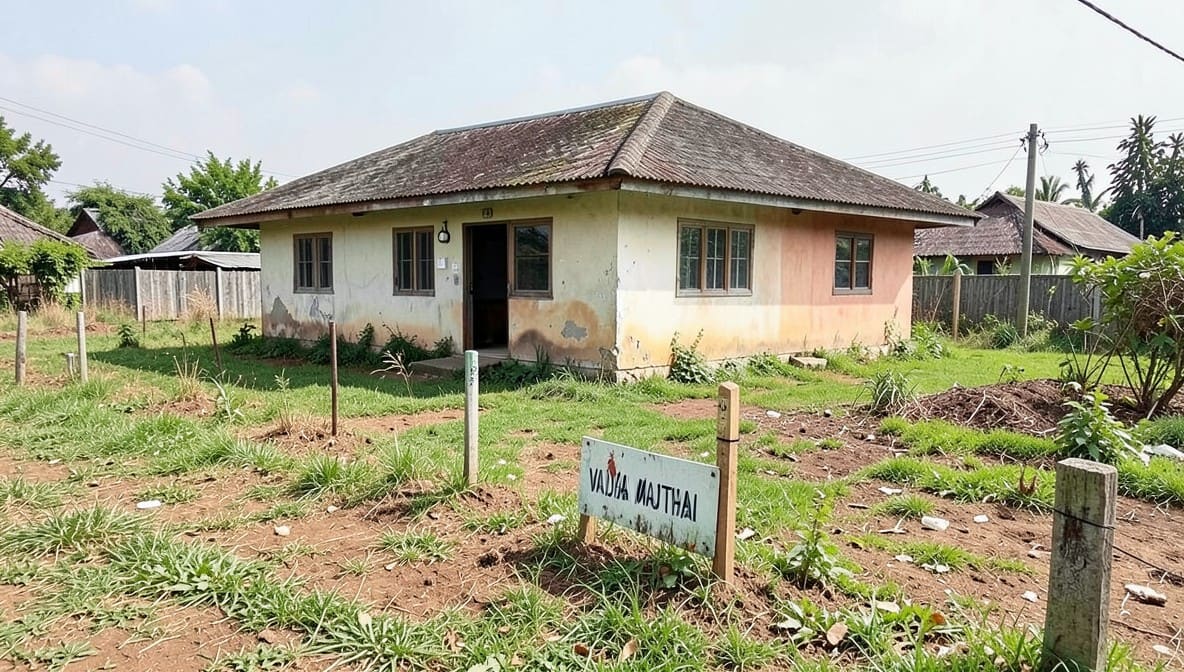
The High Court of Himachal Pradesh clarified that an admission by a party, even if unequivocal, cannot by itself confer title to property, and that the presumption of due execution under Section 90 of the Indian Evidence Act does not extend to certified copies. The court affirmed the lower appellate court’s finding that the sale deed relied upon by the defendants was not connected to the suit property, and dismissed the second appeal.
Background & Facts
The Dispute
The dispute centres on a piece of land in Village Majthai, Tehsil and District Shimla, which was allegedly mortgaged by Kanshi Ram in 1965 and subsequently purportedly sold to the defendants (original defendants) in 1966. The plaintiffs (original plaintiffs) filed a suit for redemption of the mortgage, asserting that the mortgage amount had been satisfied through profits from the property. The defendants contended that the suit property had been sold to them by a registered sale deed dated 02.02.1968 and that they had been in continuous possession since 1966, having made substantial improvements exceeding ₹10,00,000.
Key Facts
- Kanshi Ram mortgaged the building on khasra No. 407/365/1 in Village Majthai, Shimla, in 1965.
- On 15.07.1966, Kanshi Ram entered into an agreement with the defendants to sell the mortgaged property for a consideration of ₹3,500, receiving ₹500 as earnest money; the mortgage amount of ₹1,500 was deducted from the sale price.
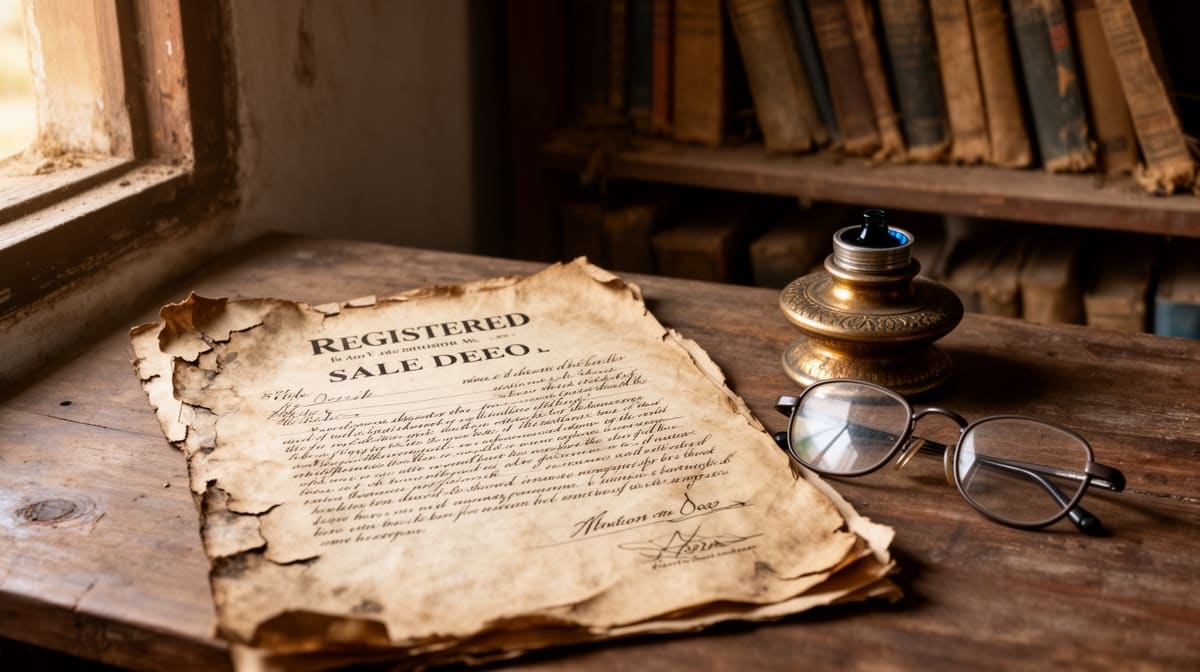
- The sale deed was executed in favour of the defendants on 02.02.1968 and duly registered in the office of the Sub-Registrar, Shimla.
- The defendants thereafter improved the property, spending more than ₹10,00,000.
- The plaintiffs filed a civil suit for redemption of the mortgage property before the learned Trial Court.
- The defendants opposed the suit, pleading lack of locus standi, no cause of action, non-maintainability, and estoppel by the plaintiffs’ conduct.
- It was admitted that Kanshi Ram had mortgaged the property in favour of the defendants and that the defendants had been in possession since 1966 with the plaintiffs’ knowledge.
- The plaintiffs’ replication denied that the mortgage property had been sold to the defendants, asserting that only two biswas of land had been conveyed.
- Evidence was recorded: the plaintiffs examined Ram Rattan (PW-1); the defendants examined Pawan Sharma (DW-1) and Rajesh Bhatia (DW-2).
Procedural History
- 13.11.2002: The learned Trial Court framed eight issues, including whether the plaintiffs were entitled to the mortgage amount, whether they had locus standi, cause of action, whether the suit was maintainable, whether the defendants were owners in possession, and whether the plaintiffs were estopped from filing the suit.
- The Trial Court held that the defendants’ version - that the suit property had been sold by Kanshi Ram to them - was duly corroborated by the registered sale deed (Ext.PW-1/A). It found that the plaintiffs had lost title after the execution of the sale deed, answered issues 4 and 5 in the affirmative, the remaining issues in the negative, and dismissed the suit.
- Aggrieved, the plaintiffs appealed to the learned District Judge (Forest), Shimla (the learned appellate Court).
- The appellate Court held that the sale deed described the property by boundaries and not by khasra number, and there was no evidence connecting the property mentioned in the sale deed to the mortgaged property. It also noted that the jamabandies relied upon by the defendants showed mutations unrelated to the suit property. Consequently, the appellate Court set aside the Trial Court’s judgment and decree.
- Being aggrieved by the appellate Court’s judgment, the defendants filed the present second appeal, which was admitted on substantial questions of law on 08.12.2008.
Relief Sought
The appellants (defendants) sought to have the judgment and decree of the learned appellate Court set aside, and to restore the judgment and decree of the learned Trial Court. The respondents (plaintiffs) sought dismissal of the appeal and affirmation of the appellate Court’s order.
The Legal Issue
The central questions were: (1) Whether an admission by a party that the defendants were absolute owners since 1968 could confer title to the suit property; (2) Whether the presumption under Section 90 of the Indian Evidence Act could be applied to a certified copy of a document over thirty years old; and (3) Whether the sale deed relied upon by the defendants was sufficiently connected to the suit property to transfer title.
Arguments Presented
For the Appellant/Petitioner
The appellants, represented by Senior Advocate R.K. Bawa assisted by Advocate Ajay Kumar Sharma, contended that the learned appellate Court had erred in holding that the sale deed was not connected to the suit property. They argued that there is no legal requirement to mention khasra numbers in a sale deed, and that ample evidence - including the examination of the Sub-Registrar’s official, the jamabandi entries, and the long-standing possession - established the connection. They further submitted that the sale deed, being over thirty years old, attracted the presumption of due execution under Section 90 of the Evidence Act, and that the admission by PW-1 (Ram Rattan) that Gur Parshad and his children were absolute owners since 1968 should be taken as conclusive proof of title. They relied on Jagan Nath and others vs. Rex (1949) and Rajagopala Ayyar and another vs. Avadai Velar and others (1960) to support the proposition that ancient documents need not be strictly proved.
For the Respondent/State
The respondents, represented by Advocate Tek Chand Sharma, countered that the question of whether the sale deed in evidence pertained to the suit property was a pure question of fact unsuitable for determination in a regular second appeal. They emphasized that the plaintiffs had expressly denied the sale of the suit property in their replication, thereby casting the burden on the defendants to prove that the property described in the sale deed was identical to the suit property. The respondents pointed out that the defendants had not filed any mutation deeds, and that reliance on unattested jamabandi copies was misplaced. They argued that the presumption under Section 90 applies only to the original document, not to a certified copy, citing Lakhi Baruah v. Padma Kanta Kalita (1996) 8 SCC 357 and Privy Council decisions such as Seethayya v. Subramanya Somayajulu [(1928-29) 56 IA 146: AIR 1929 PC 115] and Basant Singh v. Brij Raj Saran Singh [AIR 1935 PC 132: 1935 All LJ 847: 39 CWN 1057: 62 IA 180].
The Court's Analysis
The Court began by examining the admission of PW-1. It held that an admission must be taken as a whole or not at all, citing Mohd. Koya v. Muthukoya [(1979) 2 SCC 8: 1978 SCC OnLine SC 235] and Palvinder Kaur v. State of Punjab [(1952) 2 SCC 177: AIR 1952 SC 354: 1953 SCR 94]. The admission that Gur Parshad and his children were absolute owners since 1968 was qualified by the statement that they were merely residing in the property; thus the admission could not be split to confer title. The Court further observed that, as laid down in Canbank Financial Services Ltd. v. Custodian [(2004) 8 SCC 355], an admission does not create title; title can be acquired only in accordance with law, and an admission of a party does not lead to relinquishment of any right already acquired.
Turning to the presumption under Section 90, the Court noted that the principle applies to the original document, not to a certified copy produced before the court, as clarified in Lakhi Baruah v. Padma Kanta Kalita. It relied on Privy Council authority, which has been consistently followed by various High Courts, to hold that production of a copy or certified copy does not raise the presumption under Section 90, even if the document is over thirty years old. Consequently, the presumption was unavailable on the certified copy relied upon by the defendants, and the Court was justified in refusing to attach such presumption.
Finally, the Court examined the connection between the sale deed and the suit property. The sale deed described the property by its boundaries: north by the road from Shimla to Jatog, south by the land of the purchaser, east by a dilapidated house and the land of the seller, and west by the house of Lakshmi Ram. No witness, including the defendants’ own witness Rajesh Bhatia (DW-2), deposed that the suit property satisfied these boundaries. The Court therefore agreed with the learned appellate Court that the sale deed was not connected to the suit land, and that the defendants had failed to prove title.
Having found no infirmity in the appellate Court’s judgment, the Court dismissed the second appeal.
The Verdict
The appeal filed by the defendants was dismissed, upholding the judgment and decree of the learned appellate Court. No monetary compensation, costs, or interest was awarded. The suit property remains in the possession of the defendants, and the plaintiffs’ claim for redemption was rejected.
What This Means For Similar Cases
Admission Alone Does Not Transfer Title
Practitioners must remember that an admission by a party, even if unequivocal, cannot by itself convey title to property. Title can be acquired only through a valid instrument recognised by law, such as a registered sale deed, or by operation of statute. Any attempt to rely solely on an admission to establish ownership will fail unless the admission is unqualified and taken as a whole.
Presumption Under Section 90 Applies Only to Original Documents
The presumption of due execution under Section 90 of the Evidence Act does not extend to certified copies, no matter how old the document may be. To avail of the presumption, the original document must be produced; otherwise, the party seeking to rely on the document must prove its execution through other evidence.
Strict Proof of Connection Between Document and Property
When a deed describes property by boundaries, the party asserting title must lead clear evidence linking those boundaries to the specific parcel in dispute. Mere possession or improvements, without boundary-matching evidence, is insufficient to establish that the deed pertains to the suit property.