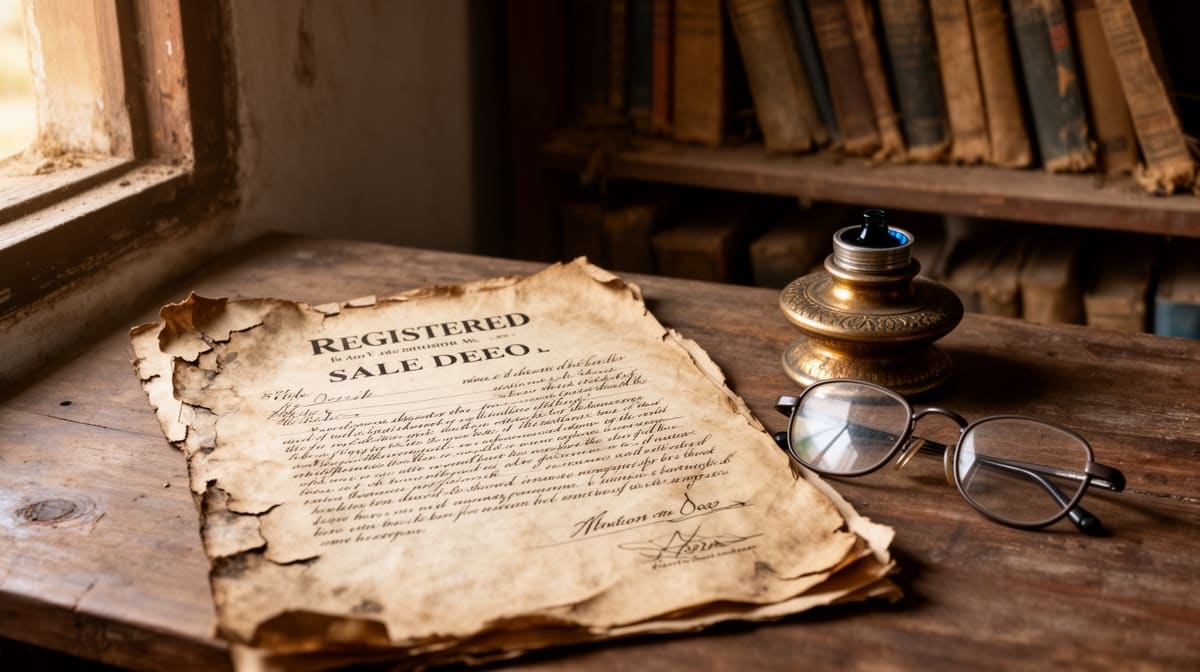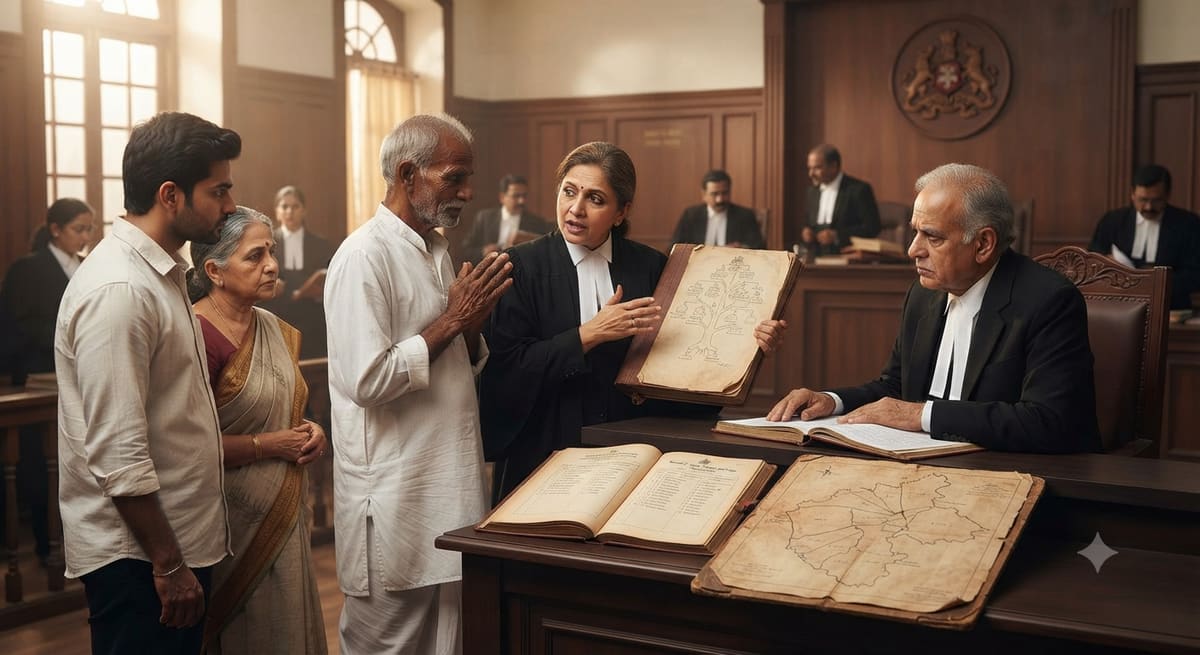
A significant clarification has emerged from the Karnataka High Court on the limits of presumptions under Section 90 of the Indian Evidence Act in title disputes. While long-standing documents may attract presumptions of due execution, the Court emphasized that such presumptions cannot substitute for affirmative proof of title chain, particularly where ancestral partition remains unproven. This judgment reinforces the doctrinal principle that documentary presumptions are procedural aids, not substantive substitutes for evidentiary burden.
Background & Facts
The Dispute
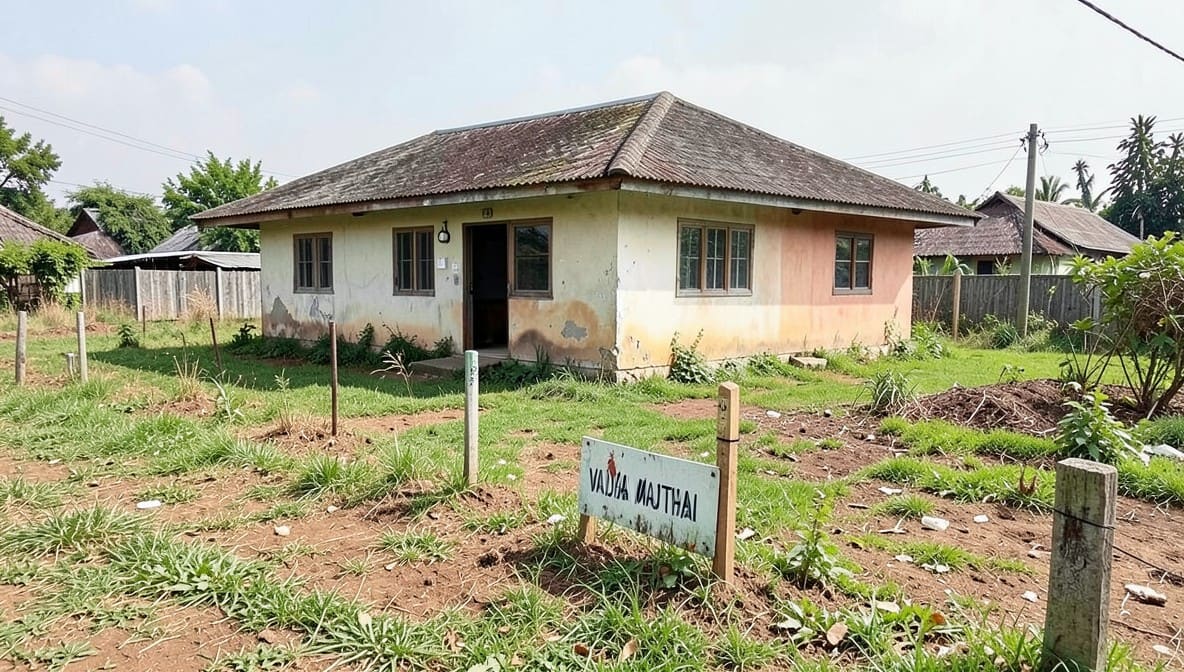
The dispute centers on a 1.27-acre dry land bearing Survey Number 21/1B in Brahmasandra, Kora Hobli, Tumakuru Taluk, claimed by the appellants as their absolute property. The appellants, legal heirs of Kempaiah, filed Original Suit No. 14/2003 seeking declaration of title and permanent injunction against respondents who allegedly interfered with their possession. The claim rests on three registered documents: a mortgage deed dated 24.09.1932 (Ex.P2), a sale deed dated 19.05.1948 (Ex.P3), and a subsequent sale deed dated 09.11.1960 (Ex.P4). The appellants assert that the property originally belonged to their ancestor, Chikkadaramma, who received it in a family partition with her brother Narasimhaiah in 1932, mortgaged it to Nanjundaradhya, and later sold it to him, who then sold it to Kempaiah.
Key Facts
- The appellants claim Chikkadaramma received Sy.no.21/1B in a family partition with her brother Narasimhaiah on or about 24.09.1932.
- Ex.P2 (mortgage deed) records the mortgage of Sy.no.21/1B to Nanjundaradhya, but incorrectly states the survey number as Sy.no.40/1 and extent as 2 acres 2 guntas, whereas the actual extent is 1 acre 27 guntas.
- Ex.P3 (sale deed dated 19.05.1948) and Ex.P4 (sale deed dated 09.11.1960) repeat the same survey number and extent errors, but consistently describe the same boundary lines.
- The boundaries described in all three deeds are identical: East: Land of Narasimha; West: Land of Chikkamariyappa; North: Land of Gangaiah; South: Karikere Road.
- Revenue records (Ex.D2, D6-D8) show Chikkanarasimhaiah (respondents’ ancestor) as the name in Column 9 of the Record of Rights for Sy.no.21/1B, while Kempaiah appears in Column 12.
- The appellants did not file any suit for rectification of the survey number or extent errors in the deeds.
- PW-2 (Narasiyappa, aged 60) claimed personal knowledge of the 1932 partition and possession, but admitted respondents’ legal heirs were in possession of the property.
- PW-3 (Gangaiah, aged 74) confirmed possession by the appellants but had no knowledge of the partition.
- No partition deed, no witness to partition, and no corroborative revenue entries supporting the partition claim were produced.
- The respondents claim the property is ancestral joint family property of Chikkanarasimhaiah, with revenue records supporting their title.
Procedural History
- 24.09.1932: Mortgage of property to Nanjundaradhya (Ex.P2) - alleged partition date.
- 19.05.1948: Sale of mortgaged property from Chikkadaramma to Nanjundaradhya (Ex.P3).
- 09.11.1960: Sale of property from Nanjundaradhya to Kempaiah (Ex.P4).
- 2003: Suit filed by Kempaiah (plaintiff) seeking declaration of title and injunction.
- 10.01.2018: Trial Court (I Additional Civil Judge and JMFC, Tumakuru) dismissed the suit, holding failure to prove partition and title chain.
- 27.06.2023: First Appellate Court (II Additional District and Sessions Judge, Tumakuru) dismissed the appeal, affirming the trial court’s findings with general concurrence.
- 20.02.2026: Second Appeal heard before Karnataka High Court.
- 10.04.2026: Judgment pronounced by Justice Ravi V Hosmani.
The Parties' Positions
Appellants (Plaintiffs’ Legal Heirs): Argued that despite clerical errors in survey number and extent in Ex.P2, P3, and P4, the consistent boundary description proves identity of the property. Relied on Section 90 of the Evidence Act to invoke presumption of due execution. Invoked Sheodhyan Singh and Narasimha Shastry to argue boundaries prevail over survey number/extent errors.
Respondents (Defendants’ Legal Heirs): Denied any connection to Chikkadaramma or the alleged partition. Asserted ancestral title through Chikkanarasimhaiah, supported by revenue records. Contended that the errors in deeds were material and fatal, and the suit was barred by delay. Argued that vendor (Nanjundaradhya) was not made a party, rendering the suit defective.
Relief Sought
The appellants sought: (1) Declaration of absolute title to Sy.no.21/1B; (2) Permanent injunction restraining respondents from interference; (3) Costs. The respondents sought dismissal of the suit with costs.
The Legal Issue
The central question was whether Section 90 of the Indian Evidence Act creates a presumption of title when a document over thirty years old is produced from proper custody, and whether such presumption can cure the failure to prove the chain of title, particularly where the foundational event - ancestral partition - remains unproven.
Arguments Presented
For the Appellant
The appellants contended that Ex.P2, P3, and P4, being over thirty years old and produced from proper custody, attracted the presumption under Section 90 of the Evidence Act that they were duly executed and attested. They argued that the consistent boundary description across all three deeds established the identity of the property despite the survey number and extent errors. Reliance was placed on Sheodhyan Singh v. Sanichara Kuer and Narasimha Shastry v. Mangesha Devaru to assert that in case of conflict, boundary description overrides survey number and extent. They further argued that the first appellate court failed to independently re-appreciate evidence, violating Order XLI Rule 31 CPC, as held in U. Manjunath Rao v. U. Chandrasekhar.
For the Respondent
The respondents countered that Section 90 only presumes due execution and attestation - not the truth of recitals within the document. They emphasized that the appellants failed to prove the foundational claim of partition between Chikkadaramma and Narasimhaiah. No partition deed, no witness to partition, and no corroborative revenue entries were produced. The respondents argued that the errors in survey number and extent were not mere clerical mistakes but material defects that undermined the entire title chain. They relied on Arjun Togu Lamani v. Nagappa to argue that a suit based on defective title deeds without rectification is unsustainable. They also contended that the omission of the vendor (Nanjundaradhya) as a party rendered the suit non-maintainable.
The Court's Analysis
The Court undertook a layered analysis of the three substantial questions of law proposed under Section 100 CPC.
First, regarding the failure of the first appellate court to independently re-appreciate evidence, the Court held that the appellate court’s mere statement of general concurrence with the trial court’s reasoning - without any analysis or expression of independent opinion - violated Order XLI Rule 31 CPC. The Court relied on U. Manjunath Rao v. U. Chandrasekhar to affirm that such mechanical affirmation constitutes a failure to discharge statutory duty and gives rise to a substantial question of law. The Court thus answered Substantial Question of Law No.1 in the affirmative.
Second, on the applicability of Section 90 of the Evidence Act, the Court clarified that while the presumption under Section 90 applies to the due execution and attestation of documents over thirty years old, it does not extend to the truth of the recitals contained therein. Citing Tehsildar, Urban Improvement Trust v. Ganga Bai Menariya, the Court held:
"This does not lead to a presumption that recitals therein are correct."
The Court observed that the appellants admitted the survey number and extent in the deeds were erroneous. The presumption of execution could not validate the claim that Chikkadaramma received the property in partition, as no evidence of partition was led. The Court noted that even if the deeds were duly executed, the title chain remained broken without proof of the initial transfer from the joint family to Chikkadaramma.
Third, on the applicability of Sheodhyan Singh and Narasimha Shastry, the Court distinguished both cases. In Sheodhyan Singh, the dispute was over mis-description of a plot number, not the identity of the land. In Narasimha Shastry, the defendant did not dispute the plaintiff’s purchase or possession, only the eastern boundary. Here, the respondents denied the entire title chain, including the partition. The Court held that these precedents could not be applied where the foundational claim of ownership - partition - was unproven.
The Court further noted that the appellants failed to examine any witness to the alleged 1932 partition, did not produce any partition deed, and did not seek rectification of the deeds despite having knowledge of the errors for over four decades. The revenue records consistently showed the respondents’ ancestor as the titleholder in Column 9. The Court concluded that the presumption under Section 90 could not fill this evidentiary void.
The Verdict
The appeal was dismissed. The Karnataka High Court held that while the first appellate court erred in failing to independently re-appreciate evidence, the appellants failed to establish title due to the absence of proof of ancestral partition. No declaration of title was granted. No injunction was issued. No costs were awarded. The judgment of the trial court and first appellate court were upheld on merits, despite procedural shortcomings in the appellate reasoning.
What This Means For Similar Cases
Presumption Under Section 90 Does Not Substitute for Title Chain Proof
- Practitioners must understand that Section 90 of the Evidence Act only presumes execution and attestation - not the truth of recitals like partition, sale, or ownership.
- In title suits based on old documents, the burden remains on the plaintiff to prove the entire chain of title, including ancestral transfers.
- Relying solely on Section 90 to establish title without proving underlying events (e.g., partition, gift, inheritance) will fail.
Boundary Description Alone Cannot Cure Material Title Defects
- While boundary descriptions may resolve minor discrepancies, they cannot validate a title chain where the foundational transaction (e.g., partition) is unproven.
- Courts will not apply Sheodhyan Singh or Narasimha Shastry where the defendant disputes the very origin of the plaintiff’s title.
- Plaintiffs must prove not just identity of land, but also lawful derivation of title from a prior owner.
Appellate Courts Must Express Independent Reasoning
- First appellate courts cannot merely copy-paste trial court reasoning.
- A mechanical affirmation without analysis violates Order XLI Rule 31 CPC and invites reversal on second appeal.
- Practitioners should raise this as a substantial question of law in second appeals where appellate reasoning is perfunctory.