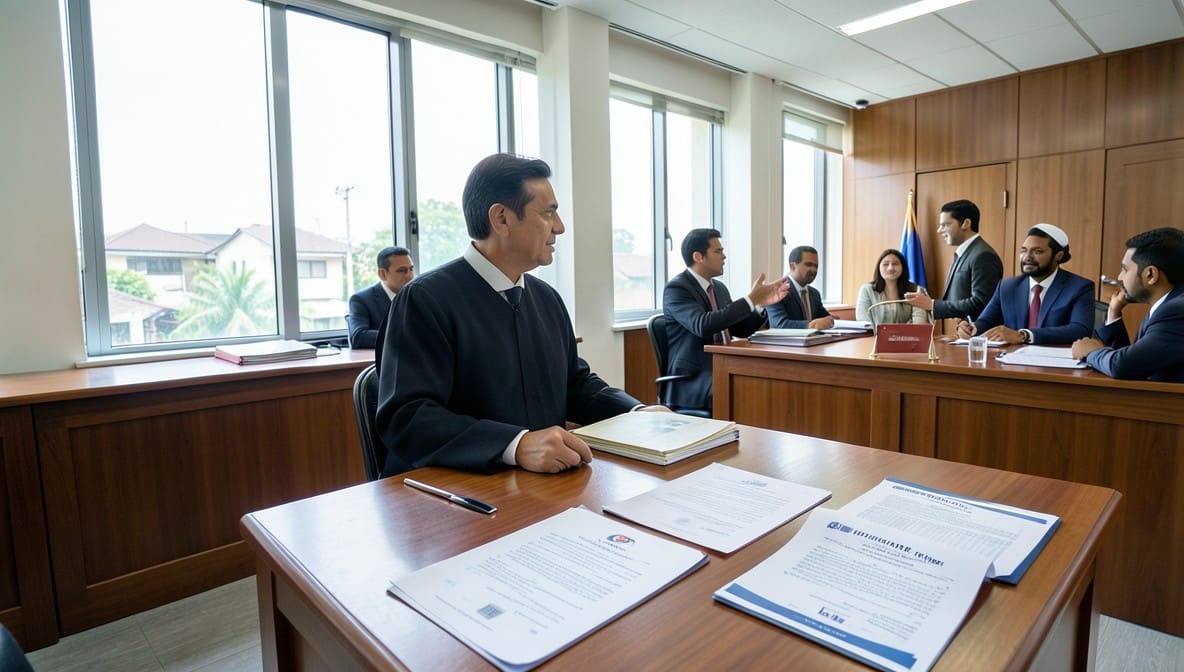
The Bombay High Court, in a recent arbitration petition, has clarified the threshold for granting interim relief under Section 9 of the Arbitration and Conciliation Act, 1996. The Court held that a party seeking equitable relief must demonstrate prima facie compliance with contractual obligations, failing which interim measures cannot be granted. The judgment underscores the importance of adhering to contractual milestones, particularly in complex transactions involving redevelopment and tenanted properties.
Background & Facts
The Dispute
The dispute revolves around Masina Building, a tenanted property situated at 68/70, Mirza Ghalib Marg, Mumbai, owned by Al-Masina Enterprises (Respondent No.1), a proprietary concern of Mohd. Rasul Mirza Hussain Ismaili. The petitioners, Bhoomipujan Prime Builders LLP and its partner, entered into an Agreement for Sale dated 9 September 2022 with Respondent No.1 for the purchase and redevelopment of the property. The total consideration was Rs. 5.40 crores, with Rs. 1.04 crores paid upfront and the balance linked to specific milestones, including mutation of the property in Respondent No.1’s name and securing tenants’ consent for redevelopment.
Key Facts
- Property Details: Masina Building, Cadastral Survey No. 240, Byculla Division, Mumbai, admeasuring 1123 sq. mtrs.
- Agreement for Sale (9 September 2022): Total consideration of Rs. 5.40 crores, with Rs. 1.04 crores paid upfront. The balance was payable in tranches upon achieving milestones:
- Rs. 51,00,000 within 3 months of mutation entry in Respondent No.1’s name.
- Rs. 50,00,000 within 3 months of securing tenants’ consent for redevelopment.
- Rs. 3,35,00,000 in six instalments upon further milestones, including obtaining consent affidavits from legal heirs.
- Mutation Entry: Achieved on 8 November 2023, triggering the first milestone payment of Rs. 51 lakhs.
- Termination Notice: Respondent No.1 issued a termination notice on 9 February 2026, alleging non-payment of the Rs. 51 lakhs and failure to call for tenants’ consent.
- Development Agreement (DA): Respondent No.1 executed a registered DA with Asma Infra Build Con (Respondent No.6) on 5 January 2026, appointing them as the new developer.
- MHADA’s Letter of Intent (LOI): Issued on 2 February 2026 in favour of Respondent No.6 after securing tenants’ consent.
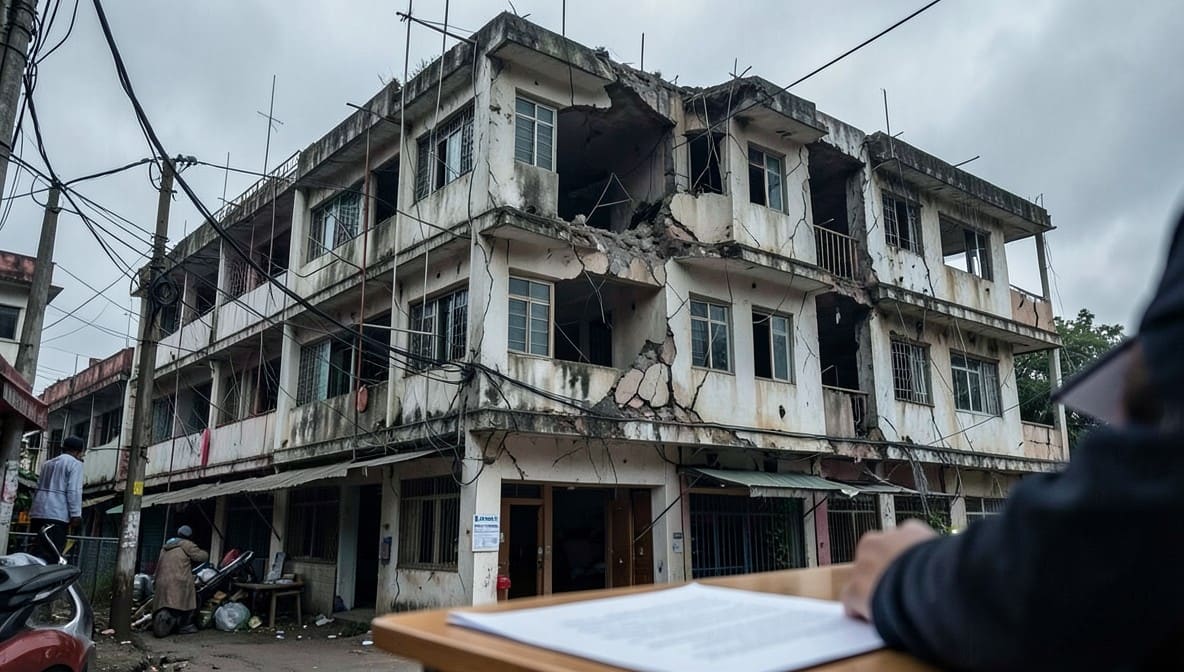
- Structural Audit: The building was classified as C-1 category (unsafe for human inhabitation) by MCGM on 19 January 2026, necessitating urgent redevelopment.
Procedural History
- 6 November 2025: Petitioners issued a notice invoking arbitration and filed Arbitration Application (L) No. 41348 of 2025 for appointment of an arbitrator.
- 9 February 2026: Respondent No.1 issued a termination notice for the Agreement for Sale.
- 10 March 2026: Petitioners replied to the termination notice.
- 30 April 2026: Present Arbitration Petition (L) No. 13286 of 2026 filed under Section 9 of the Arbitration Act, seeking:
- Stay on the implementation of the DA dated 5 January 2026.
- Stay on the termination notice dated 9 February 2026.
- Appointment of a court receiver for the property.
Relief Sought
The petitioners sought interim relief to:
- Stay the implementation of the DA and termination notice.
- Appoint a court receiver to preserve the property pending arbitration.
- Secure their interest in the property, including alleged expenditures of Rs. 3.23 crores and part payment of Rs. 1.10 crores.
The Legal Issue
The central question was whether the petitioners were entitled to interim relief under Section 9 of the Arbitration Act despite prima facie breaches of the Agreement for Sale, including:
- Failure to pay Rs. 51 lakhs within 3 months of mutation entry (8 November 2023).
- Failure to call upon Respondent No.1 to secure tenants’ consent, thereby avoiding further payment obligations.
Arguments Presented
For the Petitioners
- Unilateral Termination Impermissible: Relied on Manisha Kode vs. Mandanlal Desarda (Bombay HC) and K. S. Manjunath vs. Moorasavirappa (Supreme Court) to argue that unilateral termination of the Agreement for Sale was illegal.
- Performance of Obligations: Contended that they had taken steps for mutation, defended litigations, and incurred expenditures of Rs. 3.23 crores, which were adjusted against the total consideration, reducing it to Rs. 3.60 crores.
- No Prior Intimation: Argued that Respondent Nos.1 and 2 terminated the agreement without prior intimation or alleging delay.
- Equitable Relief: Submitted that the balance of convenience favoured granting interim relief to prevent irreparable loss.
For the Respondent
- Breach of Contract: Argued that the petitioners failed to pay Rs. 51 lakhs within 3 months of mutation entry (8 November 2023) and did not call for tenants’ consent, constituting a prima facie breach of the Agreement for Sale.
- Letter Dated 7 October 2025: Relied on a letter demanding balance consideration of Rs. 4.30 crores, which bore the acknowledgment of Petitioner No.1, proving service.
- Tenants’ Consent: Submitted that over 70% of tenants consented to redevelopment with Respondent No.6 within a month of executing the DA, demonstrating their readiness to cooperate.
- Urgency of Redevelopment: Highlighted the C-1 category classification of the building, emphasizing the need for immediate redevelopment to ensure tenants’ safety.
- Balance of Convenience: Argued that granting interim relief would jeopardize the redevelopment process and endanger tenants’ lives, outweighing the petitioners’ profit motive.
The Court's Analysis
The Court conducted a prima facie analysis of the parties’ conduct under the Agreement for Sale, focusing on the following key aspects:
-
Nature of the Agreement: The Court observed that the Agreement for Sale was not a simple sale transaction but was linked to the redevelopment of a tenanted property. The payment milestones were contingent upon mutation entry and securing tenants’ consent, reflecting the complexity of the transaction.
-
Petitioners’ Breaches:
- Non-Payment of Rs. 51 Lakhs: The first milestone payment was due within 3 months of mutation entry (8 November 2023). Despite this, the petitioners failed to pay the amount, justifying their inaction by citing pending appeals against the mutation entry. The Court rejected this pretext, holding that the Agreement did not condition payment on the finality of mutation entry.
- Failure to Call for Tenants’ Consent: Under Clause 4-ii of the Agreement, the petitioners were required to call upon Respondent No.1 to secure tenants’ consent. The Court noted that there was no evidence of such a demand, and the petitioners’ inaction appeared calculated to avoid further payment obligations.
"The Agreement, however, did not stipulate that further consideration of Rs.51,00,000/- was payable only after Mutation Entry attained finality after decision of all proceedings at various hierarchical levels. Therefore, the pretext of pendency of appeals prima facie cannot be accepted for justifying the action of the Petitioners in not making payment of Rs. 51,00,000/- within 3 months of certification of Mutation Entry."
-
Respondent’s Conduct: The Court noted that Respondent No.1 had demanded balance consideration through a letter dated 7 October 2025, which bore the acknowledgment of Petitioner No.1. Despite this, the petitioners failed to respond or make any further payments. The Court held that the termination of the Agreement was a consequence of the petitioners’ breaches.
-
Equitable Relief Under Section 9: The Court emphasized that interim relief under Section 9 is equitable in nature, and a party seeking such relief must demonstrate prima facie compliance with contractual obligations. The petitioners’ failure to meet payment milestones and call for tenants’ consent disentitled them from seeking interim measures.
-
Balance of Convenience: The Court weighed the competing interests of the parties:
- Petitioners’ Interest: Profit motive and alleged expenditures of Rs. 3.23 crores.
- Respondents’ and Tenants’ Interest: Safety of tenants residing in a C-1 category building, necessitating urgent redevelopment.
The Court held that the latter prevailed, as the petitioners’ claims could be adequately compensated through damages, whereas delaying redevelopment would endanger lives.
-
Precedents Distinguished: The Court distinguished the judgments relied upon by the petitioners (Manisha Kode and K. S. Manjunath), holding that they were inapposite for deciding interim relief. The validity of termination could only be adjudicated at the conclusion of arbitral proceedings.
The Verdict
The Bombay High Court dismissed the arbitration petition filed under Section 9 of the Arbitration Act, holding that the petitioners were not entitled to interim relief due to their prima facie breaches of the Agreement for Sale. The Court observed:
- The petitioners failed to pay Rs. 51 lakhs within 3 months of mutation entry (8 November 2023).
- The petitioners did not call upon Respondent No.1 to secure tenants’ consent, avoiding further payment obligations.
- The balance of convenience favoured the respondents, as the building’s C-1 category classification necessitated urgent redevelopment to ensure tenants’ safety.
- The petitioners’ claims for damages could be adjudicated by the arbitral tribunal, and they would not suffer irreparable loss.
The Court dismissed the petition with no order as to costs.
What This Means For Similar Cases
Prima Facie Compliance Is Non-Negotiable for Interim Relief
- Equitable Relief Under Section 9: Courts will scrutinize the conduct of parties seeking interim relief under Section 9. A party must demonstrate prima facie compliance with contractual obligations to be entitled to equitable relief.
- Milestone Payments: Failure to adhere to payment schedules or contractual milestones, even if justified by pending proceedings, may disentitle a party from interim relief.
Tenanted Properties Require Proactive Engagement
- Tenants’ Consent: In redevelopment agreements involving tenanted properties, parties must proactively secure tenants’ consent as stipulated in the contract. Passive reliance on the other party to initiate the process may constitute a breach.
- Structural Safety: Courts will prioritize structural safety concerns over profit motives, especially when a building is classified as unsafe for human habitation.
Arbitral Tribunal Remains the Forum for Final Adjudication
- Interim Relief vs. Final Relief: While courts may deny interim relief based on prima facie breaches, the validity of termination and claims for damages remain within the exclusive jurisdiction of the arbitral tribunal.
- Damages as Adequate Compensation: Courts may deny interim relief if the aggrieved party’s loss can be adequately compensated through damages at the conclusion of arbitral proceedings.
Key Takeaways for Practitioners
- Documentary Evidence: Ensure that acknowledgments of notices and demands are properly documented, as courts may rely on them to establish service and breach.
- Contractual Clarity: Clearly define payment milestones and conditions precedent in agreements, including whether they are contingent upon the finality of administrative processes (e.g., mutation entries).
- Urgency in Redevelopment: Highlight structural safety concerns and tenants’ consent to strengthen arguments for expedited redevelopment, especially in cases involving unsafe buildings.