The Bombay High Court has set aside a Single Judge's order denying interim protection under Section 9 of the Arbitration and Conciliation Act, 1996, holding that a group of doctor-investors are entitled to an injunction restraining developers from alienating land subject to a 2005 Memorandum of Understanding. The Division Bench found that the developers had retained Rs. 60 lakhs for over 21 years without delivering promised commercial premises or obtaining requisite permissions, and that any transfer of the land would render the investors' claim for specific performance infructuous.
Background & Facts
The Dispute
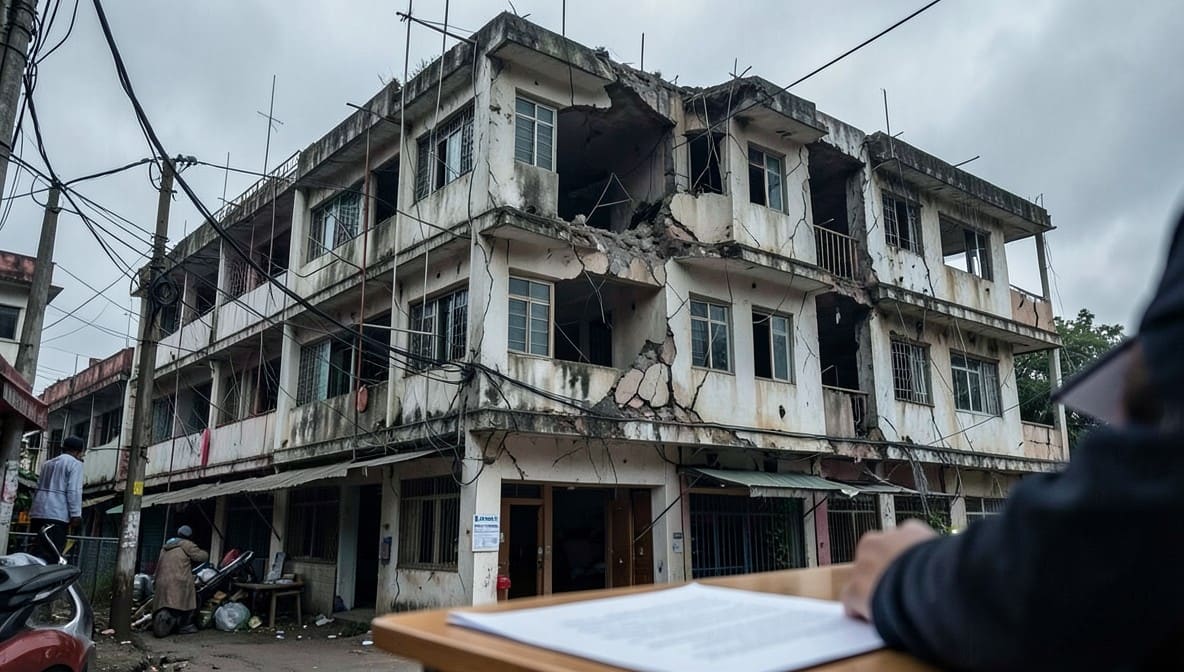
The appellants, five medical practitioners who are partners in M/s. Sanklan Hospital, entered into a Memorandum of Understanding (MoU) dated 27th June, 2005 with the respondents for the purchase of commercial premises in a proposed development called Krishna Ambika Arcade. The subject property, known as Dave's Estate, admeasures approximately 1,405 square yards and is situated at S.V. Road, Goregaon (West), Mumbai. The appellants paid Rs. 60 lakhs under the MoU but have neither received the commercial premises nor a refund of their investment after more than two decades.
Key Facts
- MoU Date: 27th June, 2005 between the appellants (as purchasers) and respondents (as developers)
- Consideration Paid: Rs. 60 lakhs received by respondents under the MoU
- Promised Deliverable: Commercial premises admeasuring 4,360 square feet in Krishna Ambika Arcade to be constructed on the subject plot
- Delivery Timeline: Within 24 months from receipt of Intimation of Disapproval (IOD) or within such time as mutually agreed
- Critical Failure: Respondents failed to obtain IOD for the project, rendering the delivery timeline inoperative
- Land Status: Respondents attempting to transfer development rights in the subject land to third parties
- Appellants' Profile: Group of doctors who invested hard-earned money; funds used interest-free by respondents for over 21 years
- Respondents' Defence: Claim MoU stood terminated or came to an end by conduct of parties
- Arbitration: Arbitrator already appointed; dispute pending adjudication
Procedural History
- 27.06.2005: Memorandum of Understanding executed between parties
- 19.06.2026: Learned Single Judge dismissed the appellants' petition under Section 9 of the Arbitration and Conciliation Act, 1996 seeking appointment of Court Receiver and injunction against creation of third party rights (Commercial Arbitration Petition (L) No. 12193 of 2026)
- 2026: Appellants filed Commercial Arbitration Appeal (L) No. 25270 of 2026 before the Division Bench
- 01.10.2026: Arguments heard; judgment reserved
- 21.10.2026: Judgment pronounced by the Division Bench (Kamal Khata, J. authoring)
Relief Sought
The appellants sought urgent ad-interim reliefs including: (A) appointment of Court Receiver, High Court, Bombay in respect of the subject property; (B) injunction restraining creation of third party rights, title, or interest in the property; (C) consequential reliefs protecting their contractual and arbitral rights; and (D) preservation of the subject matter of the arbitration.
The Legal Issue
The central question was whether the appellants are entitled to interim protection under Section 9 of the Arbitration and Conciliation Act, 1996 by way of an injunction preventing the respondents from creating third party rights in the subject land, where the respondents have failed to obtain the IOD for over 21 years and are now attempting to alienate the property, thereby frustrating the appellants' claim for specific performance of the MoU.
Arguments Presented
For the Appellants
Mr. Bahraiz Irani, learned counsel for the appellants, contended that the interim protection contemplated under Section 9 is designed to preserve the subject matter of the dispute. He argued that the respondents' attempt to transfer development rights in the land to third parties would entirely frustrate the appellants' claim for specific performance of the MoU, leaving them remediless except for a claim for damages. He emphasized that limitation is not a bar since the respondents failed to obtain the IOD, a condition precedent for the delivery timeline to commence. The appellants, being doctors who invested their hard-earned money, have been kept out of their investment for over two decades while the respondents used the funds interest-free.
For the Respondents
Mr. Gaurav Mehta for Respondent Nos. 1 and 2, and Mr. Aseem Naphade for Respondent Nos. 3 to 6, contended that the MoU stood terminated or had come to an end by the conduct of the parties. Mr. Naphade disclosed that his clients (Respondent Nos. 3 to 6) were negotiating with Respondent Nos. 1 and 2 for purchasing development rights in respect of the subject land. The respondents offered a settlement amount which the court found to be paltry compared to the monies received and retained interest-free for over 21 years.
The Court's Analysis
The Division Bench, per Kamal Khata, J., held that the impugned order dated 19th June, 2026 deserved to be set aside. The court articulated three key findings:
First, on the purpose of Section 9: "In our view, interim protection contemplated under Section 9 of the Arbitration Act is to preserve the subject matter of the dispute between the parties. In our view, if the land itself is disposed off by the Respondents, the Appellants would be remediless to the extent of their claim for specific performance." The court recognized that the appellants' contractual right to specific performance of the commercial premises would be rendered infructuous if the land were alienated.
Second, on the limitation defence: The court held that limitation is not an issue because the respondents "have failed to obtain the IOD for the subject project." Since the delivery obligation was triggered by receipt of IOD or mutual agreement, and neither occurred, the cause of action for specific performance remains alive.
Third, on the respondents' conduct: "Perusal of the record indicates that, the Respondents have attempted to play fraud on the Appellants. They have outrightly cheated the Appellants." The court referred to Sections 215 and 420 of the Indian Penal Code defining cheating, and observed: "Considering the aforesaid definitions and facts of the present case, we are prima facie of the view that the Respondents had all throughout, since inception, carried an intention to cheat the Appellants." The court noted this prima facie view was formed without going into evidentiary value at the interim stage, given that the Arbitrator has already been appointed.
The court also attempted to forge a settlement but the respondents' offer was deemed inadequate: "the Respondents offered a paltry amount as against the monies received by them having used it interest free for over 21 years."
The Verdict
The Division Bench allowed the appeal in terms of prayer clauses (A) to (D), thereby granting the interim injunctions sought by the appellants. The court set aside the Single Judge's order dated 19th June, 2026 and directed that the respondents be restrained from creating third party rights, title, or interest in the subject property (Dave's Estate, ~1,405 sq. yards, S.V. Road, Goregaon (W), Mumbai). The court declined to exercise its suo motu powers under Article 226 of the Constitution to initiate criminal proceedings against the respondents, though it expressed a prima facie view that the respondents' conduct amounted to cheating under Sections 215 and 420 IPC. The court expressed hope that the advocates would prevail upon the respondents to settle the dispute with the appellants.
What This Means For Similar Cases
Interim Protection Preserves Specific Performance Claims
Courts will grant Section 9 injunctions where alienation of the subject property would render a claim for specific performance infructuous. The preservation of the subject matter of arbitration is the guiding principle. Practitioners should emphasize that damages are an inadequate remedy when the contracted property is unique or when the claimant has a legitimate expectation of performance.
- Section 9 relief is available even at the pre-arbitration stage to prevent frustration of the arbitral process
- The test is whether the applicant would be "remediless" for specific performance if the property is transferred
- Courts look beyond formal title: contractual rights to constructed premises on the land suffice
Limitation Does Not Run Where Statutory Approvals Are Absent
Where a contractual delivery obligation is contingent on obtaining statutory permissions (such as an IOD), and the developer fails to secure them, limitation does not begin to run. This principle protects investors from developers who stall projects indefinitely while retaining funds.
- Condition precedent (IOD receipt) not fulfilled → limitation clock does not start
- Developers cannot take advantage of their own failure to obtain approvals
- 21-year delay did not bar relief where IOD never obtained
Courts May Infer Fraudulent Intent From Prolonged Retention of Funds
The court's prima facie finding of cheating intention under IPC Sections 215 and 420, based on 21-year retention of funds without performance or refund, signals that prolonged inaction coupled with alienation attempts can support an inference of fraudulent intent at the interim stage.
- Prima facie fraud finding does not require full evidentiary trial at Section 9 stage
- Retention of funds interest-free for decades + alienation attempts = strong indicia of cheating
- Courts may reference criminal provisions to underscore the gravity of civil misconduct
- Settlement offers grossly disproportionate to retained amounts weigh against respondents