The Allahabad High Court has invalidated a GST demand under Section 74 for failing to establish the essential element of fraud with intent to evade tax, while also violating fundamental principles of natural justice. The judgment reinforces that procedural fairness is non-negotiable in tax adjudication, even where substantial revenue is at stake.
Background & Facts
The Dispute
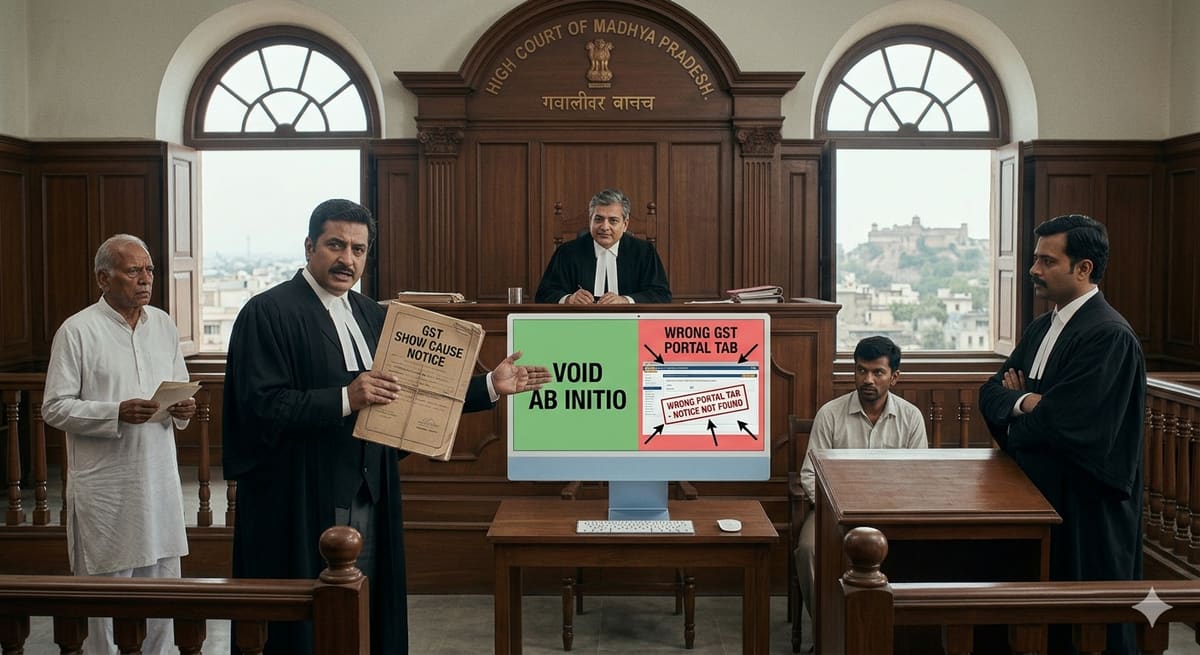
The petitioner, M/S D. S. Infraheights Private Limited, was issued a show cause notice under Section 74 of the CGST Act on 02.01.2024, alleging tax evasion for the period April 2019 to March 2020. The notice purported to initiate proceedings for recovery of tax, interest, and penalty on grounds of fraud or wilful misstatement. However, the notice fixed the date for reply and the date for hearing as the same day - 02.01.2024 - rendering meaningful response impossible. The petitioner’s GST registration was cancelled on 12.03.2024, further impeding its ability to file a reply.
Key Facts
The petitioner was engaged in infrastructure development activities during the relevant period (April 2019 - March 2020)
The show cause notice (dated 02.01.2024) did not specify any documentary or evidentiary material to substantiate allegations of fraud or intent to evade tax
The notice was uploaded on the GST portal but not served personally or through registered post
The petitioner had incurred financial losses during the period and was unable to make the pre-deposit required for filing an appeal
The petitioner’s GST registration was cancelled on 12.03.2024, prior to any opportunity to respond
No material was recorded by the assessing authority to establish the ‘sine qua non’ of fraud or intent under Section 74
Procedural History
02.01.2024: Show cause notice issued under Section 74 of the CGST Act, with reply and hearing date fixed as the same day
12.03.2024: Petitioner’s GST registration cancelled
16.02.2024: Ex-parte order passed confirming tax demand without hearing or recording evidence
21.11.2024: Appeal filed by petitioner dismissed for non-payment of pre-deposit under Section 112 of the CGST Act
28.03.2026: Writ Tax Petition No. 675 of 2026 filed before the Allahabad High Court, Lucknow Bench
Relief Sought
The petitioner sought quashing of the order dated 16.02.2024 confirming the GST demand, setting aside the dismissal of appeal dated 21.11.2024, and directing the assessing authority to pass a fresh order after affording a proper opportunity of hearing.
The Legal Issue
The central question was whether a demand under Section 74 of the CGST Act can be sustained in the absence of any material establishing fraud or intent to evade tax, and whether an ex-parte order issued without affording a reasonable opportunity of hearing violates the principles of natural justice.
Arguments Presented
For the Petitioner
The counsel argued that Section 74 requires proof of fraud or wilful misstatement with intent to evade tax - a threshold not met here. No specific documents, transactions, or discrepancies were cited in the notice. The identical reply and hearing date rendered the notice void ab initio. The cancellation of registration further deprived the petitioner of any practical ability to respond. The ex-parte order was passed without recording any evidence or reasoning, violating Section 75(4) and Section 74(6) of the CGST Act, which mandate reasoned orders and fair hearing. The dismissal of appeal for non-payment of pre-deposit was challenged as unjust, given the petitioner’s financial distress and the illegality of the underlying demand.
For the Respondent
The Standing Counsel for the State did not contest the procedural irregularities but relied on the statutory power of the tax authority to issue notices and confirm demands under Section 74. No specific counter-arguments were advanced regarding the absence of fraud, the defective notice, or the violation of natural justice.
The Court's Analysis
The Court examined the statutory framework under Section 74 of the CGST Act, which permits recovery of tax only where there is evidence of fraud, wilful misstatement, or suppression of facts with intent to evade tax. The Court emphasized that this condition is not merely procedural but substantive - without it, Section 74 cannot be invoked.
"Section 74 is not a general provision for recovery of tax; it is a penal provision requiring proof of dishonest intent. The absence of any material indicating fraud or intent renders the entire proceeding void."
The Court further held that fixing the same date for reply and hearing is a patent violation of Section 75(4), which mandates a reasonable opportunity to be heard. The failure to serve the notice personally, coupled with the cancellation of registration, rendered the notice ineffective. The ex-parte order dated 16.02.2024 was passed without recording any evidence, without addressing the petitioner’s submissions (which were never received), and without applying its mind to the legal threshold under Section 74.
The Court also noted that dismissal of the appeal for non-payment of pre-deposit cannot validate an illegal order. A defective demand cannot be fortified by procedural bars on appeal.
The Verdict
The writ petition was allowed. The order dated 16.02.2024 confirming the GST demand under Section 74 is quashed. The dismissal of the appeal dated 21.11.2024 for want of pre-deposit is set aside. The matter is remanded to the assessing authority to pass a fresh order after affording a reasonable opportunity of hearing to the petitioner, in accordance with law. The assessing authority must record specific material demonstrating fraud or intent to evade tax before invoking Section 74.
What This Means For Similar Cases
Fraud Must Be Specifically Alleged and Proven
Practitioners must challenge Section 74 notices that lack specific allegations of fraud or intent
Tax authorities cannot rely on generic assertions of evasion; they must cite transactional anomalies, falsified records, or deliberate concealment
Absence of such material renders the notice void and any order unsustainable
Procedural Defects Invalidate Tax Demands
Identical reply and hearing dates constitute a denial of natural justice
Notices uploaded only on portals without personal service are insufficient where the taxpayer’s registration is in jeopardy
Cancellation of registration does not absolve the authority of its duty to afford a hearing before passing an ex-parte order
Pre-Deposit Cannot Cure Substantive Illegality
Dismissal of appeals for non-payment of pre-deposit cannot validate an illegal underlying order
Petitioners may argue that the illegality of the demand renders the pre-deposit requirement inapplicable or unconscionable
Courts will examine the substantive legality of the demand before enforcing procedural bars