In a recent decision, the High Court of Delhi dismissed an appeal seeking damages for loss of rent due to electricity theft, holding that the landlord failed to mitigate his loss and prove the market rent at the relevant date. The judgment reinforces the stringent duty under Section 73 of the Indian Contract Act to take reasonable steps to avoid loss and to prove damages with certainty.
Background & Facts
The Dispute
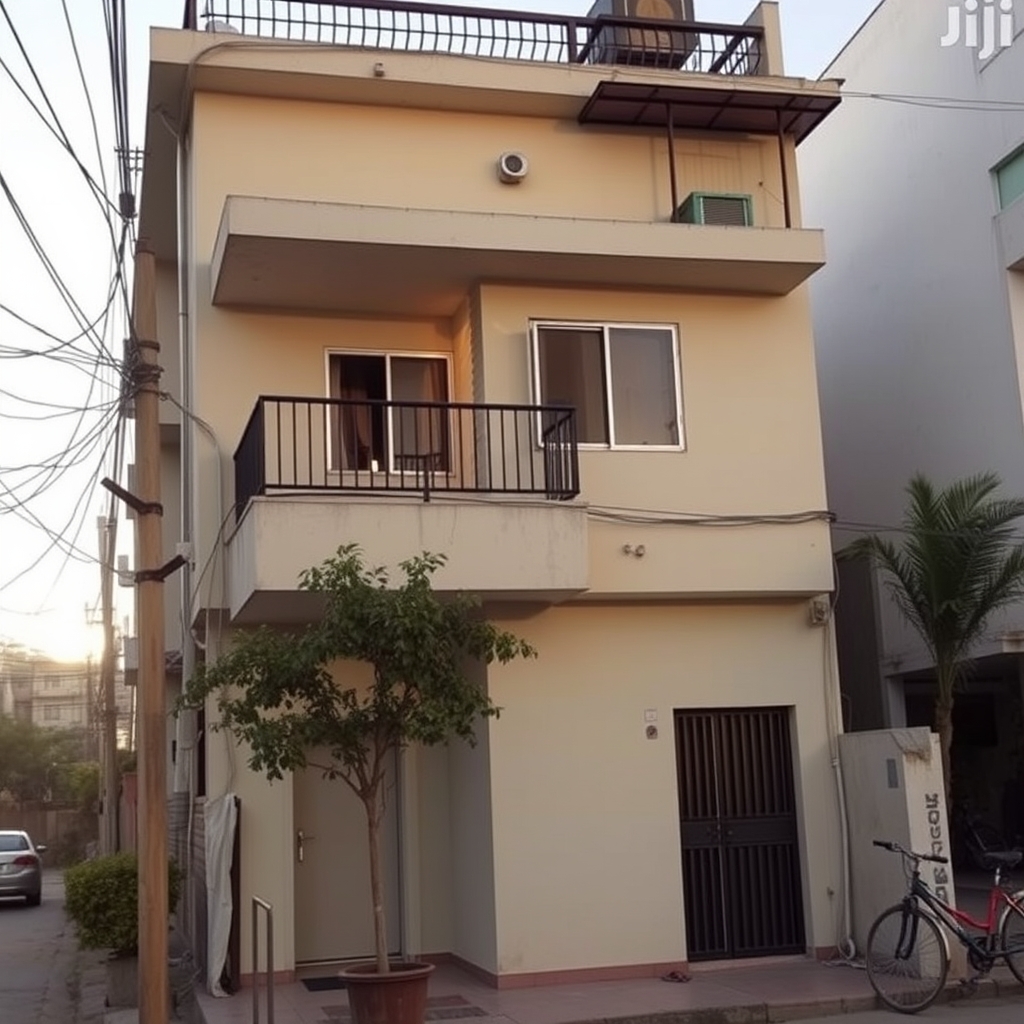
The appellant, Girish Kumar Jain, owned premises GF-3 on Plot No. B-3/4, Dr. Mukherjee Nagar Commercial Complex, Delhi, measuring 379 sq. ft. He let out the suit property to UCO Bank effective 12.03.1994 at a monthly rent of Rs. 3,400, exclusive of maintenance, electricity and water charges, for five years. The lease was extended for a further five years at Rs. 4,250 per month from 12.03.1999, vide Lease Deed dated 25.03.1998. The bank was required to pay electricity charges directly to the authority; an electricity meter was provided at the inception of tenancy.
Key Facts
- Electricity supply was disconnected by NDPL on 09.03.2006 following detection of electricity theft attributed to the bank’s excessive load.
- The appellant sent letters to the bank on 19.12.2006, 10.01.2007, 08.02.2007, 10.04.2007 and 06.08.2008, and legal notices through counsel on 03.06.2006, 25.01.2007 and 01.10.2007.
- The bank replied on 07.02.2007 and 26.02.2007; the appellant’s counsel filed rejoinders on 22.02.2007 and 15.03.2007.
- During the pendency of Suit No. 249/1999 (for possession, recovery of rent and mesne profits), the bank vacated the suit property and moved an application for handing over keys; the appellant accepted the keys under protest and took possession on 25.01.2008.
- The appellant averred that the suit property could fetch Rs. 24,000 per month as rent, w.e.f. 25.01.2008, and claimed damages for a three-year period (25.01.2008 to 15.04.2013) amounting to Rs. 8,64,000, plus interest at 20% per annum (Rs. 1,30,000), making a total claim of Rs. 9,94,000.
- The appellant arranged electricity from another premises owned by his company, M/s G.B.S. Chits (P) Ltd., and let out the suit property to Rajesh Kumar Sharma on 15.04.2013 at a monthly rent of Rs. 27,000.
- The appellant instituted the present suit for damages on 10.07.2013.
- The trial court framed issues on 07.04.2014, including whether the suit property could not be let out due to electricity disconnection and whether the claimed rent rate was proved.
- The trial court, vide judgment dated 13.02.2026, dismissed the suit, holding that the appellant had failed to establish that the means of remedying the inconvenience were unavailable during the claim period and that the rent rate of Rs. 24,000 per month was not proved with reasonable certainty.
- Aggrieved, the appellant filed the present Regular First Appeal (RFA 634/2026) challenging the trial court’s findings.
Procedural History
- 12.03.1994: Original lease deed executed with UCO Bank at Rs. 3,400/month.
- 25.03.1998: Lease deed extended for a further five years at Rs. 4,250/month from 12.03.1999.
- 09.03.2006: NDPL disconnected electricity supply due to theft.
- 03.06.2006: First legal notice sent by appellant.
- 25.01.2007: Second legal notice.
- 01.10.2007: Third legal notice.
- 19.12.2006 - 06.08.2008: Series of letters exchanged (dates as above).
- 07.02.2007 & 26.02.2007: Bank’s replies.
- 22.02.2007 & 15.03.2007: Appellant’s rejoinders.
- 25.01.2008: Appellant took possession of suit property under protest.
- 10.07.2013: Present suit for damages filed.
- 27.05.2013: Order granting liberty to file fresh suit for damages (after withdrawal of earlier amendment application).
- 15.04.2013: Suit property re-let to Rajesh Kumar Sharma at Rs. 27,000/month after arranging electricity from another premises.
- 07.04.2014: Trial court framed issues.
- 13.02.2026: Trial court judgment dismissing the suit.
- 22.09.2026: High Court judgment pronouncing dismissal of the appeal.
Relief Sought
The appellant sought damages at the rate of Rs. 24,000 per month for the period 25.01.2008 to 15.04.2013 (Rs. 8,64,000), interest at 20% per annum (Rs. 1,30,000), and consequently a total of Rs. 9,94,000, together with costs of the proceedings.
The Legal Issue
The central question was whether the suit property could not be let out throughout the claim period solely on account of the electricity disconnection caused by the respondent’s theft, and whether the appellant had proved, with reasonable certainty, the market rent of Rs. 24,000 per month as the basis for his damages claim.
Arguments Presented
For the Appellant/Petitioner
The appellant contended that the respondent’s theft of electricity led to disconnection by NDPL on 09.03.2006, rendering the suit property incapable of being let out. He argued that he had taken all reasonable steps by arranging electricity from another premises owned by his company and immediately re-letting the property on 15.04.2013. He relied on the Explanation to Section 73 of the Indian Contract Act, asserting that the burden lay on him to show that no means of remedying the inconvenience existed during the period 25.01.2008 to 15.04.2013. The appellant further submitted that the claimed rent of Rs. 24,000 per month was supported by the property’s potential and the bank’s prior use, and that the trial court erred in requiring proof of market rent at the date of breach.
For the Respondent/State
UCO Bank argued that the appellant had failed to mitigate his loss, as he could have arranged electricity from his other premises earlier than 15.04.2013, and that the absence of electricity did not automatically entitle him to damages. The bank emphasized that the appellant had not led any evidence to prove the market rent of Rs. 24,000 per month as prevailing on 25.01.2008, the date from which damages were claimed, and that the later lease deed of 15.04.2013 (Rs. 27,000) could not retrospectively establish the earlier rate. It also pointed out that the appellant had not demonstrated any attempt to let out the property during the intervening period, and that the mere fact of vacancy did not establish causation. The bank relied on Fortune Infrastructure v. Trevor D'Lima (2018) 5 SCC 442 for the principle that damages must be proved with reasonable certainty.
The Court's Analysis
The Court first examined the Explanation to Section 73 of the Indian Contract Act, 1872, which requires that in estimating loss from a breach, the means which existed of remedying the inconvenience caused by non-performance must be taken into account. It relied on the Supreme Court’s pronouncements in Murlidhar Chiranjilal v. Harishchandra Dwarkadas, AIR 1962 SC 366, and M. Lachia Setty & Sons Ltd. v. The Coffee Board, (1980) 4 SCC 636, to hold that a plaintiff must take all reasonable steps to mitigate loss consequent on the breach and cannot claim damages for any loss which he ought reasonably to have avoided.
Applying this principle, the Court found that the appellant had failed to establish by cogent evidence that the means of remedying the inconvenience caused by the absence of electricity were unavailable to him during the period from 25.01.2008 to 15.04.2013. The Court noted that the appellant ultimately arranged electricity from another premises owned by his company and immediately re-let the suit property on 15.04.2013, but offered no explanation as to why such an arrangement could not have been made earlier. The record showed that the other premises belonged to M/s G.B.S. Chits (P) Ltd., in which the appellant was a director, and that electricity was installed therein only in 2007, with increased power load only in 2014. The appellant could not supply electricity from one premises to another without NDPL’s permission, and no evidence was placed on record to show that such permission was sought or that any technical impediment existed prior to 2014.
On the quantum of damages, the Court turned to the requirement of proving loss with reasonable certainty, as mandated by Fortune Infrastructure v. Trevor D'Lima, (2018) 5 SCC 442. The sole document supporting the claimed rate of Rs. 24,000 per month was the lease deed dated 15.04.2013, which evidenced the market rent as of that date, not as of 25.01.2008, the date from which damages were claimed. The appellant led no evidence of comparable lease deeds, property dealer testimony, or any other cogent material to show that the market rent had escalated from Rs. 9,762.50 per month (as found in Suit No. 249/1999 for the period ending 08.12.2006) to Rs. 24,000 per month by 25.01.2008. The rate of Rs. 24,000 per month was, therefore, a bare figure unsupported by evidence meeting the standard of reasonable certainty.
The Court also rejected the appellant’s contention that the mere vacancy of the premises established causation, holding that vacancy alone does not prove that the loss was caused by the absence of electricity. Without evidence that the appellant had attempted to let out the property during the claim period and that prospective tenants declined due to lack of electricity, the causal link between the alleged wrong and the claimed loss remained unproven.
"The Appellant has failed to establish by cogent evidence that the means of remedying the inconvenience caused by the absence of electricity were unavailable to him, during the period from 25.01.2008 to 15.04.2013."
"The rate of Rs. 24,000/ - per month, on which the entire claim rests, is thus, a bare figure asserted in the pleadings, unsupported by any evidence which meets the standard of ' reasonable certainty ,' mandated in Fortune Infrastructure (supra)."
Thus, the Court concluded that the appellant had not discharged his burden under Section 73 ICA, and the claim for damages could not be sustained.
The Verdict
The High Court dismissed the appeal, upholding the trial court’s rejection of the claim for Rs. 9,94,000 (Rs. 8,64,000 as damages at Rs. 24,000 per month for three years plus Rs. 1,30,000 interest at 20% per annum). The court held that the appellant failed to prove that no reasonable steps to mitigate the loss were available during the claim period and that the alleged rent rate lacked reasonable certainty. No costs were awarded.
What This Means For Similar Cases
Duty to Mitigate Loss Is Stringent
Practitioners must now lead concrete evidence of mitigation efforts prevailing at the date of breach, rather than relying on later rental agreements or mere vacancy to sustain a claim for loss of rent under Section 73 of the Indian Contract Act. The burden lies on the claimant to show that no reasonable steps to avoid loss were available during the relevant period.
Proof of Market Rent Must Be Dated to the Breach
The judgment clarifies that damages for loss of rent must be measured at the date of breach, and a later lease deed cannot retrospectively establish the earlier market rate. Claimants must produce comparable lease deeds, property dealer testimony, or other cogent evidence to prove the prevailing rent as of the date from which damages are claimed.
Vacancy Alone Does Not Establish Causation
Mere fact that the premises remained vacant does not, by itself, establish that the vacancy was caused by the alleged wrongdoing. To recover damages, the claimant must demonstrate active attempts to let out the property and evidence that prospective tenants refused on account of the alleged deficiency.