The Punjab and Haryana High Court has clarified that mesne profits in tenancy disputes must reflect realistic market conditions, including inflation and contextual rent comparables, not merely historical receipts. The judgment reinforces procedural discipline in evidentiary submission and establishes a balanced mechanism for interim financial relief pending final adjudication.
Background & Facts
The Dispute
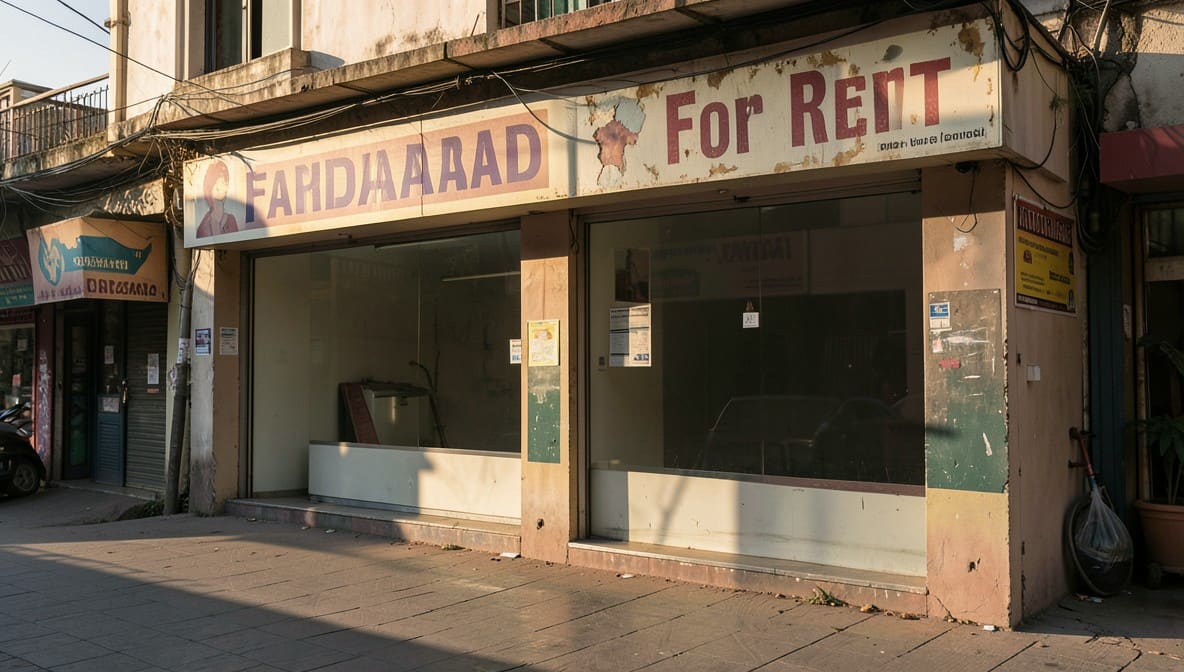
The petitioner, a tenant of a commercial shop in Iqbal Colony, Malerkotla, faced eviction by the respondent, the landlord, following a finding of default in rent payment. The landlord initiated proceedings under the Punjab Tenancy Act, seeking eviction and recovery of mesne profits for the period after the eviction order was passed but before final appellate disposal.
Key Facts
- The eviction order was passed on 18.11.2023 by the Rent Controller
- The petitioner filed an appeal before the First Appellate Authority, Malerkotla, seeking stay of eviction
- On 05.12.2025, the First Appellate Authority fixed mesne profits at Rs.10,500 per month, pending final disposal of the appeal
- The Appellate Authority directed that failure to pay mesne profits would result in automatic vacation of the stay of eviction
- The petitioner was ordered to pay mesne profits from 18.11.2023, the date of eviction order
- The petitioner submitted receipts for two shops in support of his claim that the market rent was far lower:
- A shop of 11 x 15 ft at Iqbal Colony, opposite bus stand, rented at Rs.2,500/month under Mohammad Hameed
- Another shop rented at Rs.3,000/month under Mahboob Alam for the last 25 years
- The landlord produced two rent notes:
- Rent note dated 15.09.2021 for a nearby shop at Rs.8,000/month
- Rent note dated 22.02.2023 for another nearby shop at Rs.13,000/month
- The First Appellate Court averaged these two rent notes to arrive at Rs.10,500/month
- The petitioner did not submit any market rent evidence before the First Appellate Court; the receipts were filed only with the revision petition
Procedural History
- 18.11.2023: Eviction order passed by Rent Controller
- 19.11.2023: Petitioner filed appeal before First Appellate Authority
- 05.12.2025: First Appellate Authority fixed mesne profits at Rs.10,500/month and ordered automatic vacation of stay if unpaid
- 29.04.2026: Revision petition filed before Punjab and Haryana High Court under Article 227
Relief Sought
The petitioner sought:
- Setting aside of the order dated 05.12.2025 fixing mesne profits at Rs.10,500/month
- Reduction of mesne profits to Rs.3,000/month based on historical receipts
- Continuation of stay of eviction without payment of higher mesne profits
The Legal Issue
The central question was whether the fixation of mesne profits at Rs.10,500 per month, based on average rent of two nearby shops, was legally sustainable when the tenant relied on outdated receipts showing significantly lower rents, and whether inflation and market evolution could be factored into such determination.
Arguments Presented
For the Petitioner
The petitioner’s counsel argued that the rent notes relied upon by the landlord were unreliable because the shops mentioned did not exist on the ground. He contended that the receipts issued by Mohammad Hameed and Mahboob Alam, showing rents of Rs.2,500 and Rs.3,000 respectively, were authentic and reflected the true market rate. He further argued that the First Appellate Court erred in ignoring these receipts and in fixing mesne profits without considering the age and condition of the tenanted shop. He submitted that mesne profits should not exceed the actual agreed rent and that the order was arbitrary and violative of natural justice.
For the Respondent
The respondent’s counsel countered that the rent notes dated 15.09.2021 and 22.02.2023 were contemporaneous, specific, and produced before the First Appellate Court. He emphasized that the petitioner had failed to produce any market rent evidence during the appellate stage and that the receipts relied upon were over 25 years old, making them irrelevant to the 2025 market context. He argued that the average of two credible rent notes was a reasonable and judicially accepted method to determine mesne profits, and that the court had rightly considered the passage of time and inflation.
The Court's Analysis
The Court examined the methodology adopted by the First Appellate Authority and found it to be both reasonable and legally sound. It noted that mesne profits are not intended to be punitive but compensatory, and must reflect the prevailing market rent at the time of the dispute, not historical rates.
"Even if receipts relied upon by petitioner-tenant are taken into consideration, it is clearly made out that shop which was under tenancy of Mehboob Alam was rented out 25 years ago at rent of Rs.3,000/- per month. If the inflation is added then mesne profits duly calculated by learned Appellate Court cannot be faulted with."
The Court observed that the petitioner’s failure to produce any evidence of current market rent before the First Appellate Court was fatal to his challenge. The receipts submitted for the first time in revision were not admissible as fresh evidence under Article 227, which is not a forum for re-appreciation of evidence but for correcting jurisdictional or procedural errors.
The Court further held that the average of two rent notes from comparable properties in the same locality, dated within two years of the dispute, constituted a fair and objective benchmark. It emphasized that mesne profits are a temporary measure, and the final determination of rent liability would be governed by the outcome of the pending appeal. The Court also noted that the landlord’s rent notes were not challenged on grounds of fabrication or non-existence during the appellate proceedings, and mere assertion of non-existence without proof could not override documented evidence.
The Verdict
The revision petition was dismissed. The Court upheld the fixation of mesne profits at Rs.10,500 per month. The petitioner was directed to pay all arrears of mesne profits from 18.11.2023 within 10 days from 29.04.2026. Failure to pay would result in automatic vacation of the stay of eviction. Further, 50% of the mesne profits paid shall be deposited as an FDR with the Executing Court, bearing maximum interest, to be released to the successful party upon final disposal of the appeal. The petitioner shall pay Rs.10,500 on or before the 10th of every month going forward.
What This Means For Similar Cases
Market Rent Must Reflect Current Conditions, Not Historical Receipts
- Practitioners must submit contemporaneous rent evidence (within 1 - 2 years) to challenge mesne profits; receipts older than 5 - 10 years are unlikely to be accepted
- Courts will factor in inflation and market evolution when evaluating rent comparables, even if not explicitly pleaded
- Historical rent receipts without contextual adjustment are legally insufficient to rebut market-based rent estimates
Procedural Default Bars Fresh Evidence in Revision
- Evidence not placed before the lower appellate forum cannot be introduced for the first time in a revision petition under Article 227
- Revision jurisdiction is not a second appeal; failure to produce evidence at the earliest opportunity is fatal
- Parties must ensure all material is filed at the first appellate stage to preserve rights
Mesne Profits Are Interim, Not Final, and Can Be Structured for Fairness
- Courts may direct partial deposit of mesne profits in interest-bearing accounts to protect both parties’ interests pending final adjudication
- The 50% FDR mechanism is now a recognized tool to prevent unjust enrichment while preserving the tenant’s right to claim excess upon success
- Tenants must treat mesne profits as a binding interim obligation; non-payment triggers automatic vacation of stay