The ITAT Ahmedabad has clarified that during demonetisation, unexplained cash deposits under Section 69A of the Income Tax Act cannot be presumed wholly illicit merely because of a spike in transactions. The tribunal emphasized that the source of funds must be evaluated in light of the assessee’s historical business pattern, legitimate savings, and reasonable estimates - rejecting blanket assumptions.
Background & Facts
The Dispute
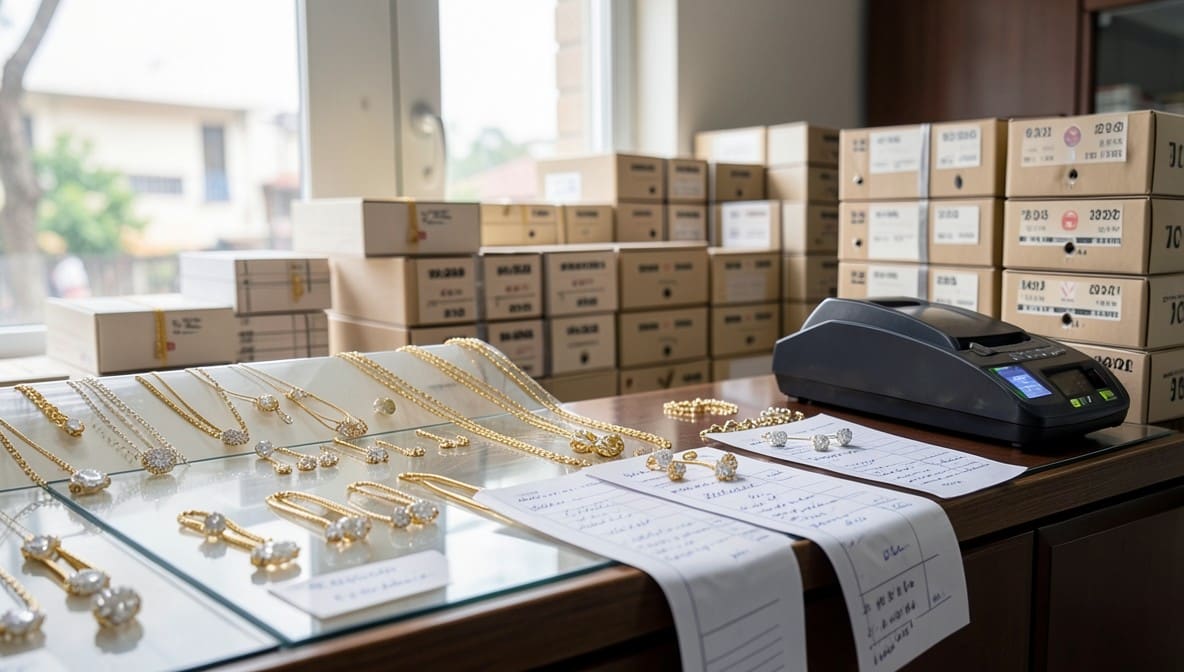
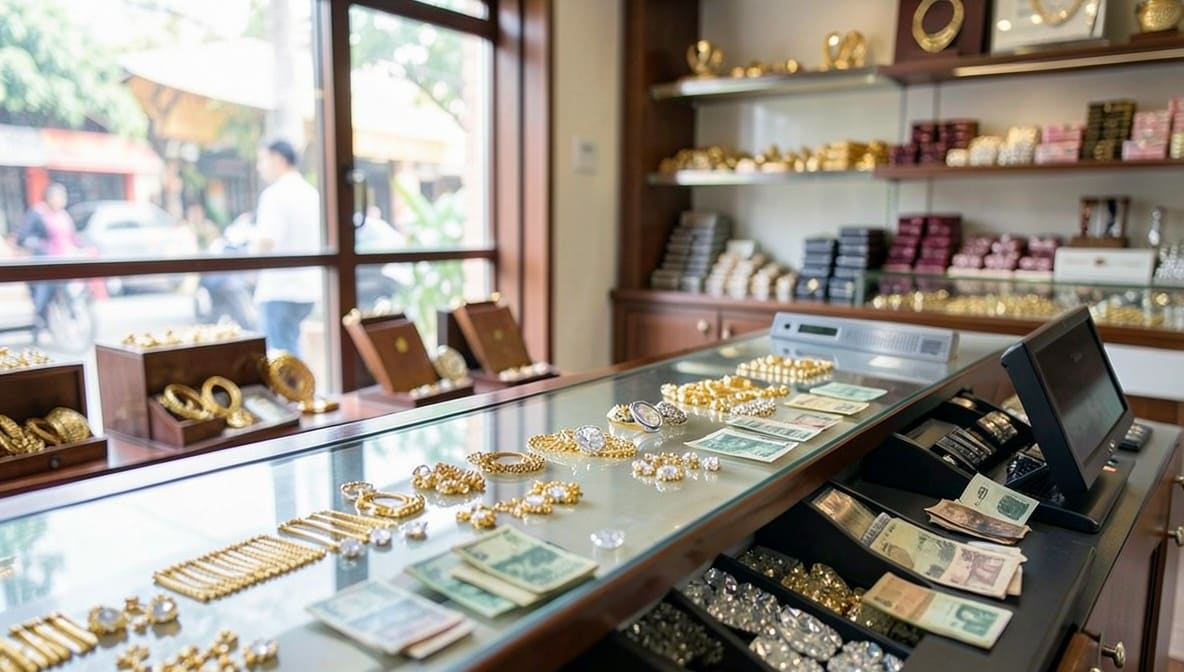
The assessee, a proprietor of M/s Bhaktavatsal Jewellers engaged in trading diamond and gold jewellery, declared total income of Rs. 5,37,900 for A.Y. 2017-18. During scrutiny, the Assessing Officer (AO) noticed a cash deposit of Rs. 47,16,000 in HDFC Bank on 11.11.2016, immediately after the demonetisation announcement on 8.11.2016. The assessee claimed this amount arose from cash sales of Rs. 39,88,590 made in October 2016, supported by invoices and audited books.
Procedural History
- 13.10.2017: Assessee filed return declaring income of Rs. 5,37,900
- 14.12.2019: AO completed assessment under Section 143(3), treating entire Rs. 47,16,000 as unexplained income under Section 69A
- 18.06.2025: CIT(A) dismissed appeal, upholding AO’s addition
- 02.03.2026: Hearing held before ITAT Ahmedabad
- 10.03.2026: ITAT pronounced order, partly allowing appeal
Relief Sought
The assessee sought deletion of the entire addition of Rs. 47,16,000, arguing that cash sales were duly recorded, books were audited, and the spike in October 2016 was due to demonetisation-driven customer rush. Alternatively, the assessee requested admission of additional evidence to verify buyer identities.
The Legal Issue
The central question was whether Section 69A permits treating an entire cash deposit as unexplained income when the assessee has a documented history of cash sales, even if the volume in one month appears anomalous, and whether the burden shifts to the Revenue to disprove legitimate sources.
Arguments Presented
For the Petitioner
Shri Rupesh R. Shah, the assessee’s representative, argued that:
- Cash sales of Rs. 39,88,590 in October 2016 were recorded in audited books and supported by invoices
- Books of accounts were never rejected under Section 145(3)
- The AO failed to prove the sales were fictitious
- Demonetisation justified the surge in cash transactions
- The CIT(A) mechanically affirmed the AO’s order without addressing submissions
For the Respondent
Shri Prateek Sharma, Sr. DR, contended that:
- Cash sales were irregular: no sales in April - July, December 2016, or February - March 2017
- October 2016 sales (Rs. 39.88 lakh) were 12x higher than September (Rs. 3.27 lakh)
- No promotional material, festival offers, or customer details were provided
- Cash memos lacked buyer names, addresses, or contact details
- The explanation was inconsistent with the November 2016 sales (only Rs. 66,748) post-demonetisation
The Court's Analysis
The ITAT examined the pattern of cash sales over the financial year and found the October 2016 spike to be statistically anomalous. The tribunal noted that while audited books are prima facie evidence, auditors do not verify transactional genuineness - only compliance with accounting standards. The absence of corroborative evidence such as event promotions, customer affidavits, or identity links rendered the sales unverified.
"Merely because the books were audited, doesn't establish that the sales were genuine."
The tribunal rejected the assessee’s request to admit additional evidence under Rule 19 of ITAT Rules, noting that Aadhar/PAN numbers were attached without linkage to specific bills, and no affidavits from buyers were provided. The generic nature of cash memos rendered them insufficient.
However, the tribunal declined to uphold the entire addition. It observed that cash sales of Rs. 1,26,319 in August and Rs. 3,27,498 in September were undisputed. Given the business nature, it was reasonable to estimate that some cash sales occurred in October prior to the demonetisation shock. The tribunal estimated a conservative Rs. 10,00,000 as legitimate October sales. Additionally, it accepted Rs. 5,00,000 as representing past personal savings, a common source in small businesses.
"The AO was not correct in treating the entire cash deposit... as unexplained."
Thus, the tribunal held that Rs. 15,00,000 of the deposit was explained, leaving Rs. 32,16,000 as unexplained income under Section 69A.
The Verdict
The assessee partly succeeded. The ITAT held that Section 69A cannot be applied mechanically to entire cash deposits during demonetisation. The tribunal reduced the addition from Rs. 47,16,000 to Rs. 32,16,000, recognising that legitimate cash sales and personal savings must be accounted for in the assessment.
What This Means For Similar Cases
Historical Sales Trend Must Inform Assessment
- Practitioners must compile and submit 12 - 24 months of cash sales data to establish baseline patterns
- A single anomalous month does not automatically invalidate all sales - context matters
- Revenue must demonstrate why the anomaly is fraudulent, not merely improbable
Personal Savings Are Recognised as Legitimate Source
- Assessees may claim personal savings as a source of cash deposits, even if undocumented
- A reasonable estimate (e.g., Rs. 5 lakh) is acceptable if supported by family income history or lifestyle
- No formal proof required if amount is modest and consistent with business owner’s profile
Generic Cash Memos Are Insufficient
-
Cash memos lacking buyer ID, address, or signature have no evidentiary value
-
To rebut Section 69A, assessees must provide verifiable documentation: signed affidavits, Aadhar-linked invoices, or bank transaction trails
-
Post-facto submissions without linkage to original records will be rejected
-
Practitioners should advise clients to maintain digital records of cash transactions with buyer details during high-risk periods
-
In future appeals, argue for partial relief based on estimated legitimate portions, not total deletion
-
Always file a detailed cash flow analysis with monthly breakdowns to preempt arbitrary additions