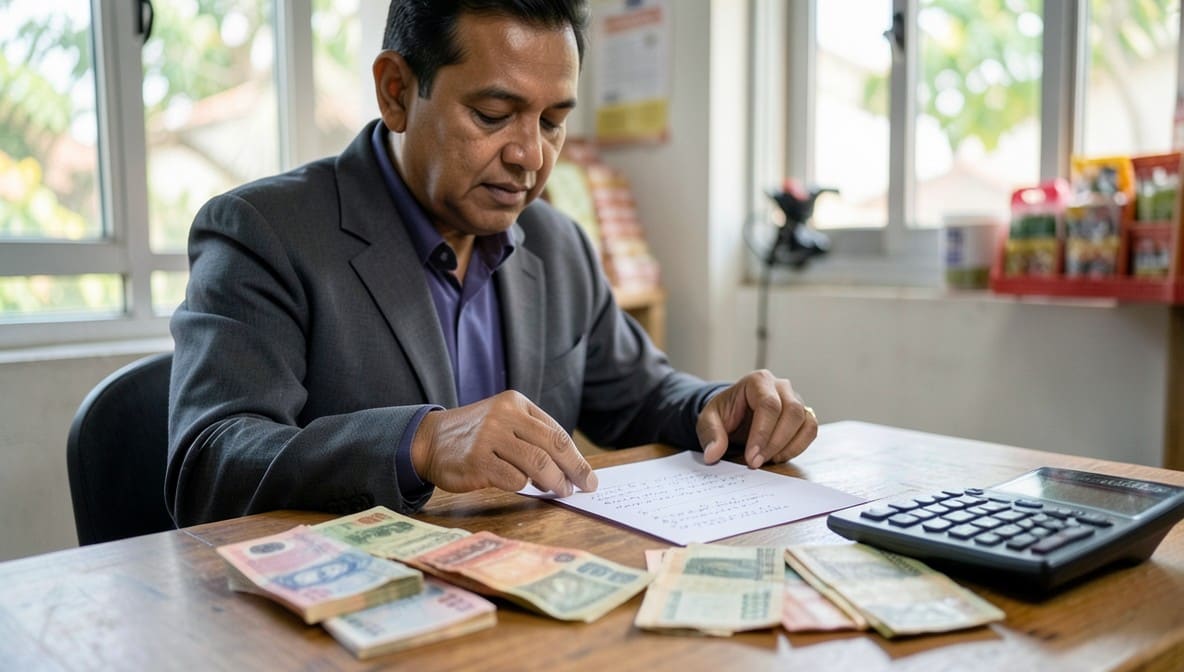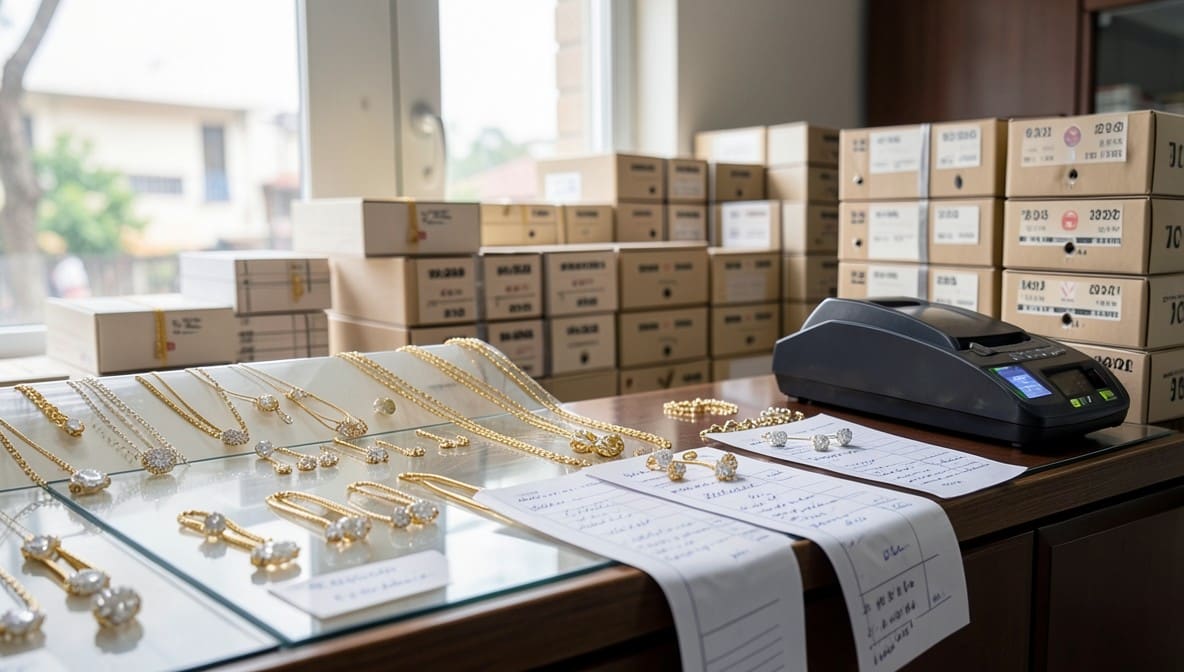
The Income Tax Appellate Tribunal, Delhi, has clarified that cash deposits made by a jeweller during the demonetization period, fully supported by audited books of accounts, verified VAT returns, and consistent stock records, cannot be treated as unexplained income under Section 68 of the Income-tax Act merely due to a spike in cash sales or the timing of Form-F issuance. This ruling reinforces the principle that once sales are recorded, taxed, and accepted by multiple statutory authorities, the corresponding bank deposits are not subject to re-assessment as undisclosed income.
Background & Facts
The Dispute
The appellant, Sumangal Diamonds Private Limited, is engaged in the retail and manufacturing of gold and diamond jewellery through branches in Delhi, Gurgaon, and Ghaziabad. During the Assessment Year 2017-18, the Assessing Officer (AO) made an addition of Rs. 72,80,000 under Section 68 of the Income-tax Act, 1961, treating cash deposits made in November 2016 as unexplained income. The AO alleged that the deposits were not genuine and were artificially structured to conceal unaccounted cash, primarily due to the timing and volume of cash sales following the demonetization announcement on 08.11.2016.
Key Facts
- The assessee filed its income tax return for AY 2017-18 on 25.10.2017, declaring total income of Rs. 3,77,160.
- On 08.11.2016, the Government of India announced demonetization of Rs. 500 and Rs. 1,000 notes.
- Between 12.11.2016 and 25.11.2016, the assessee deposited Rs. 72,80,000 in its ICICI Bank account.
- The AO observed that cash sales for AY 2017-18 were reported at Rs. 73,63,447, compared to Rs. 7,66,822 in the previous year.
- 91.56% of cash sales occurred between 01.10.2016 and 08.11.2016, coinciding with Diwali, Dhanteras, and the marriage season.
- All cash sales invoices were below Rs. 2,00,000, thus exempt from PAN disclosure under Rule 114B of the Income-tax Rules.
- The assessee maintained cash books for all branches from 01.04.2016 to 31.03.2017, with detailed records of inflows and outflows.
- The total turnover for FY 2016-17, as per audited financial statements, was Rs. 7,93,57,595.65.
- VAT returns for FY 2016-17 were filed and accepted by Delhi, Haryana, and Uttar Pradesh authorities, with total outward sales of Rs. 12,68,40,310.84 (including inter-branch transfers).
- Form-F declarations for stock transfers from Delhi to Gurgaon and Ghaziabad were issued on 07.02.2018, prior to the completion of VAT assessments (Gurgaon assessment dated 24.08.2018).
- The assessee submitted stock registers, sales invoices, bank statements, and cash books for verification.
- The AO did not reject the books of accounts, nor did he identify any mismatch in sales, purchases, or stock.
Procedural History
- 25.10.2017: Assessee filed return for AY 2017-18.
- 08.11.2016: Demonetization announced by Government of India.
- 12.11.2016 & 25.11.2016: Cash deposits of Rs. 58,13,000 and Rs. 14,67,000 made into bank account.
- 2017-18: AO issued notice under Section 143(2) and later under Section 142(1) seeking explanation for cash deposits.
- 2018: AO passed assessment order disallowing Rs. 72,80,000 under Section 68.
- 28.07.2025: Ld. CIT(A) upheld the addition.
- 05.03.2026: Hearing before ITAT Delhi.
- 26.05.2026: ITAT Delhi delivered order allowing the appeal.
The Parties' Positions
For the Appellant
- The cash deposits were sourced entirely from recorded cash sales, supported by audited books, VAT returns, and stock registers.
- The spike in cash sales was due to legitimate seasonal demand during Diwali and Dhanteras, not manipulation.
- Sales below Rs. 2,00,000 are lawful and common in the jewellery trade; no statutory violation occurred.
- Form-F was issued before the VAT assessment, in compliance with Section 6A of the Central Sales Tax Act, 1956.
- The books of accounts were never rejected, and no defect was pointed out by the AO or CIT(A).
- The same sales were accepted by VAT authorities, making the AO’s contrary finding legally unsustainable.
- Relied on Fine Gujranwala Jewellers, Nirankari Sons Jewellers, and R.S. Diamonds India Pvt. Ltd. to establish precedent.
For the Respondent
- The AO relied on principles of human probability and alleged that the timing and volume of cash sales were suspicious.
- The issuance of Form-F on 07.02.2018, after the financial year, was deemed indicative of backdating.
- The absence of item-wise stock statements for November 2016 was cited as failure to discharge burden.
- Relied on Pankaj Gupta v. Pr.CIT and Sanjay Kapur v. ACIT to argue that lack of customer confirmations rendered deposits unexplained.
Relief Sought
The appellant sought deletion of the addition of Rs. 72,80,000 under Section 68, restoration of the original declared income, and costs.
The Legal Issue
Can cash deposits made by a taxpayer during the demonetization period be treated as unexplained income under Section 68 of the Income-tax Act when the deposits are fully supported by audited books of accounts, verified VAT returns, and consistent stock records, and the underlying sales have already been disclosed and accepted by statutory authorities?
Arguments Presented
For the Appellant
The appellant argued that Section 68 applies only when the assessee offers no explanation or the explanation is unsatisfactory. Here, the source of the deposits - cash sales - was clearly explained and documented. The cash book showed sufficient opening balance and inflows to account for the deposits. The sales were recorded in the books, reported in VAT returns, and accepted by state tax authorities without any adverse observation. The Tribunal in Fine Gujranwala Jewellers and Nirankari Sons Jewellers had held that where books are not rejected and sales are verified through multiple channels, additions under Section 68 are impermissible. The appellant further cited Lakshmi Rice Mills v. CIT to establish that if the cash balance in books is sufficient to cover the deposits, and the books are not impugned, the source is deemed explained. The AO’s reliance on the timing of Form-F issuance was legally flawed, as Section 6A of the CST Act permits post-facto issuance before assessment completion.
For the Respondent
The Revenue contended that the sudden surge in cash sales between October and November 2016, coupled with the issuance of Form-F after the financial year, indicated artificial book entries. It argued that the absence of customer confirmations and item-wise sales statements for November 2016 rendered the explanation unsatisfactory. The Revenue relied on Pankaj Gupta and Sanjay Kapur to assert that mere book entries without corroborative evidence from third parties are insufficient to rebut the presumption of unexplained income under Section 68.
The Court's Analysis
The Tribunal carefully examined the nature of Section 68, which permits taxation of unexplained credits only if the assessee fails to offer a satisfactory explanation. The Court emphasized that the burden of proof under Section 68 is two-tiered: first, the assessee must offer a plausible explanation; second, if accepted, the burden shifts to the Revenue to disprove it.
"The assessee has explained the source as sales, produced the sale bills and admitted the same as revenue receipt. The assessee is engaged in the jewellery business and maintaining the regular stock registers. Both the DDIT (Inv.) and the AO have conducted the surveys on different dates, independently and no difference was found in the stock register or the stocks of the assessee."
The Tribunal noted that the AO did not reject the books of accounts, nor did he identify any discrepancy between the cash book, stock register, VAT returns, or audited financial statements. The fact that the same sales were accepted by the VAT authorities was decisive. The Court held that the Income-tax authorities cannot contradict findings of another statutory authority in the absence of independent contrary evidence.
The Tribunal distinguished Pankaj Gupta and Sanjay Kapur, noting that in those cases, the assessee failed to produce any documentary support for the deposits. Here, the appellant produced cash books, invoices, stock registers, VAT returns, and Form-F - all of which formed a coherent chain of evidence.
Regarding Form-F, the Tribunal held that its issuance on 07.02.2018 was not indicative of fabrication. Section 6A of the CST Act permits issuance of Form-F before the completion of VAT assessment, which occurred on 24.08.2018. The values in Form-F matched the stock transfer invoices and VAT returns exactly, leaving no room for suspicion.
The Tribunal further observed that the AO’s inference that sales below Rs. 2,00,000 were structured to evade Section 285BA was legally untenable. There is no prohibition on making cash sales below this threshold, and the practice is standard in the jewellery trade. The spike in sales was attributable to festival demand, not fraud.
The Court concluded that the addition under Section 68 was based on conjecture, not evidence, and violated the settled principle that once books are accepted and sales are taxed, the same receipts cannot be taxed again.
The Verdict
The appeal was allowed. The Tribunal deleted the addition of Rs. 72,80,000 made under Section 68 of the Income-tax Act for AY 2017-18. The order of the CIT(A) dated 28.07.2025 was set aside. The assessment was directed to be reopened only to the extent necessary to reflect the correct income as declared by the assessee, with no further additions. Costs were not awarded.
What This Means For Similar Cases
Recorded Sales Cannot Be Re-Taxed as Unexplained Income
- Practitioners must argue that Section 68 cannot be invoked where the source of credit is recorded sales already offered to tax.
- If the books are not rejected and sales are verified through VAT or GST returns, the Revenue cannot treat the same receipts as unexplained income.
- Double taxation of the same transaction is legally impermissible, as affirmed in President Industries.
Form-F Timing Is Not a Ground for Disbelief
- Form-F issued after the financial year but before the VAT assessment is legally valid under Section 6A of the CST Act.
- The issuance date of Form-F cannot be used to infer backdating or fabrication if the underlying invoices and stock records are consistent.
- Taxpayers must retain copies of Form-F, stock transfer invoices, and VAT assessment orders to rebut allegations of artificial transactions.
Cash Sales Below Rs. 2 Lakh Are Lawful and Common
-
The absence of PAN details in cash sales below Rs. 2,00,000 does not render them suspicious or non-genuine.
-
Seasonal spikes in cash sales during festivals are legitimate and must be explained with context, not treated as red flags.
-
The burden lies on the Revenue to prove fraud, not on the taxpayer to disprove suspicion.
-
Always maintain cash books, stock registers, and sales invoices for all branches.
-
Ensure VAT returns and income tax returns are reconciled and filed consistently.
-
Do not rely on oral explanations alone; documentary evidence is critical to rebut Section 68 additions.