The Income Tax Appellate Tribunal, Dehradun, has reaffirmed that assessments under Section 68 of the Income-tax Act must be grounded in reason and proportionality, particularly during the demonetization period. Rejecting a mechanical application of the law, the Tribunal reduced a Rs.53 lakh addition to just Rs.3 lakh, setting a critical precedent for assessing cash transactions in cash-intensive businesses.
Background & Facts
The Dispute
The appellant, Sh. Sunil Kumar Virendra, engaged in the wholesale and retail trading of timber, faced an assessment under Section 147 read with Section 144 of the Income-tax Act, 1961, for the assessment year 2017-18. The Assessing Officer (AO) treated cash deposits of Rs.53,00,000 made during the demonetization period (November 2016 to December 2016) as unexplained income under Section 68, without allowing any adjustment for legitimate business cash flows.
Key Facts
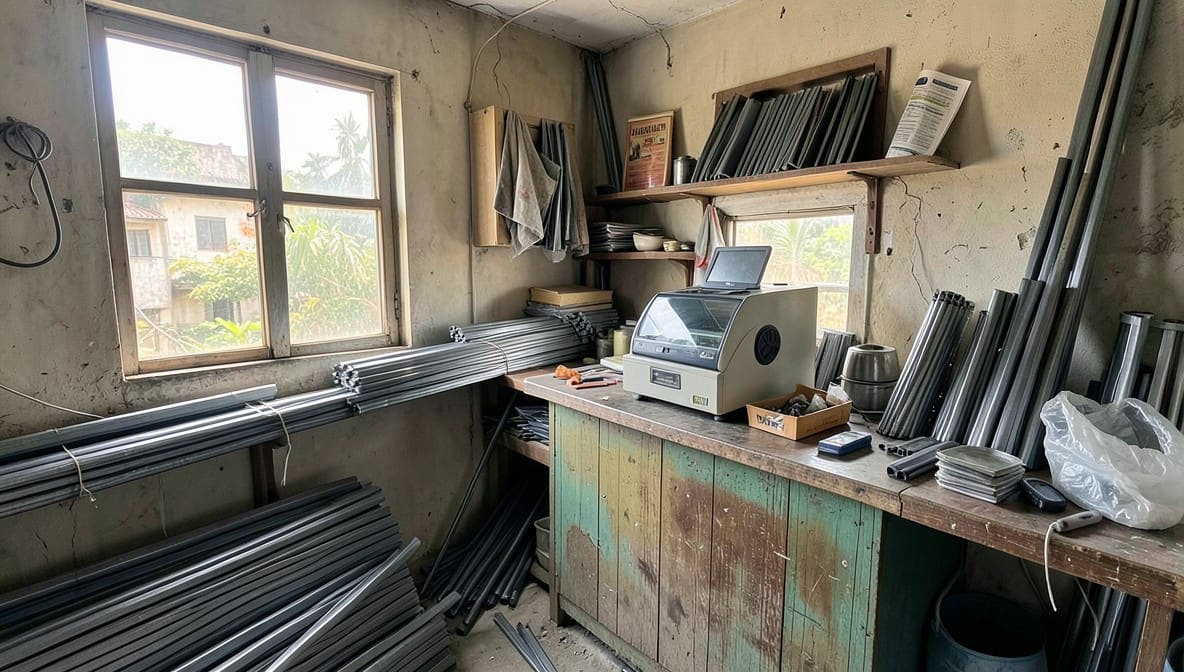
- The assessee is a timber trader operating in an unorganized sector where cash transactions are common
- During the demonetization period (November 8, 2016 to December 31, 2016), the assessee deposited Rs.53,00,000 in bank accounts
- The assessee submitted business records, including purchase and sale ledgers, bills, and bank statements, to substantiate cash turnover
- The AO did not accept any portion of the explanation, treating the entire amount as unexplained income
- The CIT(A)/NFAC upheld the AO’s order dated 18.03.2025, maintaining the addition of Rs.53,00,000
- The assessee filed appeal before ITAT Dehradun on the ground that the addition was arbitrary and disproportionate
Procedural History
- 08.11.2016: Demonetization notified by Government of India
- November 2016 - December 2016: Cash deposits of Rs.53,00,000 made by assessee
- 18.03.2025: Assessment order passed by AO under Section 147 r.w.s. 144, adding Rs.53,00,000 under Section 68
- 30.01.2026: CIT(A)/NFAC order dated 30.01.2026 (DIN: ITBA/NFAC/S/250/2025-26/1085352826(1)) confirmed the addition
- 25.05.2026: Hearing before ITAT Dehradun
- 25.05.2026: Oral order pronounced
- 05.06.2026: Written order signed and dated
Relief Sought
The appellant sought deletion of the entire addition of Rs.53,00,000 under Section 68, or in the alternative, a substantial reduction to reflect realistic cash turnover in the timber trade.
The Legal Issue
The central question was whether the entire cash deposit of Rs.53,00,000 made during demonetization could be treated as unexplained income under Section 68 of the Income-tax Act, 1961, in the absence of any evidence of illegality or non-genuineness, and whether the lower authorities had correctly appreciated the nature of cash-based business operations.
Arguments Presented
For the Appellant
The appellant’s chartered accountant argued that:
- Timber trading is a cash-intensive, unorganized sector where large cash transactions are routine
- The assessee had submitted purchase bills, sale invoices, and bank statements corroborating the source of deposits
- The entire amount could not be deemed unexplained merely because the explanation was not fully documented
- The addition of Rs.53 lakh was disproportionate and punitive, violating the principle of natural justice
- Reliance was placed on judicial precedents holding that Section 68 cannot be applied mechanically
For the Respondent
The Department contended that:
- The assessee failed to provide satisfactory evidence of the source of the deposits
- No third-party confirmations or ledger entries from counterparties were produced
- The burden under Section 68 lies on the assessee to prove the nature and source of credit
- The lower authorities were justified in treating the entire amount as unexplained income
The Court's Analysis
The Tribunal acknowledged the nature of the assessee’s business and the reality of cash transactions in the timber trade. It noted that while the assessee did not discharge the full burden of proof under Section 68, the complete rejection of the explanation was unreasonable.
"We wish to make it clear that there has been no dispute all along that the assessee is engaged in the business of trading in timber etc. in wholesale and retail, wherein possibility of cash turnover in such an unorganized sector could not be altogether ruled out."
The Tribunal emphasized that Section 68 does not mandate total disallowance merely because the explanation is imperfect. It must be applied with a sense of proportionality. The Tribunal rejected the notion that demonetization-era deposits automatically equate to unexplained income.
Further, the Tribunal addressed the applicability of Section 115BBE, relying on the Madras High Court’s decision in S.M.I.L.E. Microfinance Ltd. v. ACIT, which held that Section 115BBE applies only to transactions occurring on or after 01.04.2017. Since the deposits were made in November-December 2016, the higher tax rate under Section 115BBE was inapplicable.
The Tribunal concluded that while the assessee’s explanation was incomplete, a total addition of Rs.53 lakh was excessive. A reasonable compromise was warranted.
The Verdict
The appeal was partly allowed. The Tribunal reduced the addition under Section 68 from Rs.53,00,000 to Rs.3,00,000. The assessee was directed to be assessed under normal provisions, not Section 115BBE. The Tribunal explicitly stated that the Rs.3 lakh addition shall not be treated as a precedent. Necessary computations shall be done as per law.
What This Means For Similar Cases
Proportionality Over Perfection in Section 68 Assessments
- Practitioners must argue that Section 68 additions must reflect the nature of the business and the plausibility of cash turnover
- A complete rejection of explanation is not mandatory; partial acceptance with a reasonable addition is legally permissible
- Documentation gaps do not automatically justify full disallowance if the business context supports partial genuineness
Demonetization Deposits Require Contextual Analysis
- Cash deposits during demonetization cannot be presumed unexplained merely due to timing
- Assessing Officers must consider industry norms, historical cash patterns, and available corroborative documents
- Blanket additions of 100% are now legally untenable without specific evidence of illegitimacy
Section 115BBE Not Retroactive for Pre-April 2017 Transactions
- Assessments for deposits made before 01.04.2017 must be made under normal rates
- The S.M.I.L.E. Microfinance precedent is binding on all Assessing Officers and appellate authorities
- Taxpayers must raise this issue proactively in appeals involving demonetization-era cash deposits