The Income Tax Appellate Tribunal, Delhi, has clarified that cash deposits made during the 2016 demonetization period by a regular taxpayer engaged in a cash-based business cannot be automatically treated as unexplained income, provided a prima facie link to legitimate business activity exists. The ruling emphasizes contextual assessment over mechanical presumption, offering critical guidance for assessing officers and taxpayers alike.
Background & Facts
The Dispute
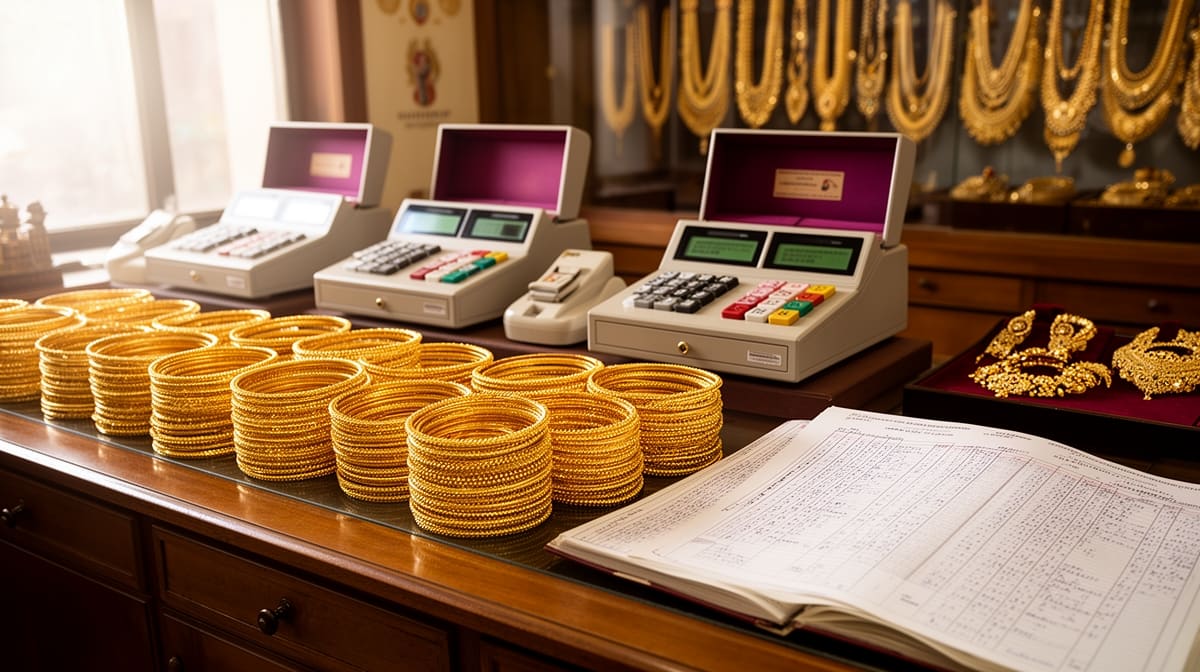
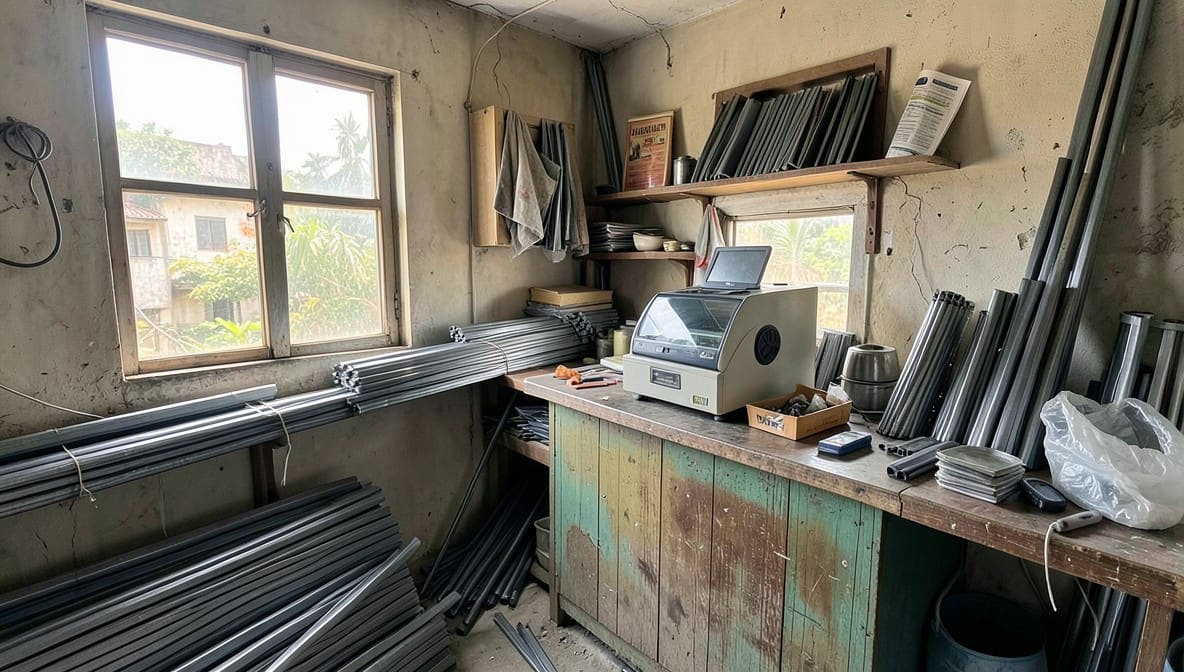
The appellant, Ms. Geeta Goswami, proprietor of M/s Asha Iron Store, a business dealing in iron and steel items at Panipat, Haryana, faced a reassessment under Sections 147 and 144 of the Income Tax Act, 1961 for Assessment Year 2017-18. The Assessing Officer (AO) treated cash deposits aggregating Rs. 12.50 lakhs made during the demonetization period (November 2016 to March 2017) as unexplained income, with no satisfactory explanation provided by the assessee.
Key Facts
- The appellant has been a consistent income tax return filer for years prior to the assessment year.
- M/s Asha Iron Store operates primarily on a cash basis, with frequent cash sales of iron and steel goods.
- The cash deposits of Rs. 12.50 lakhs were made between November 2016 and March 2017, coinciding with the period following the demonetization announcement on 8 November 2016.
- The appellant did not maintain detailed cash ledger entries or bank reconciliation for the period, but submitted copies of sales invoices and purchase bills as supporting documents.
- The AO made a lumpsum addition of Rs. 12.50 lakhs under Section 68, treating the entire amount as unexplained cash credit.
- The Commissioner of Income Tax (Appeals) [CIT(A)] upheld the addition in its order dated 30.10.2025.
Procedural History
- 08.11.2016: Demonetization of ₹500 and ₹1000 notes announced by Government of India.
- December 2016 - March 2017: Appellant made cash deposits totaling Rs. 12.50 lakhs into her bank account.
- 2017-18: Assessment proceedings initiated under Section 147 for reassessment.
- 2024: AO issued notice under Section 144, making addition of Rs. 12.50 lakhs.
- 30.10.2025: CIT(A) confirmed the addition.
- 19.03.2026: Hearing before ITAT Delhi.
- 25.03.2026: Order pronounced.
Relief Sought
The appellant sought deletion of the entire addition of Rs. 12.50 lakhs, arguing that the deposits were from legitimate cash sales. Alternatively, she requested that if any addition is sustained, it should be limited to a reasonable estimate, not the full amount.
The Legal Issue
The central question was whether cash deposits made by a regular taxpayer engaged in a cash-based business during the demonetization period can be treated as unexplained income under Section 68 of the Income Tax Act, 1961, in the absence of specific evidence of illegality, or whether a prima facie inference of business origin must be accepted.
Arguments Presented
For the Appellant
The appellant’s counsel, Shri J.B. Sharma, argued that the assessee has been a consistent return filer with a documented business of selling iron and steel on a cash basis. The deposits were made during a period of nationwide currency disruption, when businesses holding large cash balances were compelled to deposit them in banks. The burden of proof under Section 68 is not absolute; a reasonable inference of business origin must be considered. Reliance was placed on the principle that the tax department must consider the nature of the business before making mechanical additions.
For the Respondent
The Department, represented by Shri Manoj Kumar, Sr. DR, contended that the assessee failed to provide any documentary evidence linking the deposits to specific sales transactions. No cash book, ledger, or bank reconciliation was furnished. The deposits were made during a period of heightened scrutiny, and the absence of corroborative evidence justified the addition under Section 68. The department argued that the burden of proof under Section 68 lies squarely on the assessee.
The Court's Analysis
The Tribunal examined the nature of the assessee’s business and her compliance history. It noted that the appellant was not a new or suspicious entity but a long-standing, regular taxpayer operating in a sector where cash transactions are the norm. The Tribunal observed that the demonetization period created a unique situation where legitimate cash holders had no option but to deposit currency into banks.
"There is hardly any dispute between the parties that she admittedly is the proprietor of M/s Asha Iron Store dealing in all kinds of iron and steel items at Panipat. She is further stated to be a regular income tax return filer all along as well."
The Tribunal held that under these circumstances, a prima facie inference arises in favour of the assessee that the deposits form part of her regular business income, even if not fully reconciled. The Tribunal rejected the mechanical application of Section 68, emphasizing that the department must consider the context of the business and the economic reality of the period.
The Tribunal further held that while the entire Rs. 12.50 lakhs could not be accepted as explained, a reasonable addition of Rs. 1.50 lakhs was justified to account for the lack of precise documentation. The Tribunal explicitly stated that this addition shall not be treated as a precedent.
Regarding the applicability of Section 115BBE, the Tribunal relied on the Madras High Court judgment in SMILE Microfinance Ltd. v. ACIT, which held that Section 115BBE applies only to transactions occurring on or after 01.04.2017. Since the deposits were made between November 2016 and March 2017, the provision could not apply.
The Verdict
The appeal was partly allowed. The Tribunal set aside the addition of Rs. 12.50 lakhs and sustained only Rs. 1.50 lakhs as unexplained income. The appellant was directed to be assessed under regular provisions, not under Section 115BBE. The Tribunal directed that the Rs. 1.50 lakh addition shall not be treated as a precedent in any other case. Necessary computation of tax liability shall be done accordingly.
What This Means For Similar Cases
Business Context Overrides Mechanical Additions
- Practitioners must argue that the nature of the business (cash-based, small traders, retailers) must be considered before invoking Section 68.
- Regular return filers with documented business activity are entitled to a prima facie inference of legitimate origin for cash deposits.
- Assessing officers cannot treat all demonetization-era deposits as unexplained without examining the assessee’s business model.
Documentation Standards Are Contextual
- While detailed ledgers are ideal, their absence does not automatically trigger Section 68 if the business context supports cash transactions.
- Invoices, purchase bills, and witness statements may suffice if they establish a reasonable nexus between deposits and business activity.
- The burden under Section 68 is not absolute; it shifts to the department to disprove the prima facie inference.
Section 115BBE Has a Clear Cut-Off Date
- Section 115BBE applies only to income arising from transactions on or after 01.04.2017.
- Deposits made before that date, even if unexplained, cannot be taxed under this provision.
- Practitioners must verify the date of income accrual before allowing Section 115BBE to be applied.