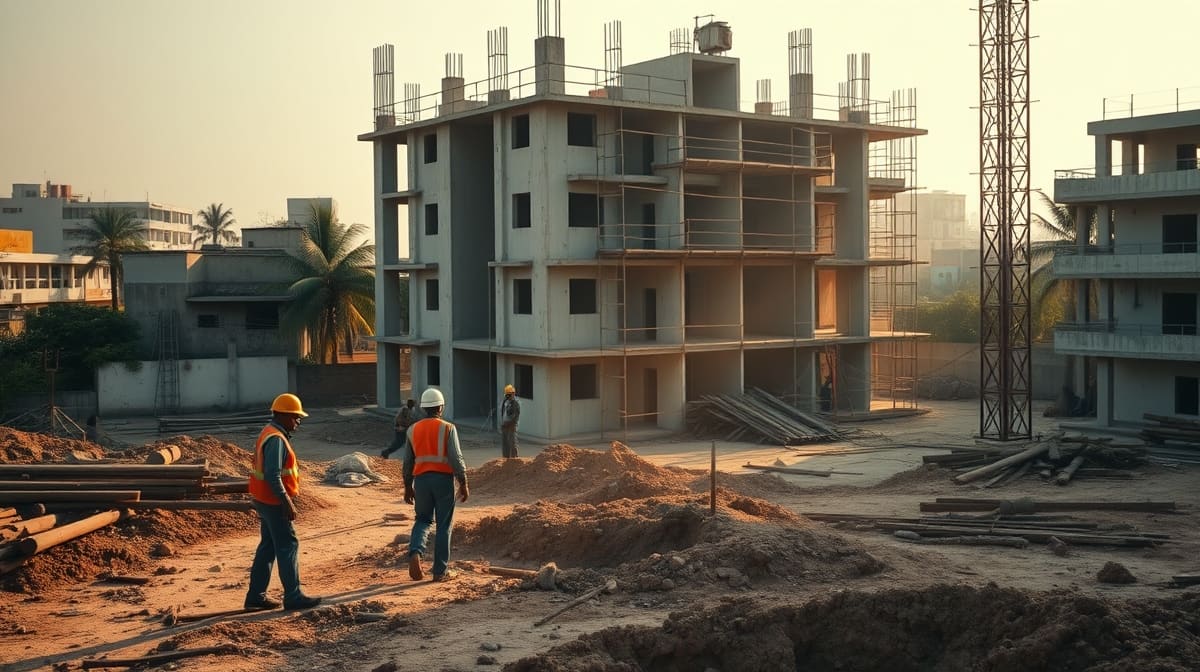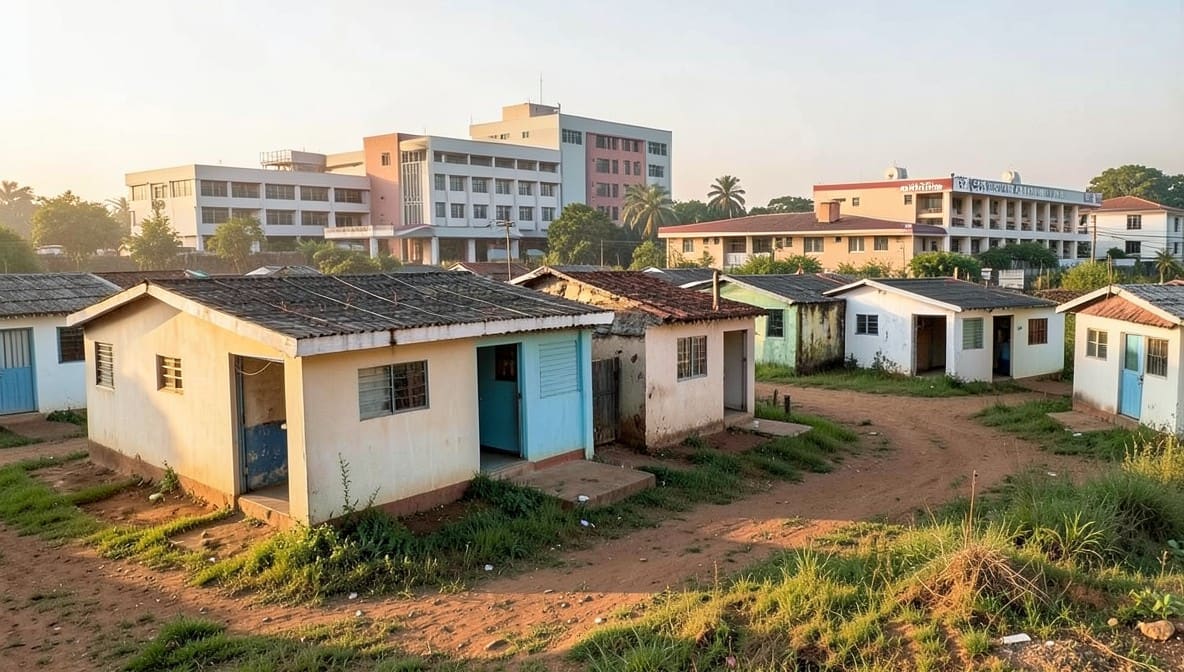
The Chennai Regional Bench of the Customs, Excise & Service Tax Appellate Tribunal has delivered a landmark ruling clarifying the scope of service tax liability on construction activities undertaken for public welfare, government entities, and non-profit organizations. The judgment decisively excludes individual residential units constructed for tsunami-affected families, police housing, and hospitals from the ambit of taxable 'construction of complex' or 'commercial or industrial construction' services under the Finance Act, 1994, setting a critical precedent for developers and public infrastructure contractors.
Background & Facts
The Dispute
The two appeals before the Tribunal arose from show cause notices issued by the Commissioner of Central Excise, Madurai, demanding service tax on construction services rendered by M/s. Pal Promoters Pvt. Ltd. (PPPL) and its Managing Director, Shri P. Panneerselvam, for the period 01.04.2007 to 31.03.2012. The Department alleged that the construction activities constituted taxable services under Section 65(105)(zzzh) (construction of complex) and Section 65(105)(zzq) (commercial or industrial construction) of the Finance Act, 1994.
Key Facts
- PPPL constructed residential units for: (i) Tamil Nadu Police Housing Corporation (TNHPCL) - police quarters; (ii) Tsunami District Implementation Unit, Pudukkotai (TDIU) - individual homes for tsunami victims; and (iii) Peoples Development Association (PDA) - low-cost housing.
- Shri P. Panneerselvam, in his personal capacity, constructed a commercial building for Devadoss Multi Specialty Hospital and residential complexes for World Vision India Limited.
- PPPL also undertook road construction and an abandoned basement-level building project for Madurai Municipal Corporation.
- Shri Panneerselvam was additionally assessed for renting of immovable property, based on rent received from PPPL for a property owned by his wife, Smt. Kayalvizhi.
- The total service tax demand against PPPL was Rs. 1,40,58,905/-, and against Shri Panneerselvam was Rs. 5,42,397/-, with interest and penalties under Sections 77 and 78 of the Finance Act, 1994.
- The Department invoked the extended period of limitation under Section 73(2) of the Finance Act, 1994, alleging willful suppression.
Procedural History
- 16.10.2012: Show cause notice issued to PPPL for service tax demand for period 01.04.2007 to 31.03.2012.
- 19.10.2012: Show cause notice issued to Shri P. Panneerselvam for personal construction and rental activities.
- 30.09.2013: Adjudicating Authority confirmed demand against Shri Panneerselvam.
- 26.03.2014: Adjudicating Authority confirmed demand against PPPL.
- 16.09.2014: Commissioner (Appeals) dismissed appeal filed by Shri Panneerselvam.
- 12.06.2014: Appeal No. ST/41810/2014 filed by PPPL against the order dated 26.03.2014.
- 15.07.2015: Appeal No. ST/40300/2015 filed by Shri P. Panneerselvam against the order dated 16.09.2014.
- 20.02.2026: Appeals heard together by CESTAT Chennai.
- 18.06.2026: Final order passed allowing both appeals.
Relief Sought
The appellants sought: (i) cancellation of service tax demand on construction for TNHPCL, TDIU, PDA, World Vision, and Devadoss Hospital; (ii) cancellation of demand for renting of immovable property; (iii) setting aside of penalties under Sections 77 and 78; and (iv) declaration that extended period of limitation was not applicable.
The Legal Issue
The central question was whether construction of individual residential houses for public welfare purposes, without sale intent, qualifies as a taxable 'residential complex' under Section 65(91a) or 'commercial or industrial construction' under Section 65(25b) of the Finance Act, 1994, and whether the extended period of limitation can be invoked absent proof of wilful suppression.
Arguments Presented
For the Appellant
The appellant’s counsel argued that: (i) individual houses constructed for tsunami victims and police quarters do not meet the cumulative definition of 'residential complex' under Section 65(91a), which requires more than twelve units, a common area, and specified facilities; (ii) construction for hospitals and municipal projects cannot be classified as 'commercial or industrial construction' unless the building is primarily used for profit-making activity, as clarified by CBEC Circular No. 80/10/2004; (iii) the Madurai Municipal Corporation project was abandoned and incomplete, rendering no service taxable; (iv) rental income received by Shri Panneerselvam was not his own, as the property belonged to his wife; and (v) there was no wilful suppression, only a bonafide belief that the services were exempt, thus the extended period of limitation could not apply.
For the Respondent
The Respondent reiterated the adjudicating authority’s findings that the construction activities fell within the scope of taxable services under Sections 65(105)(zzzh) and 65(105)(zzq), and that the appellants had failed to disclose the nature of the works, thereby justifying invocation of the extended period of limitation and imposition of penalties.
The Court's Analysis
The Tribunal undertook a detailed statutory interpretation of the definitions under Sections 65(91a), 65(30a), and 65(105)(zzzh). It emphasized that the definition of 'residential complex' requires three cumulative conditions: (1) a building or buildings with more than twelve residential units; (2) a common area; and (3) one or more specified facilities. The Tribunal held that individual houses, even if constructed in clusters, do not satisfy this definition unless they form a single complex with shared infrastructure.
"That the building or buildings should have more than twelve residential units, should have a common area and should have any one or more of the facilities stipulated therein are cumulative requirements."
The Tribunal relied on its own prior decision in M/s. Jaypee Enterprises v. Commissioner of CGST & C.Ex, Salem, and affirmed the reasoning in Macro Marvel Projects Ltd v CST, Chennai, which was upheld by the Supreme Court. It further noted that the definition of 'construction of complex' under Section 65(105)(zzzh) applied only to services simpliciter until 01.07.2012, and that the notification No. 20/2012-ST excluded single residential units from taxation.
Regarding commercial or industrial construction, the Tribunal applied CBEC Circular No. 80/10/2004, which mandates that taxability depends on the use of the structure for profit-making activity. The Department failed to produce any evidence that the hospital or municipal buildings were used for commercial purposes. The Tribunal cited Manisha Projects Pvt. Ltd. v. Commissioner of Central Excise & S.T., Ghaziabad, to hold that the burden of proving commercial use lies on the Revenue.
On the issue of extended limitation, the Tribunal held that mere non-payment of tax, without evidence of wilful suppression or misstatement, cannot trigger the extended period. It relied on M/s. Stemcyte India Therapeutics Pvt Ltd v. Commissioner of Central Excise & Service Tax, Ahmedabad, and Uniworth Textiles v. CCE, Nagpur, to affirm that the burden of proving mala fides rests on the Department, which was not discharged.
Regarding rental income, the Tribunal accepted the uncontroverted claim that the property belonged to Smt. Kayalvizhi, and the rent received by Shri Panneerselvam was not his own service. Further, the retrospective amendment to the service tax law on renting of immovable property could not revive a time-barred claim.
The Verdict
The appeals were allowed. The Tribunal set aside the impugned orders dated 26.03.2014 and 16.09.2014 in their entirety. The service tax demand of Rs. 1,40,58,905/- against PPPL and Rs. 5,42,397/- against Shri P. Panneerselvam, along with interest and penalties under Sections 77 and 78, were cancelled. The extended period of limitation was held inapplicable. The demand for rental of immovable property was quashed. All consequential reliefs, including refund of any amounts paid, were directed.
What This Means For Similar Cases
Construction for Public Welfare Is Exempt Unless It Forms a Complex
- Practitioners must now argue that construction of individual homes for NGOs, government welfare schemes, or disaster relief does not constitute a 'residential complex' under Section 65(91a) unless it meets the three cumulative criteria.
- Developers working on housing projects for public agencies should document the nature of each unit as individual, non-sale, and non-commercial to preempt tax scrutiny.
Commercial Use Must Be Proven by Revenue, Not Assumed
- The burden of proving that a building is used for commercial or industrial purposes lies squarely on the Department, as per CBEC Circular No. 80/10/2004.
- Tax authorities cannot rely on the nature of the contractor or the location of the building - they must establish actual use for profit-making activity.
- In cases involving hospitals, schools, or community centers, the absence of profit motive must be treated as a valid defense.
Extended Limitation Requires Active Suppression, Not Mere Non-Payment
- Service tax assessments invoking extended limitation must now be supported by concrete evidence of deliberate concealment or misstatement.
- Bonafide belief in exemption, even if legally incorrect, cannot be equated with evasion.
- Practitioners should routinely raise the Stemcyte and Uniworth precedents to challenge notices based on non-payment alone.
Rental Income Cannot Be Attributed to Non-Owners
- Service tax liability for renting of immovable property attaches only to the owner or authorized agent.
- Receipt of rent by a third party (e.g., spouse, director) does not create liability unless ownership or agency is established.
- Retrospective amendments cannot revive time-barred claims where no valid demand existed at the time of service.