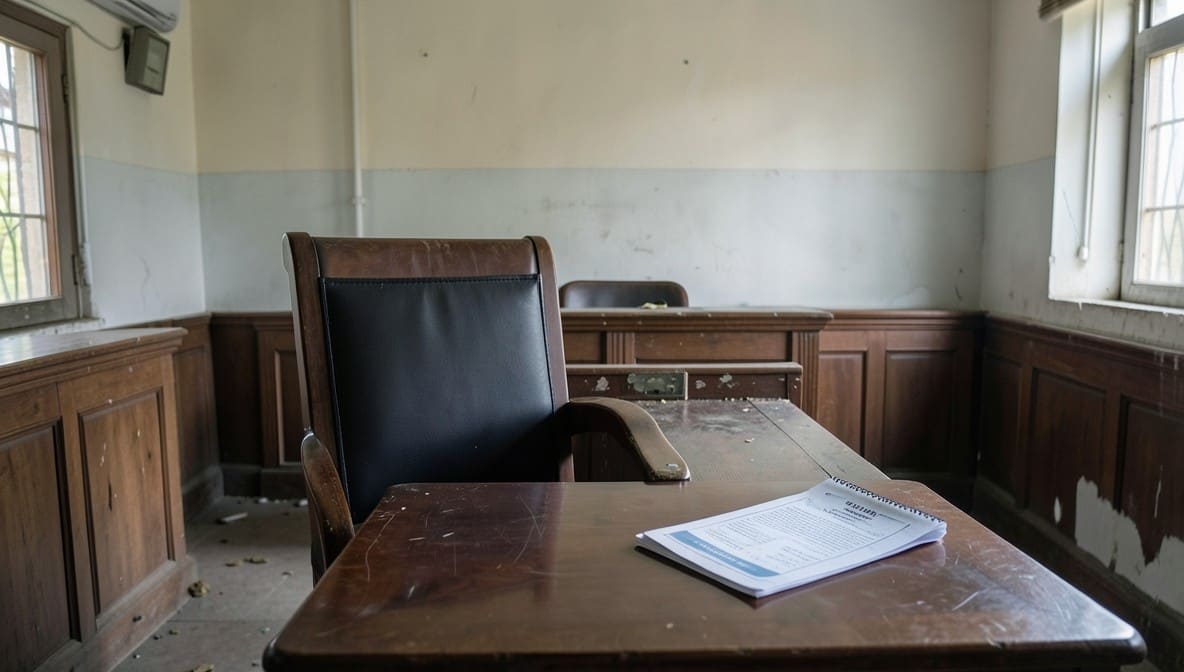
The Madhya Pradesh High Court has reaffirmed that no court may dismiss a pending land acquisition reference after evidence has been fully recorded, without affording the parties an opportunity to present final arguments. This ruling underscores the inviolable principle of natural justice in quasi-judicial proceedings under the Right to Fair Compensation and Transparency in Land Acquisition, Rehabilitation and Resettlement Act, 2013.
Background & Facts
The Dispute
The petitioner, Shri Ram Raja Sarkar Lok Kalyan Trust, challenged the dismissal of its reference under Section 64 of the Right to Fair Compensation and Transparency in Land Acquisition, Rehabilitation and Resettlement Act, 2013, by the Third District Judge, Datia. The reference arose from the acquisition of two parcels of land - Survey No. 38 (0.27 hectare) and Survey No. 40 (0.27 hectare) - situated at Mauja Dagarai, Patwari Halka No. 71, Tehsil and District Datia. An award was passed by the Land Acquisition Officer on 06.01.2016 without notifying the petitioner. The compensation amount was credited to the petitioner’s bank account on 02.07.2016 and 30.07.2016, after which the petitioner became aware of the acquisition.
Key Facts
- Land acquired: Survey No. 38 (0.27 hectare) and Survey No. 40 (0.27 hectare)
- Award date: 06.01.2016
- Compensation credited: 02.07.2016 and 30.07.2016
- Petitioner filed reference: 13.02.2017
- Condonation of delay granted: 15.10.2018
- Issues framed: 07.01.2019
- Evidence concluded: 22.09.2023
- Case registered as: Ex. L.A./01/2023
- Final arguments never heard
- Impugned order dated: 30.01.2026
Procedural History
- 06.01.2016: Land Acquisition Officer passed award without notice to petitioner
- 02.07.2016 & 30.07.2016: Compensation amounts credited to petitioner’s account
- 13.02.2017: Petitioner filed reference under Section 64 of the Act
- 15.10.2018: Application for condonation of delay allowed
- 07.01.2019: Issues framed by the trial court
- 22.09.2023: Evidence of both parties concluded
- 07.01.2026 to 28.01.2026: Multiple adjournments due to administrative transfers and roster clarification
- 28.01.2026: Letter from trial court to Principal District Judge seeking clarification on jurisdiction
- 29.01.2026: Principal District Judge directed trial court to decide case in accordance with law
- 30.01.2026: Trial court dismissed reference without hearing final arguments or deciding framed issues
- 12.05.2026: Writ petition filed under Article 227 before Madhya Pradesh High Court, Gwalior Bench
Relief Sought
The petitioner sought setting aside of the order dated 30.01.2026, restoration of the reference, and direction to the trial court to decide the matter on merits after affording a proper opportunity of hearing.
The Legal Issue
The central question was whether a court may dismiss a land acquisition reference under Section 64 of the Right to Fair Compensation and Transparency in Land Acquisition, Rehabilitation and Resettlement Act, 2013, after evidence has been fully recorded, without affording the parties an opportunity to present final arguments.
Arguments Presented
For the Petitioner
The petitioner’s counsel contended that the dismissal was illegal, perverse, and violative of the principles of natural justice. He emphasized that the delay in final arguments was entirely due to administrative inefficiencies - including roster changes and jurisdictional clarifications - and not attributable to the petitioner. The case had been pending for years, with all evidence on record, and the petitioner had repeatedly sought a hearing to cite precedents. The dismissal without any opportunity to argue was a jurisdictional error warranting interference under Article 227.
For the Respondent
The State did not file a written submission, and the Government Advocate appeared only to confirm the procedural posture. The Court noted that no counter-arguments were advanced by the respondents.
The Court's Analysis
The Court examined the procedural record and found that the trial court had not fixed the matter for final arguments on 30.01.2026. The order sheet of 28.01.2026 clearly indicated that the case was pending further directions from the Principal District Judge. Despite this, the trial court proceeded to dismiss the reference without hearing the petitioner, who had sought a short adjournment to present final submissions.
"It is a settled principle of law and a fundamental rule of natural justice that the parties must be afforded an opportunity of hearing before the case is decided."
The Court held that once evidence is concluded, the right to make final arguments is not a mere formality but a substantive right essential to fair adjudication. Dismissal on technical grounds of pendency, without addressing the merits or allowing parties to be heard, amounts to a denial of justice. The Court further observed that administrative delays cannot be visited upon litigants, especially when they have diligently pursued their claims. The trial court’s action was therefore found to be arbitrary, contrary to the mandate of Section 64 and the principles of natural justice.
The Verdict
The petition succeeded. The Court set aside the order dated 30.01.2026 passed by the Third District Judge, Datia. The matter was remanded to the same court with a direction to decide the reference afresh in accordance with law after affording a full opportunity of hearing to both parties. The parties were directed to appear before the trial court on 24.06.2026.
What This Means For Similar Cases
Hearing After Evidence Is Non-Negotiable
- Practitioners must insist on formal fixation of dates for final arguments once evidence concludes
- Any dismissal without hearing after evidence is recorded is appealable under Article 227
- Courts cannot use administrative delays as grounds to bypass substantive rights
Administrative Errors Cannot Be Penalized on Litigants
- Delays caused by roster changes, transfers, or jurisdictional confusion cannot justify summary dismissal
- The burden of ensuring due process lies with the court, not the litigant
- Petitioners may seek writ relief under Article 227 where such violations occur
Section 64 Proceedings Are Quasi-Judicial
- Land acquisition references under Section 64 attract full protection of natural justice
- Even if the Act does not explicitly prescribe hearing procedures, the principles of audi alteram partem apply
- Courts must treat such proceedings with the same rigor as civil suits