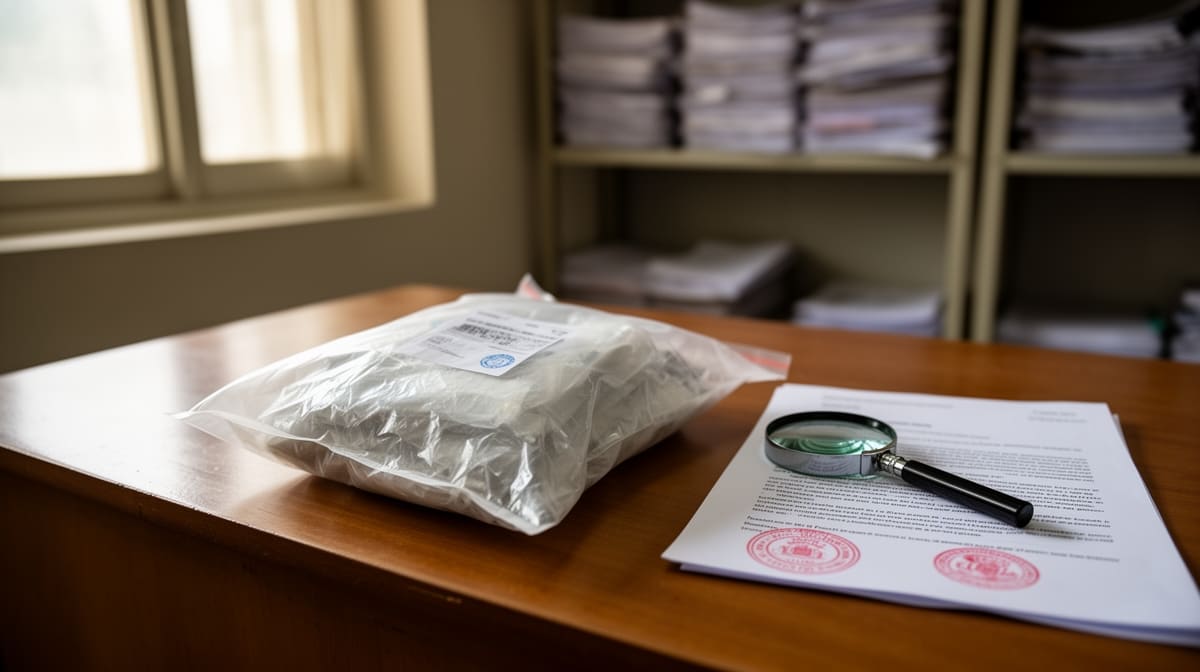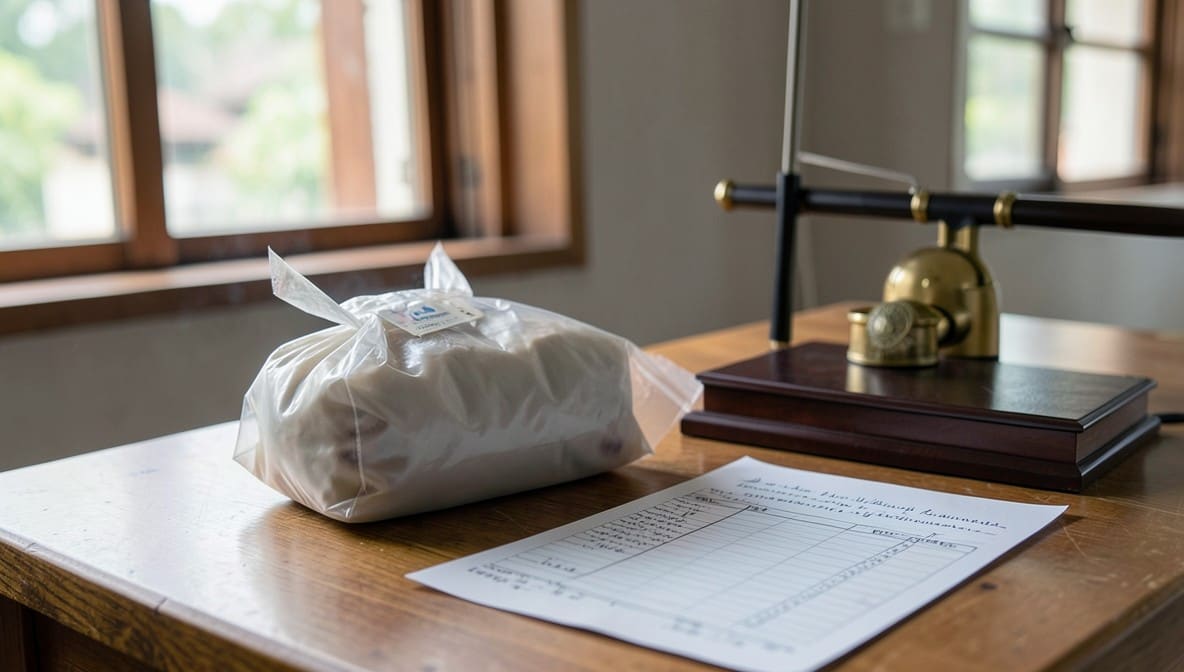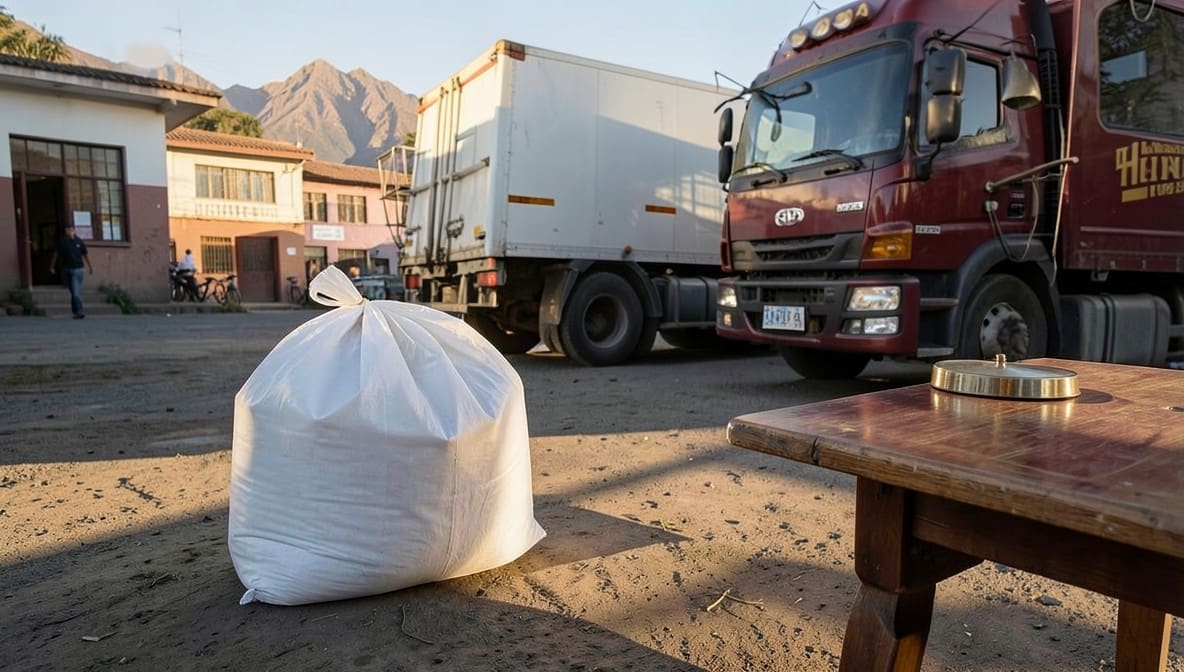
The High Court of Himachal Pradesh has reaffirmed the sanctity of judicial records under the NDPS Act, holding that a magistrate’s explicit finding that no seized vehicles were produced before the court cannot be contradicted through a writ petition. This decision underscores the principle that judicial records are conclusive and binding, and any alleged error must be corrected through the proper procedural channel before the same court.
Background & Facts
The Dispute
The petitioner, the Narcotics Control Bureau (NCB), filed a writ petition seeking quashing of two orders passed by the Judicial Magistrate First Class, Kullu, in Crime No. 21/2025 registered at NCB Chandigarh Zonal Unit, Mohali. The case arose from the seizure of 176.512 kg of poppy husk from a vehicle bearing Registration No. PB-35AM-6738 on 17.10.2025. The NCB also impounded two escort vehicles - Registration No. PB-07CE-7760 and another - as part of the investigation under Sections 8, 15, 27A, 29, 60, and 61 of the Narcotic Drugs and Psychotropic Substances Act (NDPS Act).
Key Facts
- On 17.10.2025, NCB seized 176.512 kg of poppy husk in 18 white nylon sacks (Lot A to R) from a truck
- Two escort vehicles were seized and physically brought to the court premises on 18.10.2025
- The NCB filed an application under Section 52A of the NDPS Act on 18.10.2025 seeking certification of the seized narcotics and vehicles
- The Magistrate’s order dated 18.10.2025 certified the inventory of narcotics but made no mention of the vehicles
- The NCB noticed the omission and filed a correction application on 06.01.2026
- The Magistrate dismissed the application on 06.01.2026, stating that no vehicles or photographs thereof were produced before her
- The NCB contended that the vehicles were physically present at the court premises and were photographed by Inspector Aditya Kumar Shukla
Procedural History
- 17.10.2025: Seizure of poppy husk and two escort vehicles by NCB
- 18.10.2025: Application under Section 52A NDPS Act filed before Judicial Magistrate First Class, Kullu
- 18.10.2025: Magistrate passed order certifying inventory of narcotics (Lots A to R) but omitted vehicles
- 06.01.2026: NCB filed application for correction of inventory; Magistrate dismissed it
- 18.03.2026: Petition reserved for judgment
- 04.05.2026: Judgment delivered dismissing the writ petition
The Parties' Positions
The NCB contended that the vehicles were physically present at the court premises and were photographed, and that the Magistrate’s failure to record this was an inadvertent oversight. The respondent did not file a written reply, but the Magistrate’s order stood as the official record.
Relief Sought
The petitioner sought quashing of the orders dated 18.10.2025 and 06.01.2026, and a direction to the Magistrate to correct the inventory to include the two seized vehicles.
The Legal Issue
Can a writ petition under Article 226 of the Constitution be used to challenge a magistrate’s judicial record stating that seized vehicles were not produced before the court, when the petitioner claims they were physically present but omitted by oversight?
Arguments Presented
For the Petitioner
Mr. Ashwani Pathak, Senior Advocate, argued that the vehicles were physically present at the court premises and were photographed by Inspector Aditya Kumar Shukla. He submitted that the Magistrate’s failure to record this in her order was an inadvertent error, not a deliberate omission. He relied on the principle of natural justice and the need for accurate inventory certification under Section 52A NDPS Act. He contended that the writ petition was maintainable to correct a manifest error in the judicial record.
For the Respondent
The Respondent did not appear or file any written submissions. The Magistrate’s order, however, stood as the official record, and the court treated it as conclusive.
The Court's Analysis
The Court examined the Magistrate’s order dated 18.10.2025, which explicitly stated that only the 18 nylon sacks (Lots A to R) were produced before her, and that the entire process was photographed by Inspector Aditya Kumar Shukla. Crucially, the order made no reference to any vehicle being produced. The subsequent application for correction was dismissed on the ground that no vehicle or photograph thereof was shown to the court.
The Court relied on the binding precedent of the Supreme Court in Central Bank of India v. Vrajlal Kapurchand Gandhi (2003) 6 SCC 573, which held that statements of fact recorded in a judicial order are conclusive and cannot be contradicted by affidavit or other evidence in a subsequent proceeding. The Court further cited Shankar K. Mandal v. State of Bihar (2003) 9 SCC 519, reiterating that if a party believes the record is erroneous, the only remedy is to approach the same court while the matter is still fresh, and request correction.
"Statements of fact as to what transpired at the hearing, recorded in the judgment of the Court, are conclusive of the facts so stated, and no one can contradict such statements by affidavit or other evidence."
The Court emphasized that the petitioner, represented by counsel, was present during the hearing and had the opportunity to draw the Magistrate’s attention to the omission immediately. The failure to do so rendered the record conclusive. The High Court held that it cannot conduct an inquiry into what transpired in the lower court, as that would undermine judicial decorum and public policy.
The Court noted that the vehicles may have been parked outside the courtroom, but the Magistrate’s observation that they were not produced before her was a factual finding recorded in the judicial record. The petitioner’s remedy, if any, lay in approaching the Magistrate under the inherent powers of the court, not through a writ petition.
The Verdict
The writ petition was dismissed. The orders dated 18.10.2025 and 06.01.2026 passed by the Judicial Magistrate First Class, Kullu, were upheld as conclusive. The Court held that the petitioner’s failure to seek correction before the Magistrate barred any challenge via writ jurisdiction. No monetary relief or direction was granted. The observations were confined to the maintainability of the petition and had no bearing on the merits of the criminal case.
What This Means For Similar Cases
Judicial Records Are Conclusive
- Practitioners must immediately raise omissions or errors in court orders during the same proceeding
- Writ petitions cannot be used to re-litigate factual disputes already recorded in a judicial order
- Any alleged oversight must be corrected by the same court that passed the order, not by a higher court via Article 226
Section 52A NDPS Act Compliance Requires Precision
- Seizure inventories under Section 52A must be certified with absolute accuracy
- All seized property - including vehicles - must be formally produced and recorded in court
- Failure to do so may result in the property being excluded from the certified inventory, affecting forfeiture proceedings
Writ Jurisdiction Has Limits in Procedural Errors
- Writs are not a substitute for appellate or revisional remedies
- Courts will not entertain challenges to judicial records absent prior corrective action before the originating court
- This precedent applies equally to other statutes requiring court certification of seized property (e.g., Prevention of Money Laundering Act)